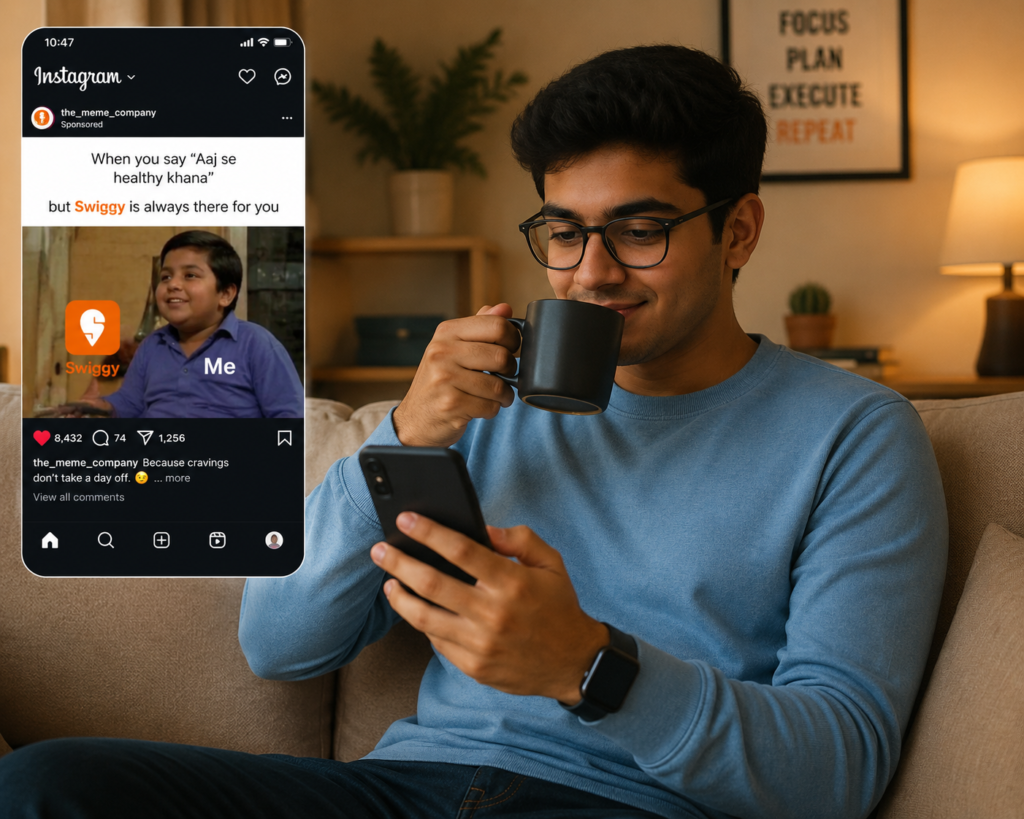
Have you ever opened Instagram to watch just one Reel…
…only to spend the next 30 minutes laughing at memes?
One meme perfectly describes Monday mornings.
Another makes fun of your favorite IPL team.
A third jokes about ordering food after promising yourself you’d cook at home.
You laugh.
You tag your friends.
You share it on WhatsApp.
Only later do you notice something interesting.
A brand is hiding inside the joke.
Sometimes it’s Zomato.
Sometimes Swiggy.
Sometimes Netflix.
Sometimes CRED.
The surprising part?
It never feels like an advertisement.
It feels like entertainment.
That’s exactly why Meme Marketing has become one of the fastest-growing marketing strategies in the digital world.
Today’s consumers don’t dislike brands.
They dislike interruptions.
Traditional advertisements ask people to stop what they’re doing and pay attention.
Memes do the opposite.
They blend naturally into the content people already enjoy.
Instead of forcing a sales message, they make people laugh first and introduce the brand second.
This subtle shift has completely changed how companies communicate with younger audiences.
Brands are no longer competing to create louder advertisements.
They’re competing to create content that people willingly share.
That’s why businesses, from startups to global companies, now invest heavily in Meme Marketing, partnering with meme pages, creators, and social media communities to reach millions of users in a way that feels authentic.
Chapter 1: What Is Meme Marketing?
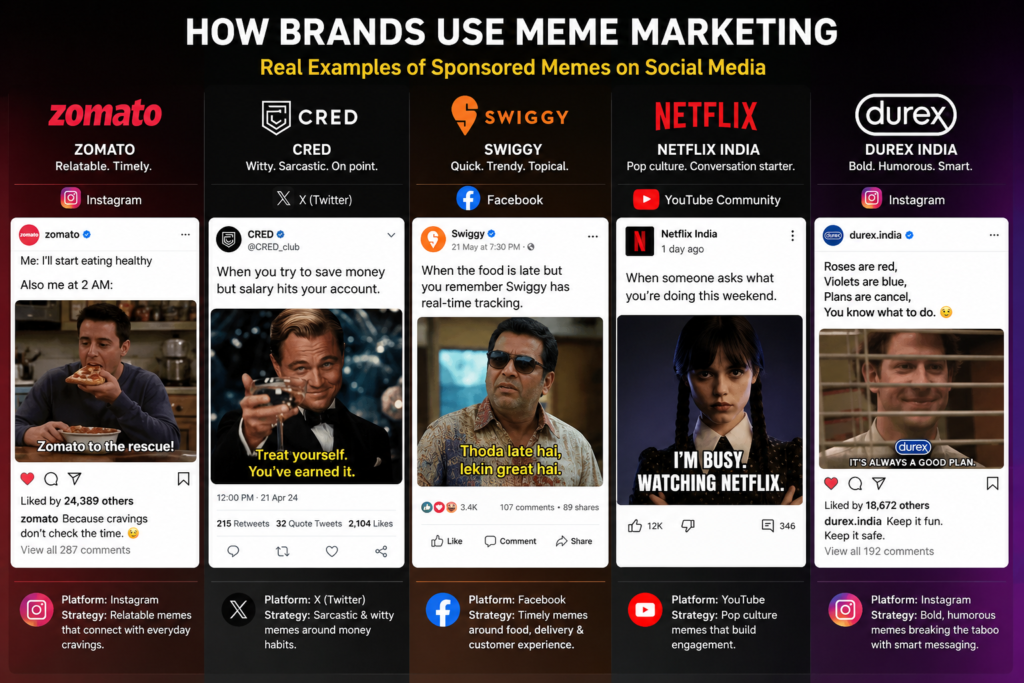
Meme Marketing is the practice of using memes, internet humor, trending templates, or collaborations with popular meme pages to promote a brand, product, or service in a way that feels entertaining rather than promotional.
Unlike traditional advertisements, memes don’t interrupt the user experience.
They become part of it.
Imagine watching a YouTube video.
A 20-second advertisement appears before the content starts.
Most people immediately look for the Skip button.
Now imagine scrolling through Instagram.
You come across a meme that perfectly describes your work life.
You laugh.
You send it to your friends.
Only after sharing it do you realize the meme was created by a brand.
That’s the biggest difference.
Traditional advertising demands attention.
Meme Marketing earns attention.
Instead of saying,
“Buy our product.”
A meme quietly says,
“You’ll enjoy this.”
The product simply becomes part of the conversation.
That’s why memes are shared far more often than advertisements.
People don’t share them because they’re trying to promote a company.
They share them because they’re funny, relatable, and worth passing along.
For brands, that’s incredibly valuable.
Every share introduces the brand to a new audience without feeling like paid advertising.
And that’s exactly why Meme Marketing has become such a powerful strategy in today’s attention-driven digital world.
Chapter 2: Why Brands Choose Meme Marketing Over Traditional Advertising
If television commercials, YouTube ads, billboards, and newspaper advertisements still exist, why are companies investing so much in Meme Marketing?
The answer is simple.
Consumer attention has changed.
Years ago, brands competed for television viewers.
Today, they compete for a few seconds of attention on Instagram, X (formerly Twitter), YouTube Shorts, Reddit, and Facebook.
In this crowded digital world, people have become experts at ignoring advertisements.
They skip YouTube ads.
They scroll past sponsored posts.
They install ad blockers.
But they rarely ignore a funny meme.
That’s because a meme doesn’t interrupt the experience.
It becomes part of the experience.
This is one of the biggest advantages of Meme Marketing.
Instead of asking people to stop and watch an advertisement, brands join conversations that are already happening online.
For example, imagine an exciting IPL match has just ended.
Within minutes, social media is flooded with jokes about the game.
A food delivery app posts a clever meme connected to the winning moment.
People laugh, share it, and tag their friends.
The brand becomes part of the celebration instead of interrupting it.
This approach creates far more engagement than simply displaying a banner advertisement.
Another reason brands prefer Meme Marketing is cost efficiency.
A television commercial requires expensive production, media buying, and airtime.
A well-crafted meme created at the right moment can reach millions of people with a much smaller budget, especially if it gets shared organically.
Brands also benefit from collaborating with popular meme pages.
These pages already have loyal followers who trust their content.
Instead of spending years building an audience from scratch, companies borrow the credibility and engagement that these communities have already earned.
Perhaps the biggest advantage is shareability.
People rarely send advertisements to their friends.
They happily send memes.
Every share introduces the brand to a new audience without additional advertising costs.
That’s why companies like Zomato, Swiggy, Netflix, Blinkit, and CRED consistently invest in Meme Marketing.
They understand that modern marketing isn’t about shouting louder.
It’s about becoming part of the content people genuinely enjoy.
Successful brands no longer ask,
“How do we create more advertisements?“
Instead, they ask,
“How do we create something people actually want to share?”
That shift in thinking is exactly why Meme Marketing continues to grow while traditional advertising struggles to capture the same level of attention.
Chapter 3: The Psychology Behind Meme Marketing
If Meme Marketing were only about making people laugh, companies wouldn’t invest millions of dollars into it every year.
The real reason it works is much deeper.
Behind every successful meme are psychological principles that influence how people pay attention, build trust, remember brands, and make purchasing decisions.
Let’s explore the psychology that makes Meme Marketing so effective.
1. The Mere Exposure Effect: Familiarity Builds Trust
Have you ever noticed how certain brands feel familiar even if you’ve never used their products?
That’s because our brains naturally trust things we see repeatedly.
Psychologists call this the Mere Exposure Effect.
The more often people see a brand, the more comfortable it begins to feel.
This is why brands like Zomato, Swiggy, Netflix, and CRED appear regularly in memes.
They’re not trying to make a sale with every post.
They’re building familiarity.
Over time, familiarity turns into recognition, and recognition often influences buying decisions.
2. Humor Creates Emotional Connections
People may forget an advertisement.
They rarely forget something that made them laugh.
Humor creates positive emotions, and our brains naturally associate those emotions with whatever caused them.
When a brand appears inside a funny meme, the positive feeling is transferred to the brand itself.
This is one reason why Meme Marketing creates stronger brand recall than many traditional advertisements.
Instead of saying,
“Remember our product.”
The brand simply gives people a reason to smile.
The memory follows naturally.
3. In-Group Signaling Makes Brands Feel Relatable
Many memes only make sense if you’ve experienced a particular situation.
Think about memes related to:
- IPL matches
- Office meetings
- College life
- Food delivery
- Monday mornings
When people understand these jokes, they feel like they’re part of a community.
Psychologists call this In-Group Signaling.
Brands that participate in these conversations stop feeling like outsiders trying to sell something.
Instead, they become part of the same culture their audience already enjoys.
That’s why many successful brands sound more like internet users than advertisers.
4. Trust Can Be Borrowed
Imagine seeing the same sponsored post from two different sources.
One comes directly from a company’s page.
The other comes from your favorite meme page that you’ve followed for years.
Which one feels more authentic?
Most people trust the familiar page.
This is known as Source Credibility Bias.
Brands aren’t only paying meme pages for reach.
They’re borrowing the trust those pages have already built with their audience.
That’s why collaborations with popular meme creators often perform better than publishing the same content on a brand’s own account.
5. People Share Memes to Express Themselves
Why do memes spread so quickly?
Not because people want to advertise brands.
People share memes because they reflect their personality, humor, or current mood.
Psychologists describe this as Social Currency.
Sharing a clever meme makes people appear funny, relatable, or up to date with internet culture.
If a brand is naturally part of that meme, it benefits every time someone shares it.
Unlike traditional advertising, consumers voluntarily distribute the marketing message.
Why These Principles Make Meme Marketing So Powerful
The real strength of Meme Marketing is that these psychological principles work together.
A single meme can:
- Feel familiar through repeated exposure.
- Make people laugh.
- Create a sense of belonging.
- Borrow trust from a popular meme page.
- Encourage thousands of people to share it.
That combination is difficult for traditional advertisements to achieve.
Instead of interrupting consumers, memes engage them emotionally, socially, and psychologically.
That’s why brands increasingly see Meme Marketing as more than internet humor.
They see it as a powerful way to build relationships with consumers.
Understanding these principles also helps us become smarter consumers.
The next time you laugh at a sponsored meme, pause for a moment and ask yourself:
“Am I sharing this because of the joke, or has the brand quietly become part of my thinking?”
That’s the hidden power of Meme Marketing.
Chapter 4: Real-World Examples of Meme Marketing
The best way to understand Meme Marketing is to see how successful brands use it in everyday marketing.
Instead of relying only on traditional advertisements, many companies have built a strong online presence by becoming part of internet culture.
Zomato
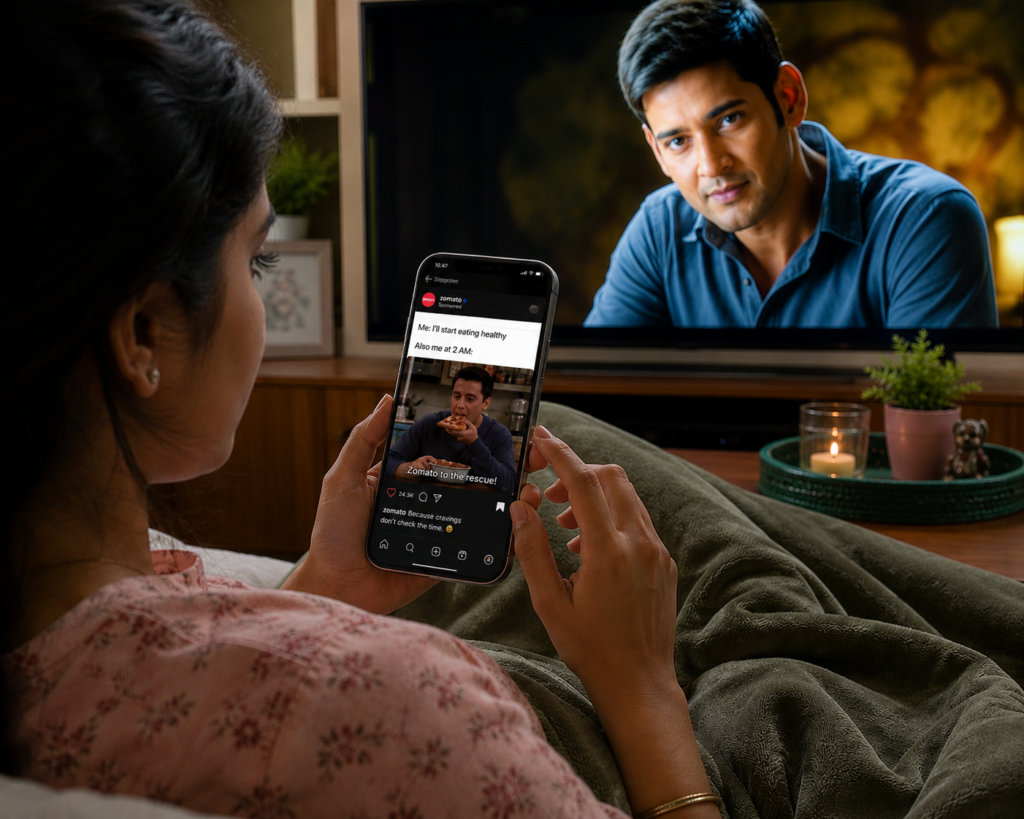
Zomato rarely promotes its food delivery service directly.
Instead, it creates relatable memes about late-night cravings, office lunches, and weekend laziness.
People share these posts because they’re funny, while the brand naturally stays top of mind.
Swiggy
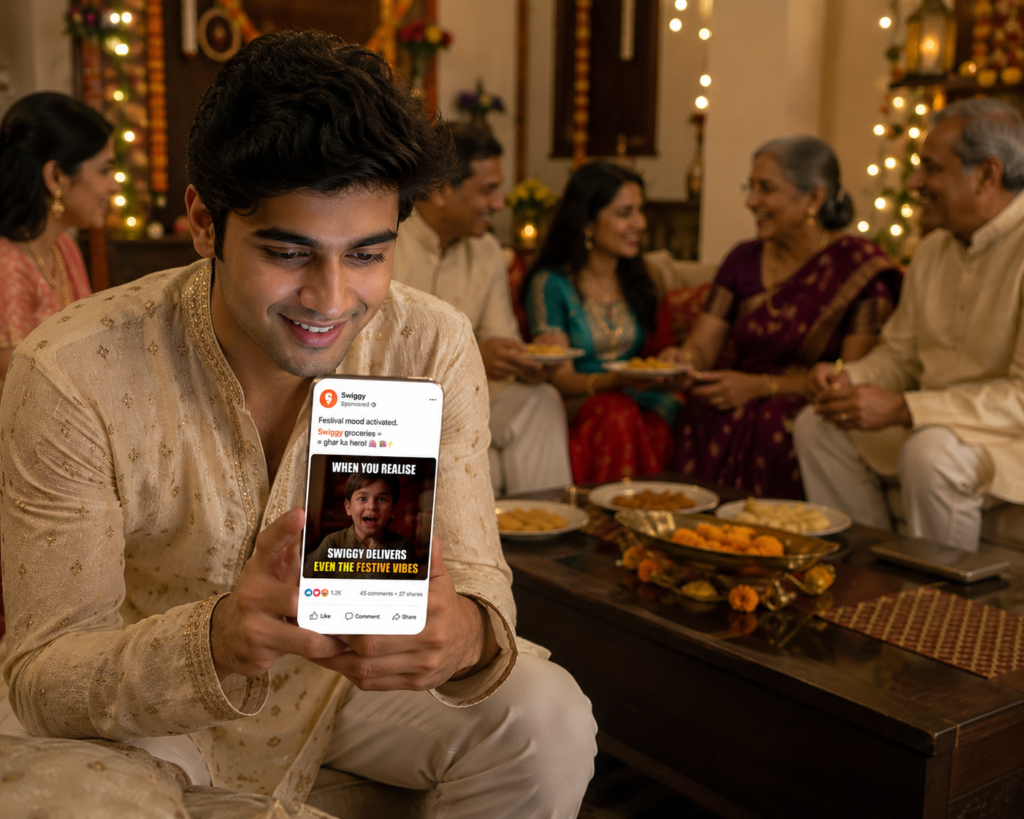
Swiggy is known for reacting quickly to trending events.
Whether it’s an IPL match, a movie release, or a festival, the brand publishes timely memes that join existing online conversations instead of interrupting them.
Netflix India
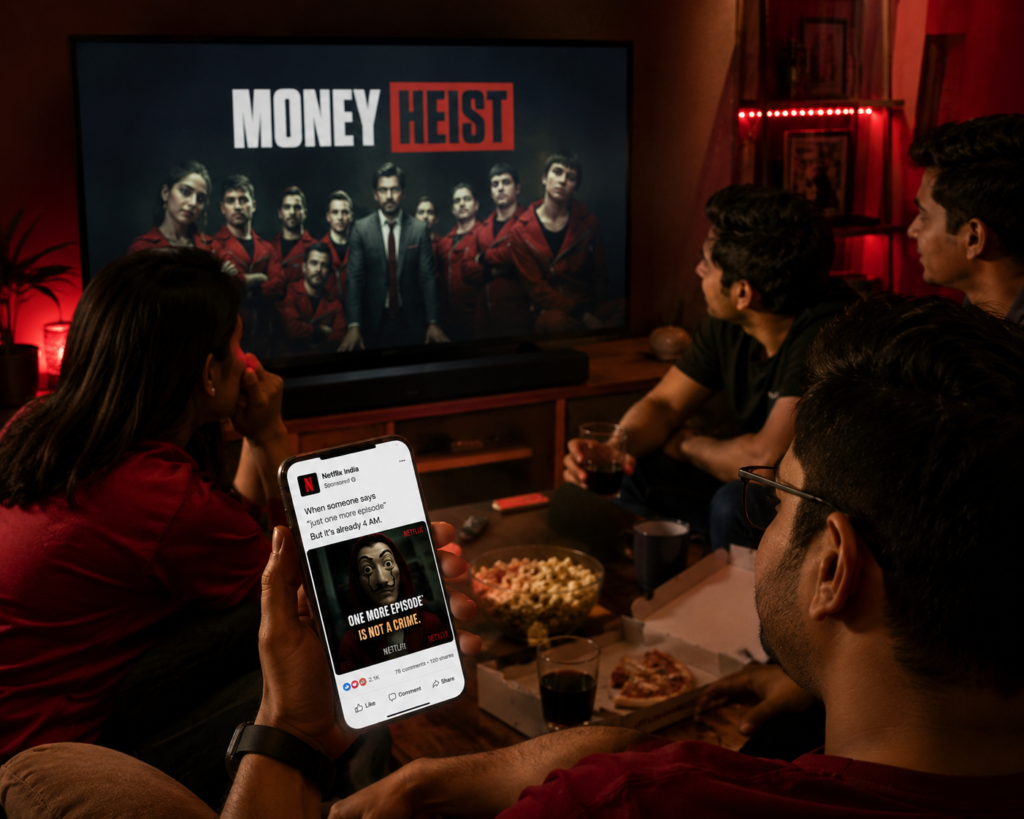
Netflix often transforms scenes from its popular shows into relatable memes.
Instead of saying, “Watch this series,” it lets the meme entertain first, encouraging users to share it across social media.
Durex India and CRED
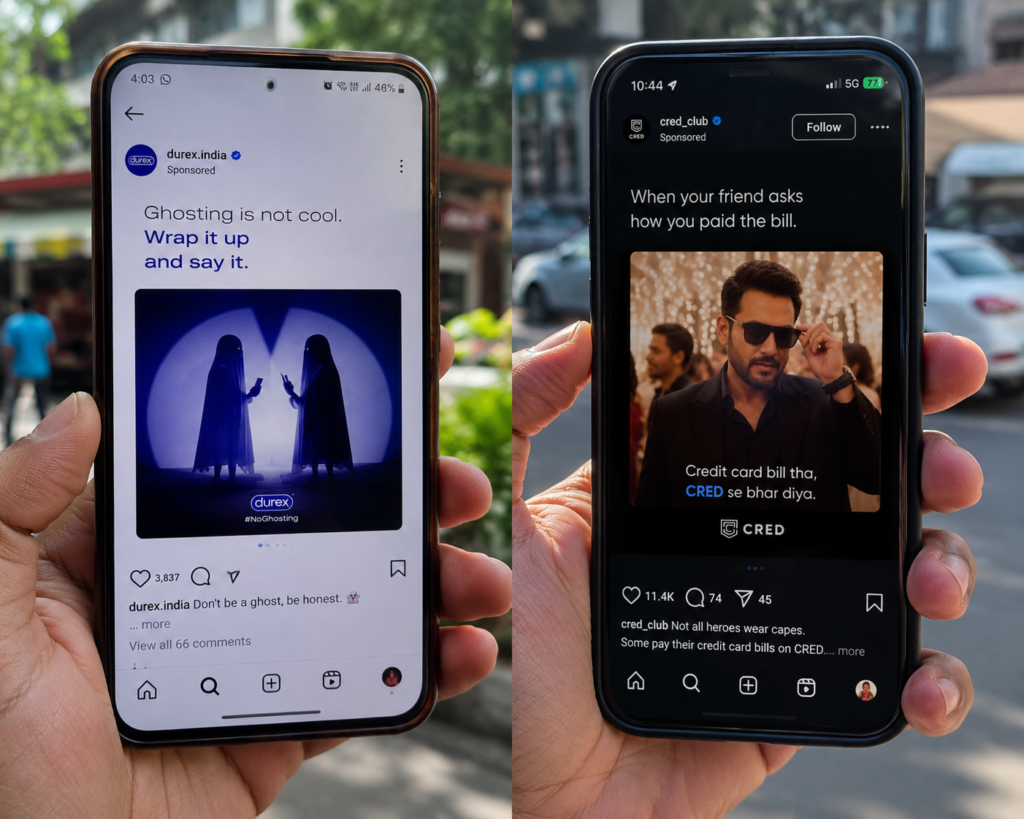
These brands prove that even products people don’t usually discuss online can become engaging through humor.
By using clever wordplay and internet trends, they make their brands memorable without sounding like traditional advertisers.
These examples highlight an important lesson.
Successful Meme Marketing doesn’t try to sell immediately.
It builds familiarity, engagement, and trust first.
Chapter 5: How AI Is Changing the Future of Meme Marketing
Artificial Intelligence is transforming Meme Marketing faster than most people realize.
Today, AI helps marketers identify trending topics, generate caption ideas, analyze audience sentiment, and measure campaign performance within minutes.
Instead of spending hours brainstorming ideas, marketing teams can use AI to create multiple meme concepts instantly and then choose the strongest one.
AI is also making Meme Marketing more personalized.
Imagine a food delivery company creating different memes for cricket fans, football fans, movie lovers, or students, all within the same campaign.
The product remains the same, but the humor changes based on the audience’s interests.
In the future, AI will go even further.
It may predict viral trends before they become popular, automatically adapt memes into different languages, and generate personalized content for millions of users simultaneously.
However, AI still has one major limitation.
It understands data better than culture.
A meme can go viral because of perfect timing, local slang, or shared experiences, things that still require human creativity and judgment.
The future of Meme Marketing won’t be AI replacing marketers.
It will be AI helping marketers move faster while humans provide originality, emotion, and cultural understanding.
That’s the combination most likely to create the next generation of viral campaigns.
When Meme Marketing Goes Wrong
Like every marketing strategy, Meme Marketing isn’t foolproof.
The same meme that makes a brand go viral today can damage its reputation tomorrow if it’s poorly timed or insensitive.
One of the biggest mistakes brands make is jumping onto every trending topic without understanding the context. Memes about natural disasters, political controversies, or tragic events may generate attention, but they can quickly trigger public backlash.
Another common mistake is forcing humor where it doesn’t belong. If the meme feels unnatural or has no connection to the brand, people remember the joke but forget the company behind it.
The most successful brands understand a simple rule:
Don’t chase every trend. Join only the conversations that align with your brand and audience.
What Businesses Can Learn from Meme Marketing
Whether you’re a startup, small business, or global brand, Meme Marketing offers valuable marketing lessons.
- Entertain before you sell. People are more likely to engage with content that makes them smile than content that immediately promotes a product.
- Understand your audience deeply. Great memes come from understanding your customers’ language, culture, and everyday experiences.
- Be authentic. Internet users can quickly identify brands that are trying too hard to sound trendy.
- Focus on consistency. One viral meme may bring attention, but consistent, relatable content builds long-term brand recall.
- Use AI wisely. Let AI help you discover trends and improve efficiency, but rely on human creativity to create humor that genuinely connects with people.
What Consumers Can Learn
As consumers, understanding Meme Marketing helps us become more aware of how brands influence our decisions.
The next time you see a funny sponsored meme, ask yourself:
- Am I laughing because it’s genuinely funny?
- Did I notice the brand without realizing it?
- Am I beginning to trust this brand simply because I see it repeatedly?
Recognizing these psychological triggers doesn’t stop you from enjoying memes.
It simply helps you become a more informed consumer who can separate entertainment from marketing.
Key Takeaways
- Meme Marketing blends entertainment with advertising instead of interrupting consumers.
- Brands prefer memes because they’re more relatable, shareable, and engaging than many traditional advertisements.
- Psychological principles like the Mere Exposure Effect, Humor Bonding, In-Group Signaling, Source Credibility Bias, and Social Currency make Meme Marketing highly effective.
- Companies such as Zomato, Swiggy, Netflix India, Durex India, and CRED use memes to build stronger relationships with their audiences.
- Artificial Intelligence is making Meme Marketing faster, smarter, and more personalized, but human creativity remains essential.
Frequently Asked Questions (FAQs)
1. What is Meme Marketing?
Meme Marketing is the strategy of promoting a brand using memes, internet humor, or collaborations with meme pages so that marketing feels entertaining instead of intrusive.
2. Why is Meme Marketing more effective than Traditional advertising?
Because it blends naturally into the content people already enjoy. Instead of interrupting users, memes encourage likes, comments, shares, and conversations.
3. Which brands are known for successful Meme Marketing?
Brands such as Zomato, Swiggy, Netflix India, CRED, Blinkit, and Durex India regularly use Meme Marketing to connect with younger, digitally active audiences.
4. How is AI changing Meme Marketing?
AI helps marketers identify trends, generate creative ideas, personalize content, analyze audience sentiment, and optimize campaigns. However, human creativity is still needed to produce authentic and culturally relevant humor.
5. Is Meme Marketing suitable for every business?
Not necessarily. It works best for brands whose audience actively uses social media and responds well to internet culture. Every business should ensure its humor aligns with its brand personality and values.
Final Thoughts
The future of advertising isn’t about creating more advertisements.
It’s about creating content that people genuinely enjoy.
That’s exactly why Meme Marketing has become one of the most influential marketing strategies of the digital age.
A great meme doesn’t just make people laugh.
It creates familiarity.
It builds trust.
It starts conversations.
It turns consumers into voluntary brand ambassadors through shares, comments, and recommendations.
As Artificial Intelligence continues to reshape digital marketing, Meme Marketing will become even more personalized, data-driven, and efficient. But technology alone won’t make campaigns successful.
The brands that win will be those that combine AI’s speed with human creativity, cultural understanding, and authentic storytelling.
The next time you’re scrolling through Instagram, X (formerly Twitter), or your favorite meme page and come across a funny branded meme, pause for a moment.
You’re not just looking at internet humor.
You’re witnessing one of the smartest marketing strategies of the modern digital era.
What We Can Learn as Consumers
Every day, we consume dozens of memes without realizing that many of them are carefully designed marketing messages.
There’s nothing wrong with enjoying them.
In fact, good marketing often provides genuine entertainment.
However, being aware of Meme Marketing helps us make more thoughtful decisions.
Before buying a product you’ve seen repeatedly in memes, ask yourself:
- Do I need this product, or has repeated exposure made it feel familiar?
- Am I choosing it because of its quality or because the marketing was memorable?
- Would I still buy it if I had never seen those memes?
The goal isn’t to avoid marketing.
The goal is to recognize it.
Because once you understand the psychology behind Meme Marketing, you don’t just become a smarter consumer.
You also begin to appreciate the creativity, strategy, and behavioral science that power every viral meme you see online.