“We think we ignore them. We don’t.”
We’re driving to work.
We glance at a large billboard for less than three seconds.
Hours later, we’re scrolling through an online shopping app and suddenly recognize the same brand.
Coincidence?
Not at all.
That’s Outdoor Advertising Psychology at work.
Even when you believe you’re ignoring a billboard, your brain quietly notices its colors, logo, message, and design. These visual cues are stored in your memory and can influence future decisions without you realizing it.
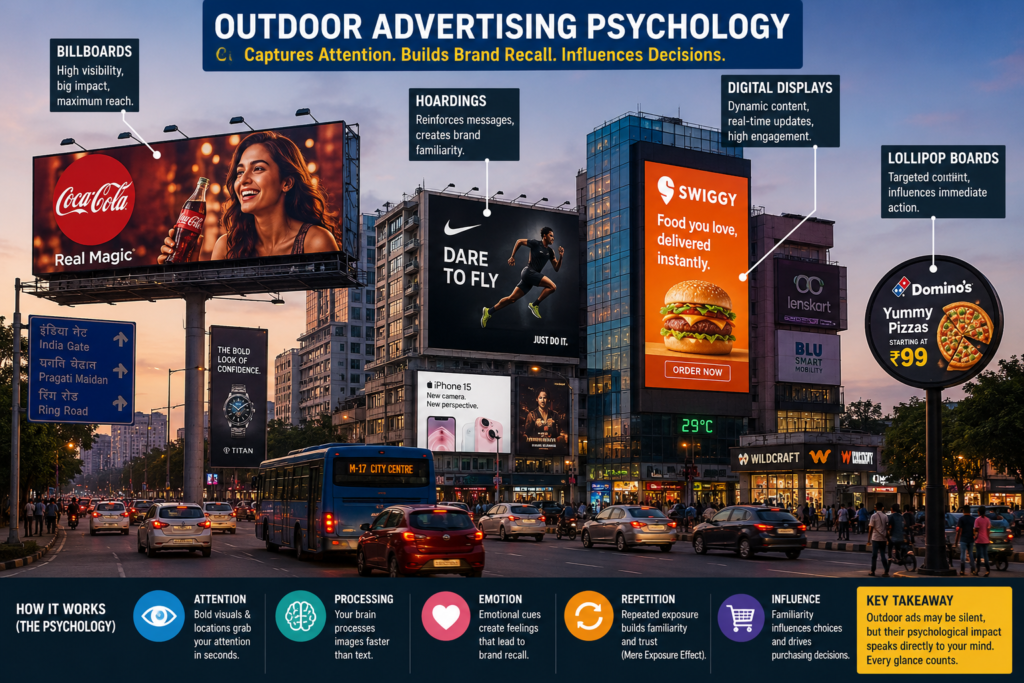
From giant highway billboards to neighborhood hoardings and compact lollipop boards, outdoor advertisements are carefully designed to shape what we remember, trust, and eventually buy.
We’ll discover why outdoor advertising remains one of the most effective forms of marketing, the psychology behind it, and what lessons we can apply as both a consumer and an aspiring marketer.
Table of Contents
- What Is Outdoor Advertising Psychology?
- What Are Billboards, Hoardings, and Lollipop Boards?
- Why Do Most People Underestimate Outdoor Advertising?
- Why Outdoor Advertising Psychology Works So Well
- The Psychology Behind Outdoor Advertising
- Real-World Examples of Outdoor Advertising Psychology
- How Different Outdoor Advertising Formats Work
- Why Some Billboards Become Unforgettable
- What We Can Learn from Outdoor Advertising Psychology
- Digital Out-of-Home (DOOH)
- Frequently Asked Questions (FAQs)
- Final Thoughts
What Is Outdoor Advertising Psychology?
Outdoor Advertising Psychology is the study of how outdoor advertisements influence people’s attention, memory, emotions, and buying decisions.
Unlike online ads that can be skipped or blocked, outdoor advertisements become part of our daily environment.
Think about where you see them:
- Highways
- Traffic signals
- Shopping malls
- Bus stops
- Airports
- Railway stations
- Busy intersections
We may not consciously read every advertisement, but our brain still processes many of them.
That’s why major brands continue investing in outdoor advertising despite the rise of digital marketing.
What Are Billboards, Hoardings, and Lollipop Boards?
Billboards
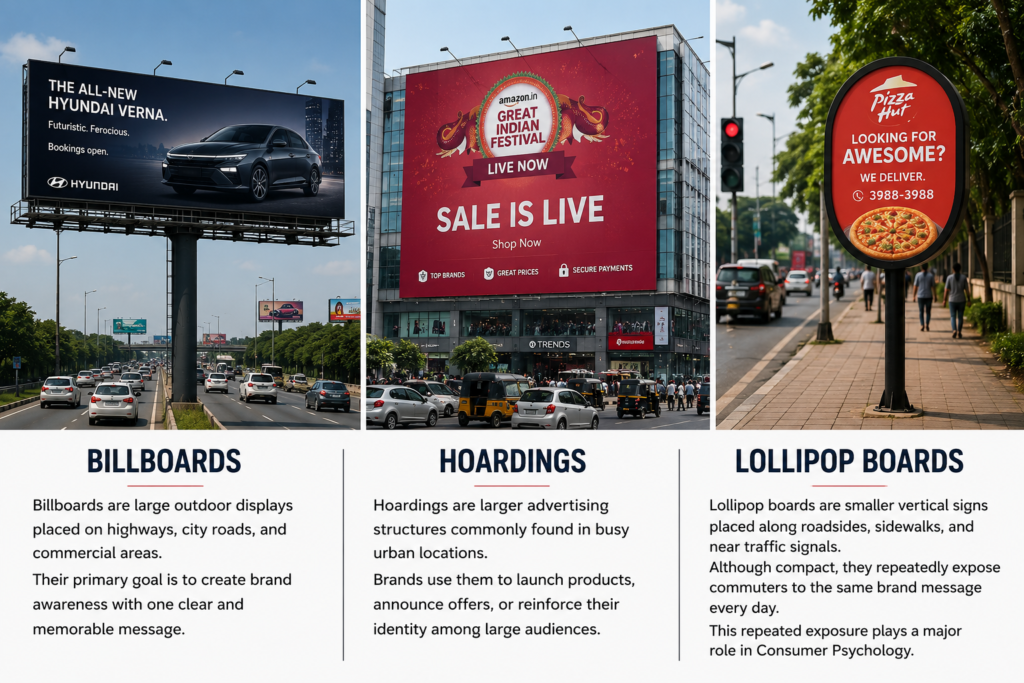
Billboards are large outdoor displays placed on highways, city roads, and commercial areas.
Their primary goal is to create brand awareness with one clear and memorable message.
Hoardings
Hoardings are larger advertising structures commonly found in busy urban locations.
Brands use them to launch products, announce offers, or reinforce their identity among large audiences.
Lollipop Boards
Lollipop boards are smaller vertical signs placed along roadsides, sidewalks, and near traffic signals.
Although compact, they repeatedly expose commuters to the same brand message every day.
This repeated exposure plays a major role in Consumer Psychology.
Why Do Most People Underestimate Outdoor Advertising?
Many people believe outdoor ads don’t affect them because they rarely stop to read every word.
This is one of the biggest misconceptions in marketing.
Our brains are designed to notice patterns, colors, shapes, and familiar logos almost instantly.
Even a quick glance can strengthen your memory of a brand.
Imagine passing the same coffee shop billboard every morning for a month.
The next time you feel like having coffee, which brand comes to mind first?
Very often, it’s the one you’ve seen repeatedly.
That’s not luck.
That’s Outdoor Advertising Psychology in action.
Why Outdoor Advertising Psychology Works So Well
It Captures Attention Within Seconds
People spend only a few seconds looking at an outdoor advertisement.
That’s why successful billboards use:
- A powerful headline
- Bold colors
- Minimal text
- Strong visuals
- A memorable logo
The goal isn’t to explain everything.
The goal is to leave a lasting impression.
It Builds Brand Recall Through Repetition
One of the strongest psychological principles in marketing is repetition.
The more often people see a brand, the more familiar it feels.
This concept is known as the Mere Exposure Effect.
When consumers repeatedly see the same billboard during their daily commute, they begin to trust the brand simply because it feels familiar.
This is why companies invest in long-term outdoor advertising campaigns.
It Influences Decisions Without Interrupting You
Unlike pop-up ads or autoplay videos, outdoor advertisements don’t interrupt your experience.
Instead, they quietly become part of your surroundings.
Because they don’t demand immediate action, people are often less resistant to them.
This subtle approach makes outdoor advertising remarkably effective.
The Psychology Behind Outdoor Advertising
The Mere Exposure Effect
Psychologists have found that repeated exposure to something often increases our preference for it.
Seeing the same advertisement every day doesn’t just improve recognition.
It can also make the brand feel more trustworthy.
This explains why well-known brands continue using billboards even when everyone already knows their name.
They’re reinforcing familiarity.
Attention Is Captured Before Logic Begins
Your brain processes visuals much faster than words.
Large images, bold colors, and simple messages grab attention almost instantly.
Only after your attention is captured does your brain begin evaluating the message.
This is why effective billboards focus on one clear idea rather than several competing messages.
Emotions Drive Memory
People remember how an advertisement makes them feel more than the exact words it uses.
A joyful family, a breathtaking destination, or an inspiring success story can create a stronger emotional connection than a long paragraph of text.
Great outdoor advertising doesn’t just communicate information.
It creates an experience that stays in your memory.
Simplicity Wins
Imagine driving at 60 km/h.
Would you read a paragraph on a billboard?
Probably not.
That’s why the best outdoor advertisements use:
- One headline
- One image
- One message
- One call to action
Less information often creates more impact.
Real-World Examples of Outdoor Advertising Psychology
Theory becomes much easier to understand when we see it in action. Let’s explore how different businesses use Outdoor Advertising Psychology to capture attention, build brand recall, and influence customer decisions.
Premium Restaurants

Luxury restaurants rarely overload their billboards with information.
Instead, they display:
- One stunning food image
- A simple brand logo
- A short tagline
Imagine driving past a billboard showing a beautifully plated steak with the words:
“An Experience Worth Remembering.”
There’s no menu or price list.
The advertisement focuses on creating an emotional connection rather than selling a meal.
This is Marketing Psychology at work. The restaurant wants you to remember the feeling, not just the food.
Cafés
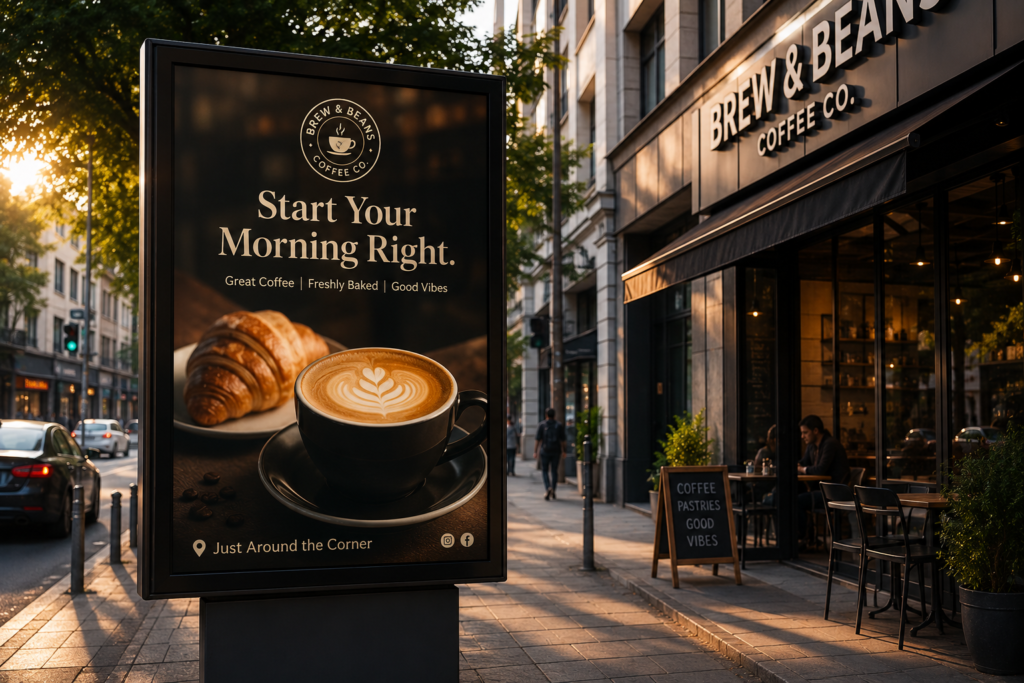
Modern cafés use outdoor advertising to create a lifestyle.
A roadside billboard might display:
- A steaming cup of coffee
- Warm colors
- Minimal text
- A relaxing morning scene
Instead of saying “Buy Coffee,” it communicates:
“Start Your Morning Right.”
The advertisement sells an experience rather than a product.
Five-Star Hotels

Luxury hotels master Outdoor Advertising Psychology by making their advertisements look elegant and uncluttered.
Their billboards usually include:
- Beautiful destination photography
- Clean typography
- Plenty of empty space
- One memorable message
Rather than listing room prices, they invite customers to imagine a luxurious vacation.
The less they say, the more curiosity they create.
Fast-Food Chains
Fast-food brands take a different approach.
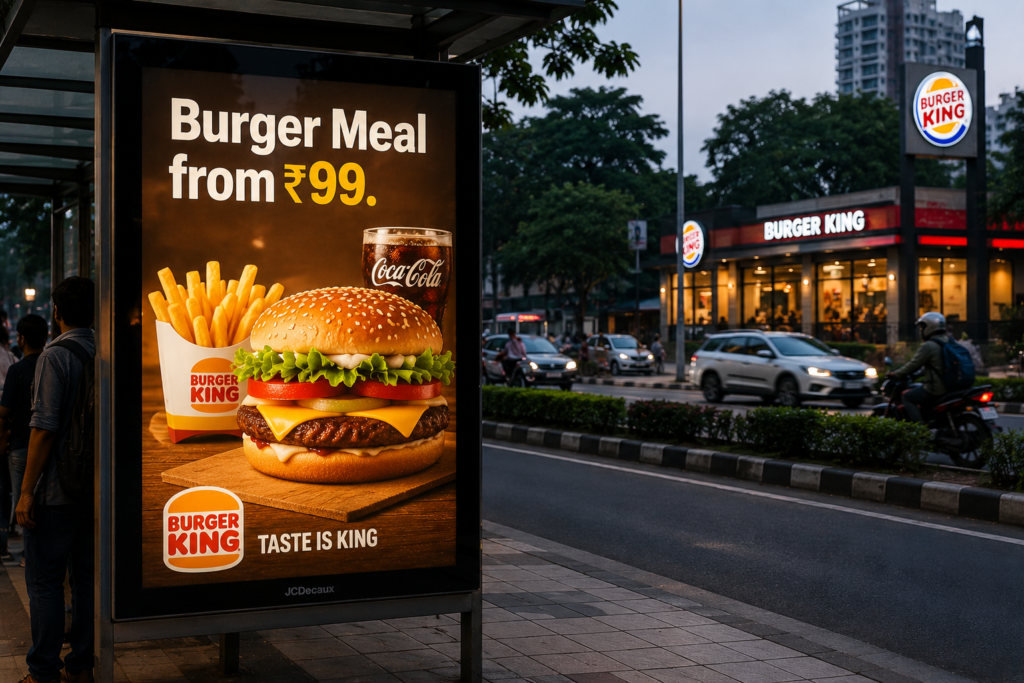
Companies like McDonald’s, KFC, and Burger King often use:
- Bright colors
- Large food images
- Short promotional offers
- Clear pricing
For example:
“Burger Meal from ₹99”
This immediately communicates value while grabbing attention within seconds.
Unlike luxury brands, fast-food businesses want customers to make quick decisions.
International Brands
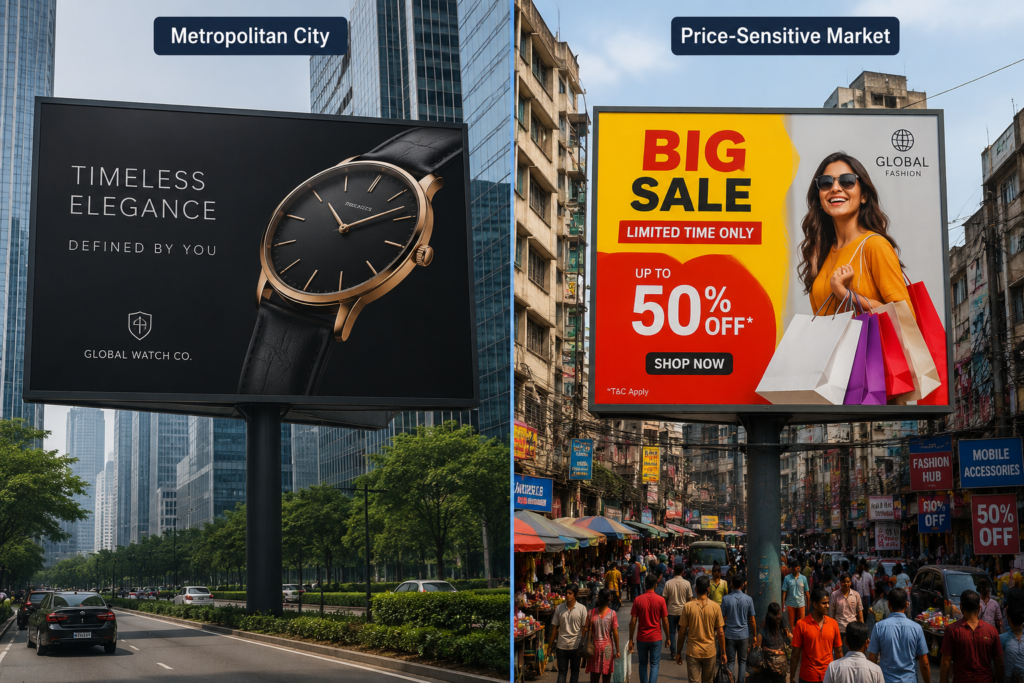
Global companies adapt their outdoor advertising based on local markets.
For example:
- A premium brand may use minimalist billboards in metropolitan cities.
- The same company may highlight discounts and offers in price-sensitive markets.
This demonstrates that Outdoor Advertising Psychology is flexible.
Successful brands don’t create one advertisement for everyone.
They understand the audience first.
How Different Outdoor Advertising Formats Work
Not every outdoor advertisement serves the same purpose.
Understanding the differences helps explain why brands choose one format over another.
| Format | Best Location | Main Goal |
|---|---|---|
| Billboards | Highways and busy roads | Maximum brand awareness |
| Hoardings | Cities, shopping areas, commercial streets | Product launches and promotions |
| Lollipop Boards | Outside stores, cafés, restaurants | Drive immediate walk-in customers |
| Digital Outdoor Displays | Airports, malls, metro stations | Dynamic and real-time communication |
Each format supports a different stage of the customer journey.
Industry Insights
Outdoor advertising continues to evolve alongside digital marketing.
Today’s campaigns often combine traditional billboards with digital experiences.
Examples include:
QR Codes
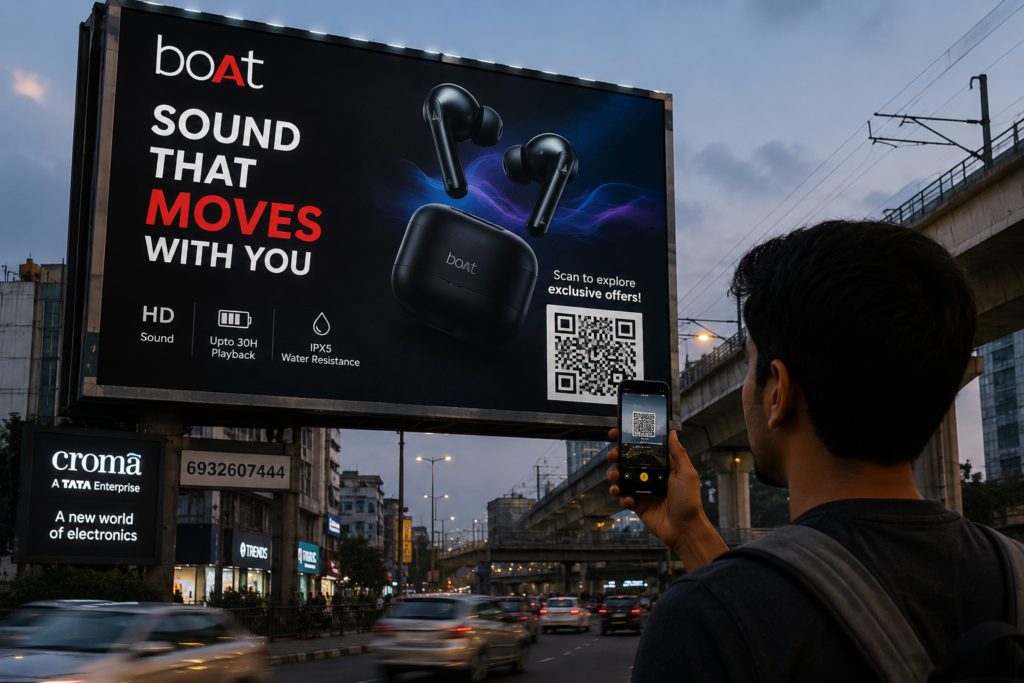
Customers scan a QR code directly from a billboard to:
- Visit a website
- Download an app
- Claim an offer
- View product details
Digital Billboards
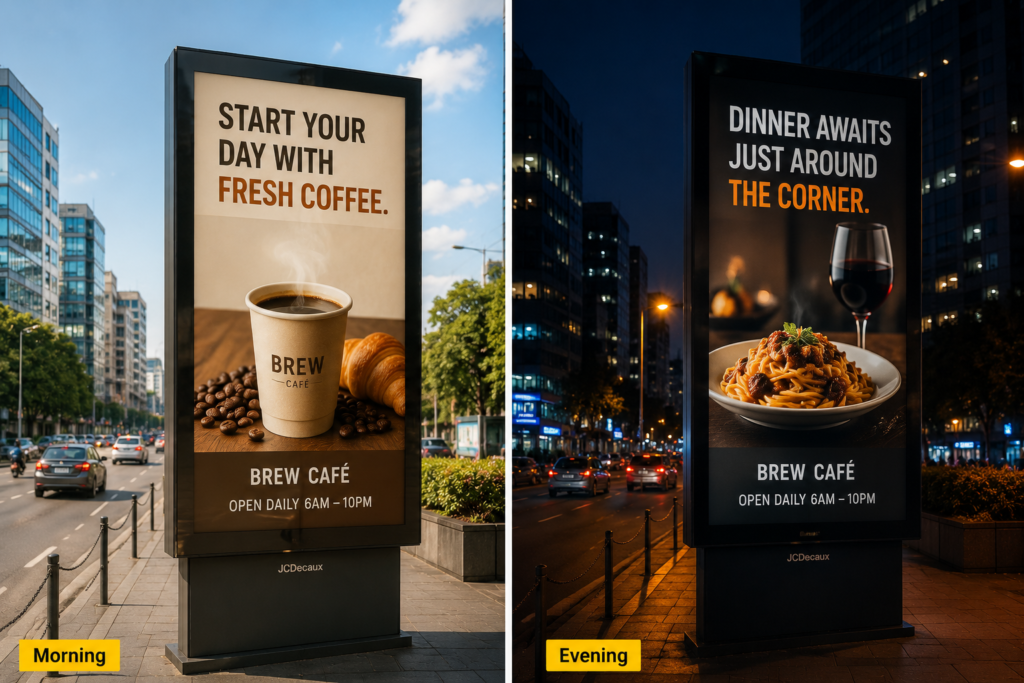
Unlike traditional billboards, digital displays can change messages throughout the day.
For example:
Morning:
“Start Your Day with Fresh Coffee.”
Evening:
“Dinner Awaits Just Around the Corner.”
The message changes according to customer behavior.
Location-Based Advertising
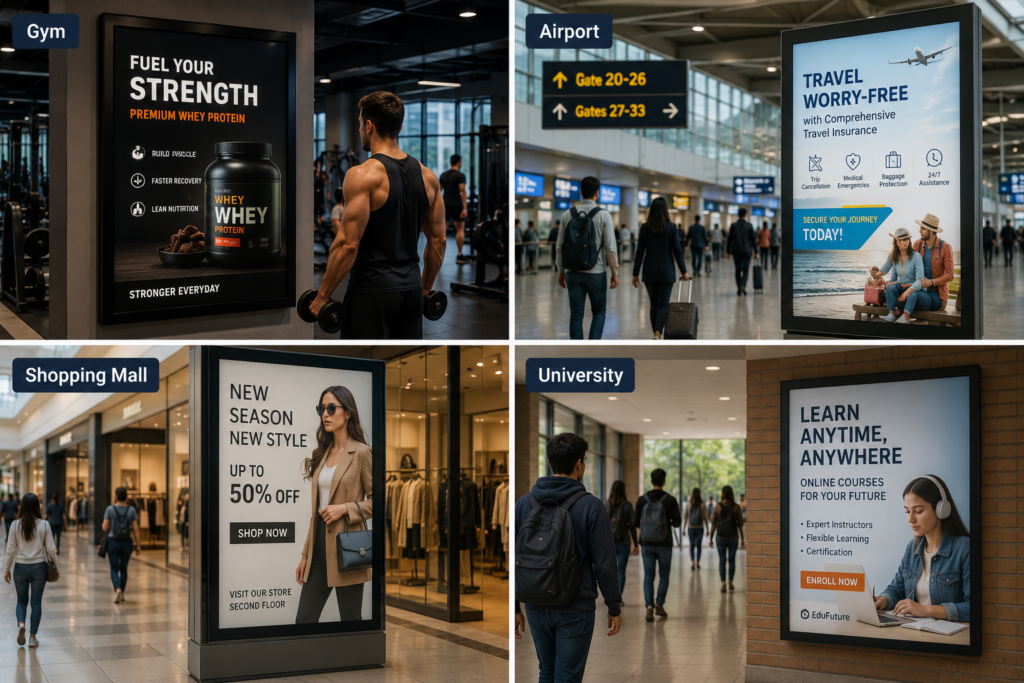
Brands carefully choose locations where customers are most likely to act.
Examples include:
- Gyms advertising protein products.
- Airports promoting travel insurance.
- Shopping malls promoting fashion brands.
- Universities advertising online learning platforms.
The advertisement reaches people when they’re most likely to be interested.
Why Some Billboards Become Unforgettable
Have you ever remembered a billboard months after seeing it?
That’s rarely accidental.
Successful outdoor advertisements usually follow five simple principles:
They Focus on One Message
Too much information creates confusion.
One idea is easier to remember.
They Use Powerful Visuals
Humans process images much faster than text.
A strong visual immediately captures attention.
They Use Large Fonts
Drivers and pedestrians should understand the message within a few seconds.
Small text often goes unread.
They Create Emotion
Whether it’s happiness, excitement, curiosity, or nostalgia, emotions help people remember brands.
They Repeat Consistently
Seeing the same advertisement multiple times strengthens brand recall.
Repetition builds familiarity, and familiarity builds trust.
What We Can Learn from Outdoor Advertising Psychology
Here are the biggest insights we can take away:
- We’ll realize our brain notices outdoor advertisements even when we think we’re ignoring them.
- We’ll understand how repetition quietly builds trust between customers and brands.
- We’ll begin spotting the psychological techniques used in billboards, hoardings, and lollipop boards every day.
- We’ll recognize that great advertisements focus on one clear message instead of overwhelming people with information.
- We’ll notice how colors, images, and emotions work together to capture attention within seconds.
- We’ll understand why successful brands invest in outdoor advertising despite the growth of digital marketing.
- We’ll become more aware of how brands influence buying decisions without interrupting our daily routine.
- We’ll start thinking like a marketer by analyzing advertisements wherever we go.
- We’ll discover that effective marketing isn’t always loud. Sometimes, the most powerful advertising works silently.
Common Mistakes Brands Make
Even experienced businesses sometimes misuse outdoor advertising.
Here are some common mistakes:
Too Much Text
A billboard isn’t a brochure.
People won’t stop to read long paragraphs.
Weak Visuals
If the image doesn’t grab attention, the message is easily forgotten.
Poor Placement
Even a brilliant advertisement won’t perform well if it’s placed where the target audience rarely visits.
No Clear Brand Identity
Customers should immediately recognize:
- Who the advertiser is
- What they’re offering
- Why it matters
Confusing advertisements rarely leave a lasting impression.
The Future of Outdoor Advertising Psychology
Outdoor advertising has evolved far beyond traditional billboards. Today, brands are combining technology with Marketing Psychology to create smarter and more engaging campaigns.
AI-Powered Billboards
Artificial Intelligence is helping brands display advertisements based on:
- Weather conditions
- Time of day
- Traffic density
- Customer demographics
- Local events
For example, a digital billboard may advertise cold drinks on a hot afternoon and switch to coffee promotions during a rainy evening.
This makes advertisements more relevant and increases customer engagement.
Digital Out-of-Home (DOOH)
Digital billboards allow brands to update advertisements instantly.
Unlike traditional billboards, Digital Out-of-Home (DOOH) advertising enables businesses to:
- Run multiple campaigns on one screen.
- Schedule ads at specific times.
- Display real-time information.
- Integrate QR codes for instant action.
This combination of technology and Outdoor Advertising Psychology creates more personalized customer experiences.
Interactive Outdoor Advertising
Modern advertisements are becoming interactive.
Brands now encourage people to:
- Scan QR codes.
- Visit landing pages.
- Watch videos.
- Participate in contests.
- Download mobile apps.
This transforms a simple billboard into a complete customer journey.
Frequently Asked Questions (FAQs)
What is Outdoor Advertising Psychology?
Outdoor Advertising Psychology is the study of how billboards, hoardings, and other outdoor advertisements influence people’s attention, emotions, memory, and buying decisions using psychological principles.
Why are billboards still effective in the digital age?
Unlike online advertisements, billboards cannot be skipped or blocked.
Their constant visibility helps build brand awareness, trust, and long-term customer recall.
What is the difference between a billboard and a hoarding?
A billboard is typically a large advertisement placed along highways and major roads to maximize visibility.
A hoarding is usually installed in busy commercial areas, shopping streets, or construction sites and often targets local audiences.
What are lollipop boards?
Lollipop boards are smaller roadside advertising signs commonly placed outside restaurants, cafés, retail stores, and local businesses to attract nearby customers.
Why do companies spend millions on outdoor advertising?
Because repeated exposure increases Brand Recall.
The more often people see a brand, the more familiar and trustworthy it becomes.
Which industries benefit the most from outdoor advertising?
Almost every industry can benefit, including:
- Restaurants
- Retail
- Real Estate
- Education
- Healthcare
- Tourism
- Automobile
- Banking
- Technology
- Entertainment
Final Thoughts
The next time you pass a billboard, a hoarding, or a lollipop board, don’t just look at it.
Study it.
Ask yourself:
- Why did the brand choose these colors?
- Why is the message so short?
- Why is this advertisement placed here?
- Why did this particular image capture my attention?
You’ll soon realize that every successful outdoor advertisement is carefully designed using Consumer Psychology, Marketing Psychology, and Outdoor Advertising Psychology.
Great marketing isn’t about shouting louder than everyone else.
It’s about communicating the right message, to the right audience, at the right moment.
Sometimes, the advertisements you barely notice become the ones you remember the most.
That’s the silent power of outdoor advertising.