Most People Think Brands Collaborate Simply to Increase Sales.
That’s only part of the story.
Have you noticed something interesting recently?
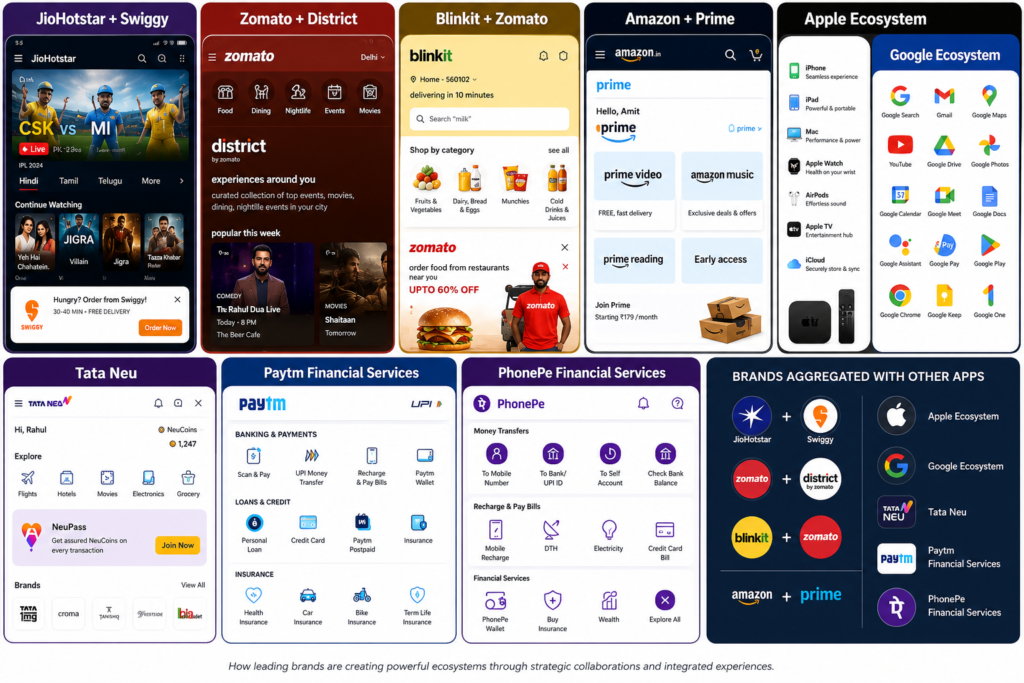
While watching an IPL match on JioHotstar, you suddenly see an option to order food from Swiggy without leaving the live stream.
A few days later, you open Zomato and discover you can book movie tickets, concerts, comedy shows, and sporting events through District.
Uber lets you connect Spotify.
Amazon partners with banks to offer credit cards.
Apple devices work seamlessly with each other.
Google connects Gmail, Maps, Drive, Photos, and YouTube into one experience.
At first glance, these seem like ordinary business partnerships.
But if you look deeper, you’ll notice something fascinating.
These companies aren’t just collaborating.
They’re changing how people make decisions.
So the real questions aren’t:
- Why did JioHotstar partner with Swiggy?
- Why did Zomato acquire District?
- Why are companies promoting another company’s products?
The real questions are:
- Why are so many brands collaborating today?
- Why don’t they simply build these services themselves?
- Why are ecosystems replacing standalone apps?
- What psychological principles make these partnerships so effective?
- What do companies gain when customers stay inside one ecosystem?
- More importantly, what can consumers learn from these hidden strategies?
This article answers all of those questions.
We’ll explore the marketing psychology, business strategy, and consumer behavior behind modern brand collaborations, using real-world examples from companies such as Zomato, Swiggy, JioHotstar, Apple, Google, Amazon, Uber, and many more.
By the end, you’ll never look at app partnerships the same way again.
Because you’ll realize something most consumers never notice.
The partnership isn’t the product.
Your convenience is.
Table of Contents
- Chapter 1: Why Are So Many Brands Collaborating Today?
- Chapter 2: The Hidden Marketing Strategy Behind Brand Collaborations
- Chapter 3: The Consumer Psychology Behind Every Brand Partnership
- Chapter 4: Real Case Studies: Why These Brand Collaborations Work
- Chapter 5: Why Everything Is Becoming an Ecosystem
- Chapter 6: Why This Strategy Is So Powerful
- Final Framework: The Hidden Psychology Behind Every Successful Collaboration
- Chapter 7: The Future of Brand Collaborations
- Final Thoughts: The Future Belongs to Ecosystems, Not Standalone Products
Chapter 1: Why Are So Many Brands Collaborating Today?
A decade ago, companies mostly competed with one another.
Food delivery companies focused on food.
Streaming platforms focused on entertainment.
Banks focused on banking.
Retail companies focused on shopping.
Everyone stayed in their own lane.
Today, that world looks completely different.
A streaming platform can help you order dinner.
A food delivery app can help you book a concert.
A payment app can help you buy insurance.
An e-commerce platform can provide loans.
A ride-hailing app can play your favorite music.
The boundaries between industries are disappearing.
Why?
Because companies have realized something extremely valuable.
Customers don’t think in industries.
They think in experiences.
Consumers Don’t Buy Products. They Complete Tasks.
Imagine it’s Saturday evening.
You’re watching an IPL match.
Halfway through the game, you start feeling hungry.
What happens next?
Without an integrated experience, your journey looks like this:
Watch IPL
↓
Pause the match
↓
Unlock your phone
↓
Open Swiggy
↓
Search for a restaurant
↓
Place an order
↓
Return to Hotstar
↓
Resume watching
Now imagine a different experience.
You’re watching the match.
A food offer appears.
You tap once.
Order your meal.
Continue watching without interruption.
Which experience feels easier?
Obviously the second one.
That’s exactly why companies collaborate.
Not because collaboration is fashionable.
Because every extra step increases the chances that customers will abandon the journey.
Marketing isn’t only about convincing people.
It’s also about removing obstacles.
The Cost of Making Customers Think
One of the biggest principles in consumer psychology is this:
The human brain naturally chooses the easiest available option.
Imagine two coffee shops.
Coffee Shop A
Requires:
- Download an app
- Create an account
- Verify your email
- Add your payment method
Coffee Shop B
Allows you to order in two taps using an app you already use.
Which one will most people choose?
The second.
Not necessarily because the coffee is better.
Because the process is easier.
Companies understand this better than anyone.
Every additional click…
Every additional login…
Every additional app…
Creates friction.
And friction reduces sales.
Brand collaborations remove friction.
The Shift from Competition to Cooperation
Many people assume companies always want to beat their competitors.
Sometimes they do.
But in today’s digital economy,
cooperation often creates more value than competition.
Let’s take an example.
Suppose Swiggy wants to attract cricket fans during IPL.
It has two options.
Option 1
Spend hundreds of crores on advertising.
Hope people notice.
Hope they install the app.
Hope they place an order.
Option 2
Partner with the platform where millions of cricket fans are already watching IPL.
Which option sounds smarter?
Exactly.
Instead of buying attention,
they borrow it.
That’s one of the biggest reasons partnerships have become so common.
Consumers Want Seamless Experiences
Think about how you use technology today.
You don’t think:
“I need a streaming platform.”
You think:
“I want entertainment.”
You don’t think:
“I need a payment gateway.”
You think:
“I want to pay quickly.”
You don’t think:
“I need an event booking platform.”
You think:
“I want to attend a concert.”
Consumers care about outcomes.
Not platforms.
Businesses have started designing around those outcomes.
Why Companies No Longer Want to Be “Just an App”
Take Zomato as an example.
Initially,
its purpose was simple.
Deliver food.
Today,
its ecosystem includes:
- Restaurant discovery
- Dining experiences
- Blinkit
- District
- Event bookings
- Movie tickets
Why?
Because if customers leave the app after ordering food,
the relationship ends.
But if they stay to book a movie,
reserve a restaurant,
or purchase concert tickets,
the relationship grows stronger.
Every additional service increases customer engagement.
The New Goal: Own More Moments in a Customer’s Day
Earlier,
companies asked:
“How do we sell more?”
Today’s companies ask a different question.
“How do we become part of more moments in a customer’s life?”
Imagine a single Saturday.
Morning:
Order groceries.
Afternoon:
Book movie tickets.
Evening:
Reserve dinner.
Night:
Order dessert.
If all of this happens within one ecosystem,
the company doesn’t just gain another transaction.
It gains another opportunity to understand, serve, and retain the customer.
That’s far more valuable.
The Rise of the Platform Economy
Traditional businesses sold products.
Modern digital platforms connect people, businesses, and services.
Think about:
- Amazon
- Apple
- Tata Neu
- Zomato
- PhonePe
They’re no longer selling one product.
They’re building ecosystems where different services reinforce one another.
Each new service makes the entire platform more useful.
And the more useful it becomes,
the harder it is for customers to leave.
Why This Trend Will Continue
As technology evolves,
customers increasingly expect everything to work together.
People no longer ask:
“Can this app do one thing well?”
They ask:
“Can this app simplify my entire experience?”
That’s why collaborations are becoming more common.
The future belongs to connected experiences.
Not isolated products.
Key Takeaways
- Modern consumers value convenience more than ever before.
- Companies collaborate to reduce friction and simplify customer journeys.
- Businesses increasingly compete through ecosystems rather than individual products.
- Partnerships allow companies to borrow attention instead of buying it.
- The objective isn’t simply increasing sales. It’s becoming part of more moments in a customer’s daily life.
Chapter 2: The Hidden Marketing Strategy Behind Brand Collaborations
Imagine you’re the CEO of a fast-growing company.
You have two choices.
Option A
Spend ₹500 crore building:
- A food delivery network
- Delivery partners
- Warehouses
- Customer support
- Restaurants
- Logistics
It could take years.
There is still no guarantee customers will use it.
Option B
Partner with a company that has already spent years building all of that.
You launch in weeks instead of years.
Which option would you choose?
Most successful companies choose Option B.
Not because they’re incapable of building it themselves.
Because it’s smarter.
Welcome to the hidden world of Strategic Brand Collaborations.
Most consumers think these partnerships are about advertisements.
In reality, they’re about reducing costs, increasing customer value, and building powerful ecosystems.
What Is a Brand Collaboration?
A Brand Collaboration is a strategic partnership where two or more companies work together to create greater value for customers while helping each business achieve its own goals.
Unlike sponsorships or advertisements, collaborations are designed to create a win-win-win situation.
- The customer benefits.
- Brand A benefits.
- Brand B benefits.
Think of it as two puzzle pieces joining together to complete a bigger picture.
For example:
- JioHotstar brings entertainment.
- Swiggy brings food delivery.
Separately,
they solve one problem each.
Together,
they create a better IPL experience.
Collaboration Is About Solving Bigger Customer Problems
Customers don’t wake up thinking,
“Today I need three different apps.”
Instead, they think,
“I want an enjoyable evening.”
That evening might include:
- Watching cricket
- Ordering pizza
- Booking movie tickets
- Paying online
Companies have realized something powerful.
Customers don’t care who provides each service.
They care that everything works together effortlessly.
The easier the experience,
the happier the customer.
Why Build Everything Yourself When Someone Already Has It?
Let’s imagine Zomato wanted to enter the event booking industry.
There are two ways.
Build Everything
- Hire hundreds of engineers.
- Build a ticketing platform.
- Partner with event organizers.
- Market the new product.
- Build customer trust.
This could take years.
Acquire or Partner
Work with an existing company that already has:
- Technology
- Customers
- Experience
- Industry relationships
Growth becomes much faster.
This is why companies often collaborate instead of starting from zero.
It’s not a shortcut.
It’s a strategy.
Customer Acquisition Cost (CAC)
One of the most important concepts in marketing is Customer Acquisition Cost, commonly called CAC.
What Is Customer Acquisition Cost?
Customer Acquisition Cost is the total amount a company spends to acquire one new customer.
This includes expenses such as:
- Advertising
- Influencer marketing
- Referral programs
- Cashback
- Sales teams
- Promotional campaigns
Imagine this.
A company spends ₹10 crore on advertising.
It acquires 2 lakh new users.
The average acquisition cost is ₹500 per customer.
Now imagine another company reaches those same customers through a strategic partnership.
Instead of spending ₹500 to attract one customer,
it reaches customers already using another trusted platform.
That’s why partnerships can dramatically reduce acquisition costs.
Why Borrow Customers Instead of Buying Them?
Think about a busy shopping mall.
Would a new coffee shop rather:
Build a mall from scratch?
Or
Open a store inside an existing mall with thousands of daily visitors?
The answer is obvious.
The mall has already attracted customers.
The coffee shop simply benefits from existing foot traffic.
Brand collaborations work in exactly the same way.
Instead of buying expensive attention,
companies borrow it.
Customer Lifetime Value (LTV)
If CAC explains how much it costs to acquire a customer,
Customer Lifetime Value (LTV) explains how valuable that customer becomes over time.
What Is Customer Lifetime Value?
Customer Lifetime Value is the total revenue a business expects to earn from one customer throughout their relationship.
Imagine two customers.
Customer A
Downloads the app.
Orders food once.
Never returns.
Value to the company:
Very low.
Customer B
Uses the app for:
- Food delivery
- Grocery shopping
- Movie tickets
- Concert bookings
- Dining reservations
The same customer now generates far greater value.
Companies don’t just want more customers.
They want customers who stay longer and use more services.
That’s where collaborations become powerful.
One Customer, Many Services
Earlier, businesses focused on selling one product.
Today’s companies think differently.
Instead of asking,
“How do we get another customer?”
They ask,
“How can one customer use five different services?”
For example:
Morning:
Coffee subscription.
Afternoon:
Food delivery.
Evening:
Movie tickets.
Night:
Cab booking.
One customer.
Multiple services.
Higher lifetime value.
Cross-Selling: The Hidden Engine Behind Collaborations
One of the biggest reasons brands collaborate is Cross-Selling.
What Is Cross-Selling?
Cross-selling means offering related products or services to existing customers.
Example:
You buy a laptop.
The website suggests:
- Laptop bag
- Wireless mouse
- Keyboard
- Antivirus
The company isn’t finding a new customer.
It’s increasing the value of an existing one.
The same principle applies to digital ecosystems.
Watching IPL?
Order food.
Booking a movie?
Reserve a restaurant.
Buying groceries?
Purchase household essentials.
The customer journey expands naturally.
Ecosystem Strategy
Perhaps the most powerful business strategy today is building an ecosystem.
What Is an Ecosystem Strategy?
An ecosystem strategy means creating multiple connected products and services that work together to solve more customer problems.
Imagine two companies.
Company A
Sells one product.
Customers leave after purchasing.
Company B
Offers:
- Shopping
- Payments
- Entertainment
- Travel
- Insurance
- Food delivery
Customers spend more time inside the platform.
Which company has more opportunities to grow?
Obviously,
Company B.
The Flywheel Effect
Successful collaborations create something called the Flywheel Effect.
Think of a heavy wheel.
The first push requires enormous effort.
But once it starts moving,
every push makes it spin faster.
Businesses work the same way.
More services
↓
More customer engagement
↓
More trust
↓
More purchases
↓
More partnerships
↓
More customers
↓
Even more growth
Growth begins to feed itself.
Platform Economy
Traditional businesses sold products.
Modern platforms connect multiple participants.
For example:
A food delivery platform connects:
- Customers
- Restaurants
- Delivery partners
A streaming platform connects:
- Viewers
- Advertisers
- Brands
- Merchants
The more participants involved,
the more valuable the platform becomes.
This is known as the Platform Economy.
Collaborations make platforms even stronger because they bring together complementary services instead of building everything independently.
Trust Is Easier to Borrow Than Build
Building trust takes years.
Borrowing trust through the right partnership can happen much faster.
Imagine you’ve trusted Swiggy for years.
Now Swiggy introduces another trusted service within its app.
Your hesitation is lower because your confidence in the original platform influences how you perceive the new experience.
This is called Trust Transfer.
It’s one of the most valuable outcomes of strategic collaborations.
Why Collaboration Is Better Than Competition
Companies used to think,
“How can we beat our competitors?”
Today, many ask,
“Who can help us create a better customer experience?”
The answer often isn’t another product.
It’s another partnership.
Modern businesses compete less through isolated products and more through interconnected ecosystems.
That’s why collaborations are becoming one of the defining strategies of the digital economy.
Key Takeaways
- Brand collaborations are strategic partnerships designed to create value for customers and businesses.
- Companies collaborate because building everything internally is often slower, costlier, and riskier.
- Partnerships help reduce Customer Acquisition Cost (CAC) by reaching existing audiences.
- Customer Lifetime Value (LTV) increases when customers use multiple services within the same ecosystem.
- Cross-selling enables companies to expand customer relationships without constantly acquiring new users.
- Ecosystem strategies and platform thinking are replacing standalone business models.
- Trust is one of the most valuable assets in a collaboration, and the right partnership can accelerate customer adoption.
Chapter 3: The Consumer Psychology Behind Every Brand Partnership
Imagine this.
It’s Sunday evening.
You’re watching an IPL match.
Your favorite team needs 18 runs in the last over.
Suddenly, a small banner appears.
“Hungry? Order your favorite meal in just one tap.”
Without thinking too much, you place an order.
Five minutes later, you’re back to watching the match.
No switching apps.
No searching.
No interruption.
Later, you realize something.
You didn’t actually choose between food delivery apps.
You simply tapped the option that was already there.
This is where consumer psychology begins.
Most people believe partnerships work because they’re convenient.
That’s true.
But convenience is only the visible layer.
Behind every successful collaboration lies a deep understanding of how the human brain makes decisions.
The companies aren’t just connecting apps.
They’re designing experiences that align with how people naturally think.
Let’s uncover the psychology behind it.
1. Convenience Bias: Our Brain Chooses the Path of Least Resistance
Imagine two roads leading to the same destination.
Road A:
- Smooth
- Straight
- Well-lit
Road B:
- Longer
- Filled with traffic
- Several turns
Which road would you choose?
Almost everyone chooses the easier one.
The same thing happens digitally.
When an app allows you to complete a task without switching platforms, your brain naturally prefers it.
Psychologists call this Convenience Bias.
People don’t always choose the best option.
They often choose the easiest option.
Why It Matters to Businesses
Every additional step reduces conversions.
For example:
Watching IPL
↓
Leave the app
↓
Unlock phone
↓
Open another app
↓
Search restaurant
↓
Order food
↓
Return to the match
Many users abandon the journey halfway.
Now compare it with:
Watching IPL
↓
Tap “Order Food”
↓
Continue watching
One tap.
Much easier.
One small reduction in effort can create millions of additional orders.
Consumer Lesson
Convenience is valuable.
But convenience shouldn’t replace comparison.
Before accepting the first offer you see,
ask yourself:
“Is this truly the best option, or simply the easiest one?”
Sometimes the answer is the same.
Sometimes it isn’t.
Learning to pause before deciding can save money and improve your choices.
2. Trust Transfer: Why We Trust Unknown Services Faster
Suppose a completely unknown app appears today.
It asks you to:
- Add your payment details
- Save your address
- Place your first order
Would you feel comfortable?
Probably not.
Now imagine the exact same service appears inside an app you’ve trusted for five years.
Your hesitation immediately decreases.
Why?
Because trust transfers.
What Is Trust Transfer?
Trust Transfer occurs when confidence in one brand influences how consumers perceive another brand introduced through a partnership.
For example,
if you’ve trusted:
- Apple
- Amazon
- Swiggy
- Zomato
for years,
you’re more likely to trust a new feature they recommend.
Your brain thinks:
“If this company recommends it, it must be reliable.”
That’s one reason collaborations accelerate customer adoption.
Consumer Lesson
Trust is powerful.
But it should never replace independent thinking.
A trusted platform can introduce excellent products.
It can also introduce products that simply fit its business strategy.
Always evaluate whether the recommendation truly meets your needs.
3. Habit Formation: The More You Repeat, the Less You Think
Have you noticed something?
Many people no longer say,
“Let’s order food.”
Instead they say,
“Let’s use Swiggy.”
Or,
“I’ll PhonePe you.”
The brand becomes the habit.
How Habits Form
Every habit follows a simple loop.
Cue
↓
Action
↓
Reward
Watching cricket
↓
Order food
↓
Enjoy dinner
Repeat this enough times,
and your brain connects the activities.
Soon,
watching IPL automatically reminds you of ordering food.
Companies don’t create habits overnight.
They strengthen existing routines.
Consumer Lesson
Habits save mental effort.
But they can also reduce awareness.
Occasionally ask yourself:
- Am I choosing this because it’s the best?
- Or simply because I’ve always done it?
Breaking automatic behavior helps you make smarter decisions.
4. The One-Stop Shopping Effect
Imagine planning a weekend.
You need to:
- Book movie tickets
- Reserve dinner
- Arrange transport
- Buy snacks
Would you rather use:
Four different apps?
Or
One platform that handles everything?
Most people choose one.
This is called the One-Stop Shopping Effect.
People enjoy completing multiple tasks in one place.
It saves:
- Time
- Effort
- Decision-making
That’s why ecosystems are growing.
Why Businesses Love It
Every additional service keeps customers inside the platform longer.
Longer engagement creates:
- More opportunities
- More purchases
- Stronger relationships
The customer wins through convenience.
The business wins through retention.
Consumer Lesson
Integrated services can genuinely simplify life.
But don’t assume one platform always offers the best price or experience.
Occasionally compare alternatives.
Convenience and value are not always the same.
5. Decision Fatigue: Why Fewer Choices Feel Better
Imagine entering a restaurant with a menu containing 800 dishes.
How would you feel?
Probably overwhelmed.
Now imagine another restaurant with:
- 25 carefully selected dishes.
Choosing becomes easier.
This is called Decision Fatigue.
The more decisions we make,
the more mentally tired we become.
Brands reduce this fatigue by presenting:
- Recommended options
- Curated bundles
- Integrated services
Instead of asking customers to search,
they guide them.
Example
Rather than asking:
“Which food delivery app should I use?”
The platform simply presents one option.
The decision disappears.
Consumer Lesson
Recommendations are helpful.
But remember,
they’re not always neutral.
Sometimes they’re optimized for your convenience.
Sometimes they’re optimized for business partnerships.
Learning to recognize the difference is a valuable life skill.
6. Cognitive Fluency: Familiar Feels Better
Have you ever wondered why most payment apps have similar layouts?
It’s because familiar experiences require less mental effort.
This principle is called Cognitive Fluency.
The easier something feels,
the more trustworthy it appears.
That’s why collaborations often use:
- Familiar logos
- Consistent design
- Simple navigation
The brain interprets familiar experiences as safer.
Consumer Lesson
Ease of use doesn’t always indicate superior quality.
It simply means the experience feels more natural.
Don’t confuse familiarity with excellence.
7. Contextual Marketing: The Right Offer at the Right Moment
Timing often matters more than the offer itself.
Imagine receiving:
A pizza coupon at 9 AM.
Useful?
Probably not.
Now imagine receiving the same offer during the second innings of an IPL match.
Completely different.
The offer hasn’t changed.
The context has.
Why Context Matters
Companies increasingly deliver offers when they match your current activity.
Watching sports?
Food appears.
Booking flights?
Hotels appear.
Buying a smartphone?
Accessories appear.
This increases the likelihood of action because the offer feels relevant.
Consumer Lesson
Relevant recommendations can save time.
But relevance doesn’t automatically mean necessity.
Ask:
“Would I have purchased this if it hadn’t appeared right now?”
8. The Attention Economy: Every Second Counts
Today’s companies compete for something even more valuable than money.
Your attention.
Every minute you spend inside an app is valuable.
Why?
Because attention creates opportunities.
Opportunities create transactions.
Transactions create revenue.
Collaborations help companies keep your attention longer without making you leave the platform.
That’s why integrated experiences are becoming so common.
Consumer Lesson
Your attention is a limited resource.
Spend it intentionally.
The longer you stay inside one ecosystem,
the more products and services you’ll encounter.
Not every suggestion deserves your time.
9. Network Effects: Why Bigger Platforms Keep Getting Bigger
Imagine joining a messaging app that none of your friends use.
Would you stay?
Probably not.
Now imagine joining WhatsApp.
Everyone is already there.
That’s the power of Network Effects.
The more people use a platform,
the more valuable it becomes.
Brand collaborations strengthen this effect.
More services attract more users.
More users attract more partners.
More partners create even more value.
The cycle continues.
Consumer Lesson
Popular platforms often provide better convenience.
However,
being popular doesn’t always mean they’re the perfect fit for your individual needs.
Choose platforms based on your priorities,
not just their popularity.
Bringing It All Together
At first glance,
brand collaborations seem like ordinary partnerships.
But underneath,
they’re carefully designed around human psychology.
Every collaboration aims to reduce effort,
increase trust,
strengthen habits,
and keep customers inside an ecosystem.
The technology matters.
But understanding how people think matters even more.
That’s why some collaborations become unforgettable,
while others disappear.
They succeed because they align with human behavior,
not because they force people to change it.
Key Takeaways
- Convenience Bias encourages people to choose the easiest available option.
- Trust Transfer helps consumers adopt new services introduced by brands they already know.
- Habit Formation transforms repeated actions into automatic behaviors.
- The One-Stop Shopping Effect makes integrated ecosystems more attractive than separate apps.
- Decision Fatigue explains why curated experiences often outperform endless choices.
- Cognitive Fluency shows why familiar interfaces and experiences feel more trustworthy.
- Contextual Marketing delivers the right offer at the right moment.
- The Attention Economy turns customer attention into one of the most valuable business assets.
- Network Effects help ecosystems become stronger as more users and partners join.
Chapter 4: Real Case Studies: Why These Brand Collaborations Work
First,
brand collaborations aren’t random.
Second,
they’re deeply rooted in consumer psychology.
But theory becomes far more interesting when we see it in the real world.
In this chapter, we’ll analyze some of the biggest brand collaborations in recent years.
Not from the perspective of advertisements.
Not from the perspective of business news.
Instead, we’ll answer four questions for every collaboration.
✔ Why did the companies collaborate?
✔ What marketing strategy are they using?
✔ Which psychological principles influence consumers?
✔ What can businesses and consumers learn from it?
Let’s begin.
Case Study 1: JioHotstar × Swiggy
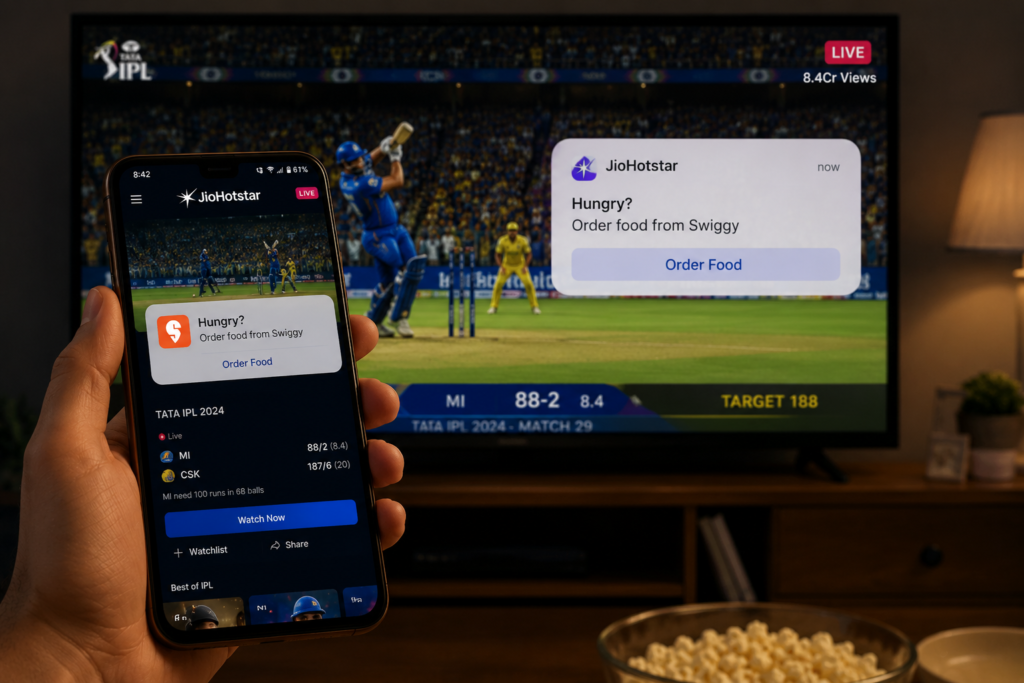
The Situation
Imagine you’re watching the IPL final.
It’s 8:30 PM.
Your favorite team is batting.
Suddenly, you feel hungry.
Normally, you would:
Pause the match
↓
Open Swiggy
↓
Choose a restaurant
↓
Order food
↓
Return to the match
Now imagine another experience.
Without leaving JioHotstar,
you tap “Order Food.”
Continue watching.
Food arrives before the innings break.
One small change.
A completely different customer journey.
Business Objective
At first glance,
it looks like a simple promotion.
Actually,
it’s much bigger.
JioHotstar wants:
- Higher engagement
- Longer watch time
- Better user experience
Swiggy wants:
- More food orders
- Access to millions of IPL viewers
- Lower customer acquisition costs
Both companies win.
Marketing Strategy
This partnership combines several marketing strategies.
- Contextual Marketing
- Cross-Selling
- Ecosystem Marketing
- Embedded Commerce
Instead of interrupting the customer,
they become part of the customer’s activity.
Consumer Psychology
Several psychological principles work together.
Convenience Bias
No app switching.
Less effort.
Higher probability of ordering.
Habit Stacking
Watching IPL
Ordering Food
↓
One combined habit
Soon,
IPL automatically reminds people of food delivery.
Context Effect
People naturally crave snacks and meals while watching sports.
The timing makes the offer feel relevant.
Business Lesson
Don’t ask customers to leave your platform.
Bring the solution to them.
Reducing even one unnecessary step can significantly improve conversions.
Consumer Lesson
Integrated experiences save time.
But before ordering,
compare prices or restaurant availability if you have alternatives.
Convenience should support your decision,
not replace it.
Case Study 2: Zomato × District
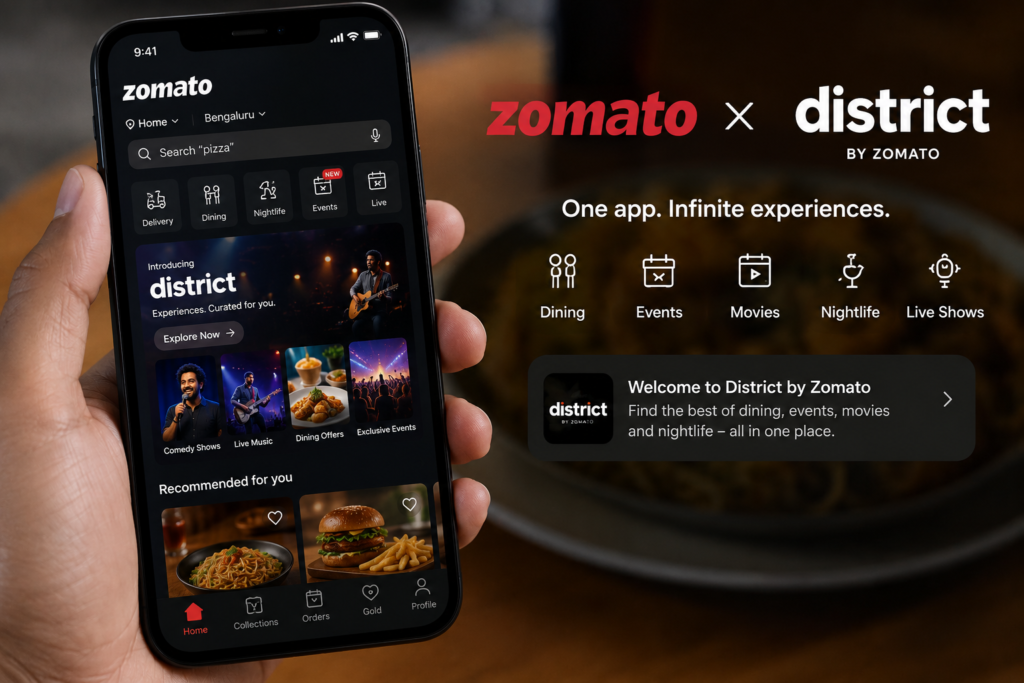
Most people think Zomato is a food delivery company.
Not anymore.
Today,
Zomato wants to own your entire “going out” experience.
Imagine planning Saturday evening.
You want to:
Watch a movie
↓
Book dinner
↓
Attend a concert
↓
Reserve a table
Instead of using multiple apps,
District brings these experiences together.
Business Objective
Increase Customer Lifetime Value.
Instead of earning from one dinner,
earn from the customer’s entire evening.
Marketing Strategy
This partnership demonstrates:
- Ecosystem Strategy
- Cross-Selling
- Customer Retention
- Experience Marketing
Consumer Psychology
One-Stop Shopping Effect
The fewer apps consumers use,
the happier they become.
Decision Fatigue
One app
instead of
four apps.
Fewer decisions.
Less mental effort.
Trust Transfer
Customers already trusted Zomato.
That trust extends to District.
Business Lesson
Don’t stop after solving one customer problem.
Ask:
“What problem comes immediately after this one?”
That’s where your next opportunity exists.
Consumer Lesson
One platform can make planning easier.
However,
occasionally compare ticket prices,
service charges,
and availability before completing the booking.
Case Study 3: Blinkit × Zomato
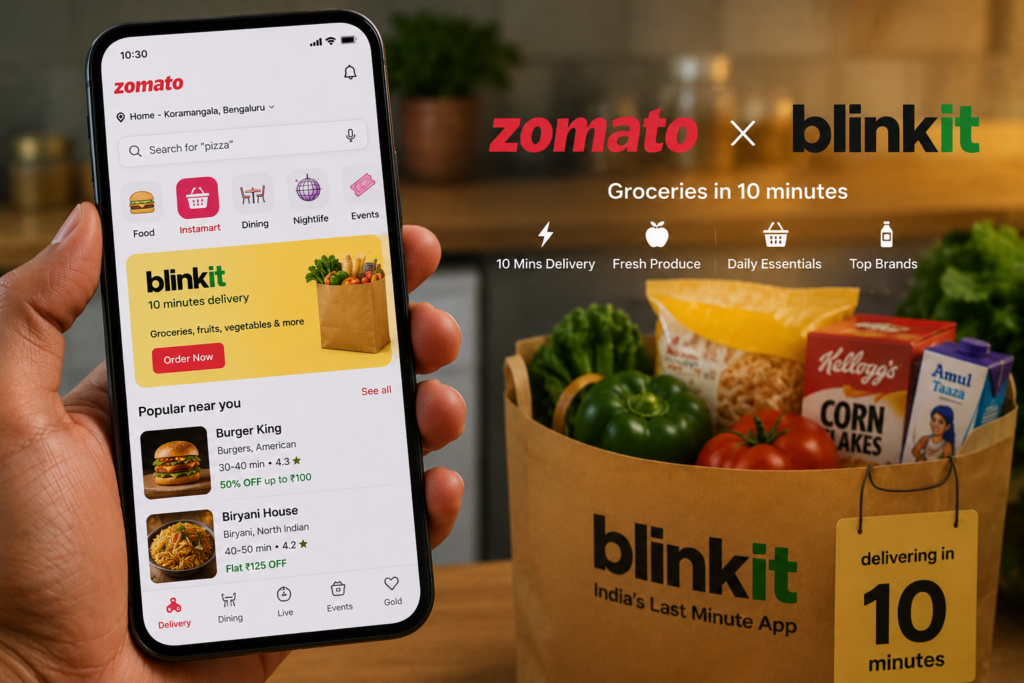
Years ago,
ordering food and buying groceries were separate activities.
Today,
the boundary is disappearing.
Ordered dinner?
Need soft drinks?
Forgot dessert?
Need ice cream?
Blinkit completes the experience.
Business Objective
Increase purchase frequency.
People order food occasionally.
People buy groceries frequently.
Combining both creates more customer touchpoints.
Marketing Strategy
- Ecosystem Expansion
- Cross-Selling
- Habit Formation
Consumer Psychology
Convenience Bias
Everything happens inside one ecosystem.
Frequency Effect
More reasons to open the app.
More habits formed.
Business Lesson
Products that customers use frequently create stronger long-term relationships.
Consumer Lesson
Buying everything from one platform feels effortless,
but compare delivery fees and product prices with local stores or competitors when making larger purchases.
Case Study 4: Uber × Spotify
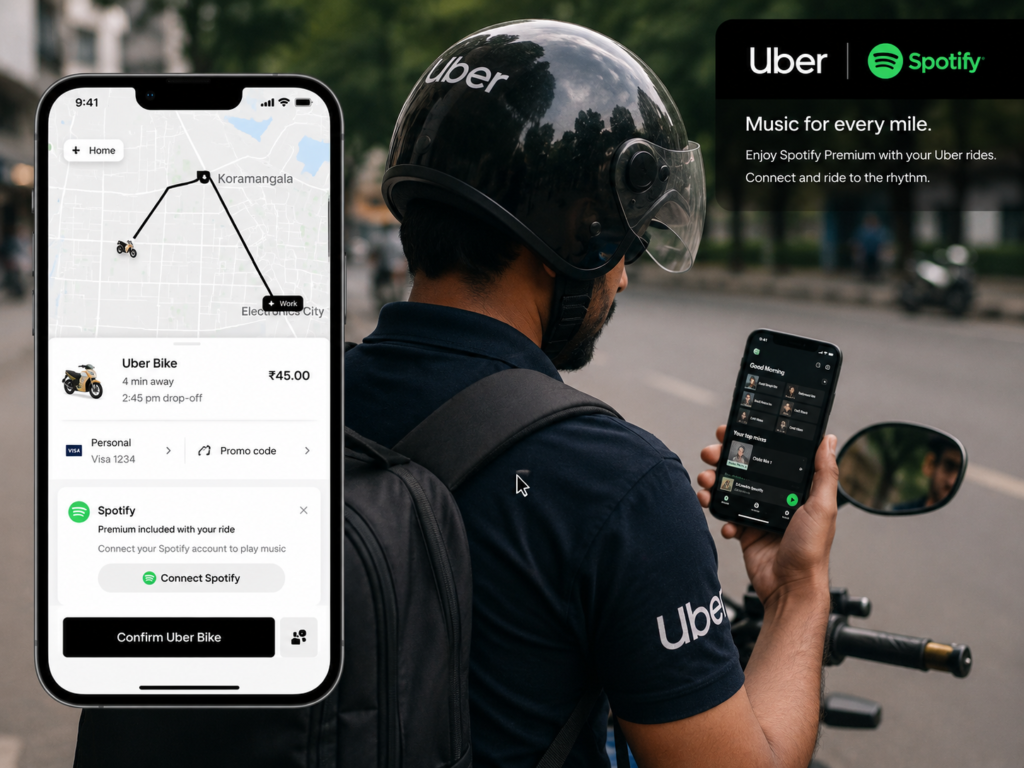
This partnership isn’t about transportation.
It’s about personalization.
Imagine entering an Uber.
Your favorite playlist starts automatically.
Nothing changed about the car.
Nothing changed about the destination.
But the ride feels different.
Why?
Because the experience feels personal.
Business Objective
Differentiate Uber.
Create memorable rides.
Increase customer satisfaction.
Marketing Strategy
- Personalization
- Experience Marketing
- Emotional Branding
Consumer Psychology
Endowment Effect
People value experiences that feel uniquely theirs.
Emotional Connection
Music creates emotional attachment.
Positive emotions become associated with the brand.
Business Lesson
Small personalized experiences often create stronger loyalty than large discounts.
Consumer Lesson
Personalization improves convenience,
but always review privacy settings and understand what data you’re comfortable sharing for customized experiences.
Case Study 5: Amazon × ICICI Bank Credit Card
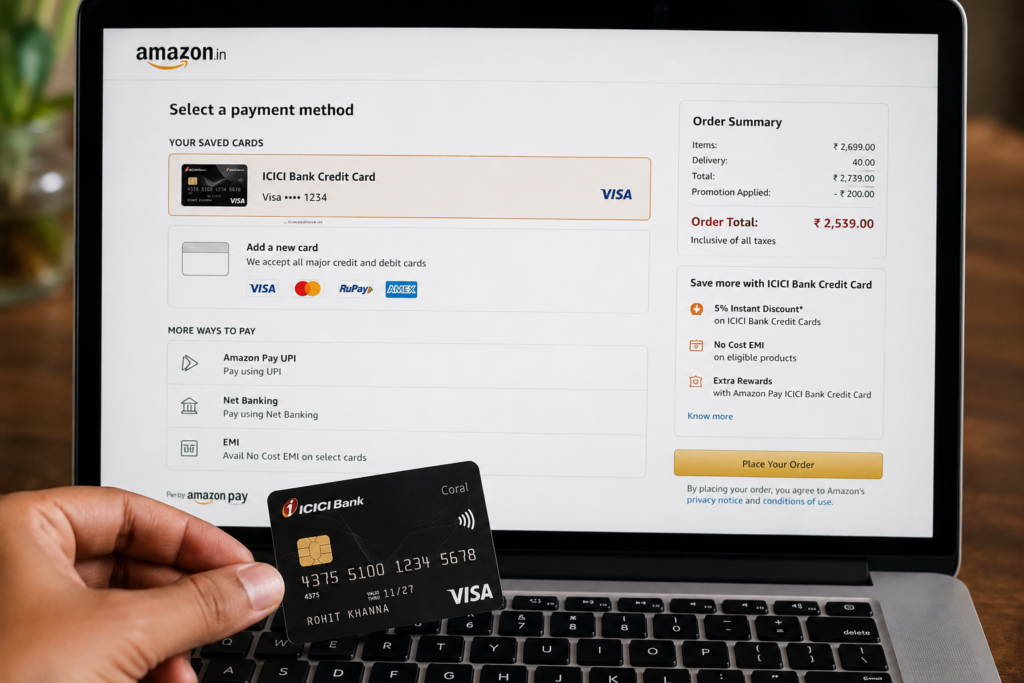
Imagine shopping on Amazon.
Instead of paying normally,
you’re offered an Amazon Pay ICICI Credit Card.
Why?
Because the companies aren’t selling a credit card.
They’re encouraging future purchases.
Business Objective
Increase repeat shopping.
Reward loyal customers.
Reduce dependence on external payment methods.
Marketing Strategy
- Loyalty Marketing
- Financial Partnerships
- Customer Retention
Consumer Psychology
Reward Psychology
Every purchase earns rewards.
The brain begins associating spending with future benefits.
Commitment Effect
Once customers adopt the card,
they’re more likely to continue shopping within Amazon’s ecosystem.
Business Lesson
Financial products can strengthen customer relationships when they genuinely add value.
Consumer Lesson
Rewards are useful only if you repay your credit card responsibly.
Never spend more just to earn cashback or reward points.
Case Study 6: Apple’s Ecosystem
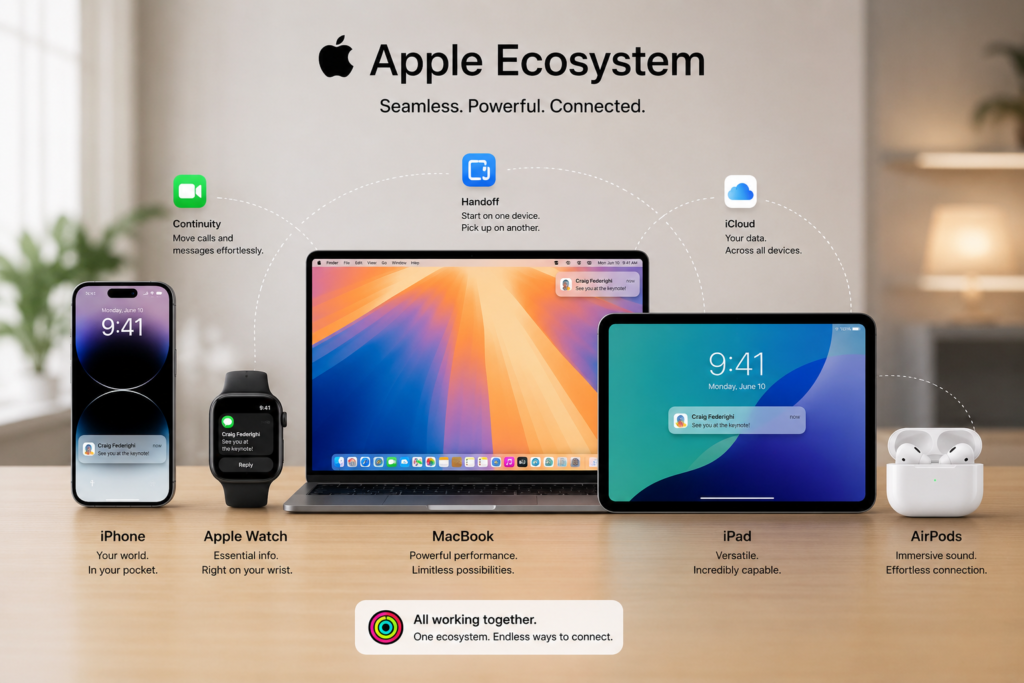
Apple doesn’t simply sell:
An iPhone.
It sells an ecosystem.
Imagine owning:
- iPhone
- Apple Watch
- MacBook
- iPad
- AirPods
Everything works together.
Photos sync automatically.
Calls move across devices.
Files appear instantly.
That’s intentional.
Business Objective
Increase switching costs.
The more Apple products customers own,
the harder it becomes to leave.
Marketing Strategy
- Ecosystem Marketing
- Product Integration
- Customer Retention
Consumer Psychology
Switching Cost
People avoid leaving because replacing the ecosystem feels difficult.
Cognitive Ease
Everything works together.
Less setup.
Less effort.
Business Lesson
Connected products create stronger loyalty than isolated products.
Consumer Lesson
Ecosystems can genuinely improve productivity.
However,
consider whether you’re staying because the ecosystem adds value,
or simply because switching feels inconvenient.
Case Study 7: Google’s Ecosystem
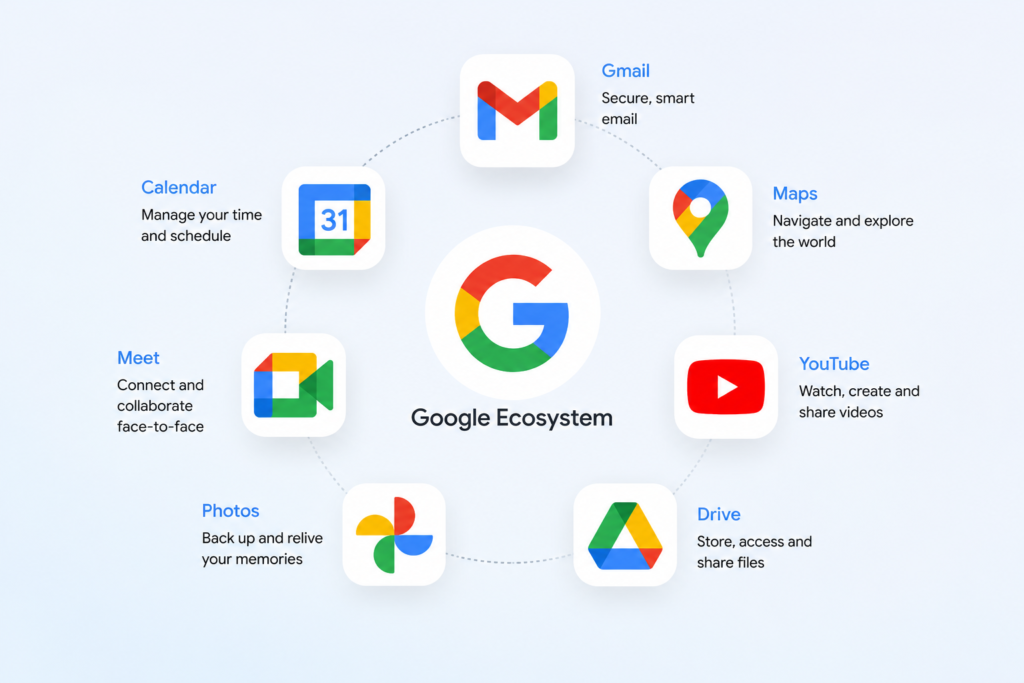
Google began as a search engine.
Today,
millions of people use:
- Gmail
- Maps
- YouTube
- Drive
- Photos
- Calendar
- Meet
Each product strengthens the others.
Search for a restaurant.
Open Maps.
Book a table.
Watch reviews on YouTube.
Everything feels connected.
Business Objective
Keep users inside Google’s ecosystem.
The longer people stay,
the more opportunities Google has to improve services and support its advertising business.
Marketing Strategy
- Platform Ecosystem
- Service Integration
- User Retention
Consumer Psychology
Familiarity Effect
Using one Google service makes adopting another feel effortless.
Cognitive Fluency
Consistent design reduces mental effort.
Everything feels familiar.
Business Lesson
Products shouldn’t compete with one another.
They should strengthen one another.
Consumer Lesson
Integrated ecosystems save time.
But it’s healthy to periodically explore alternatives and choose tools based on your needs rather than habit alone.
Common Pattern Across Every Collaboration
Although these companies belong to different industries,
their strategies follow the same pattern.
| Company Collaboration | Business Goal | Consumer Psychology | Long-Term Benefit |
|---|---|---|---|
| JioHotstar × Swiggy | Increase engagement and orders | Convenience Bias, Habit Stacking | Higher conversions |
| Zomato × District | Expand customer journey | One-Stop Shopping Effect | Higher Customer Lifetime Value |
| Blinkit × Zomato | Increase purchase frequency | Habit Formation | More customer touchpoints |
| Uber × Spotify | Personalize experiences | Emotional Connection | Stronger loyalty |
| Amazon × ICICI | Increase repeat purchases | Reward Psychology | Customer retention |
| Apple Ecosystem | Reduce switching | Switching Cost | Long-term loyalty |
| Google Ecosystem | Keep users connected | Familiarity Effect | Ecosystem growth |
Notice something remarkable.
Every collaboration begins with a business objective.
But every successful collaboration succeeds because it aligns with human psychology.
Technology enables these partnerships.
Psychology makes them successful.
Key Takeaways
- Successful collaborations solve customer problems instead of simply promoting products.
- The best partnerships reduce friction rather than add features.
- Convenience, trust, personalization, and ecosystem thinking drive higher engagement.
- Companies benefit through customer retention, cross-selling, and increased lifetime value.
- Consumers benefit from seamless experiences but should remain aware of pricing, privacy, and habit-driven decisions.
- The most successful collaborations create value for both businesses and customers, making the partnership feel natural rather than forced.
Chapter 5: Why Everything Is Becoming an Ecosystem
Imagine waking up on a Monday morning.
Your alarm rings.
You check Gmail.
Google Calendar reminds you of today’s meeting.
You open Google Maps to check traffic.
You stop for coffee and pay using PhonePe.
At lunch, you order food through Zomato.
In the evening, you buy groceries from Blinkit.
Later, you watch a movie on JioHotstar.
Finally, you book flight tickets for your weekend trip.
Now pause for a moment.
How many companies did you interact with today?
More importantly,
how many companies did you leave after completing a task?
Probably very few.
This is no accident.
It is one of the biggest business shifts of the last decade.
Companies no longer want to build products.
They want to build ecosystems.
And understanding this shift can completely change the way you look at modern businesses.
What Is an Ecosystem?
Most people think an ecosystem simply means offering many services.
Not exactly.
A business ecosystem is a network of interconnected products and services that work together to solve multiple customer problems while encouraging customers to stay within the same platform.
Think of it like a shopping mall.
Inside one building, you can find:
- Clothing stores
- Restaurants
- Banks
- Cinemas
- Supermarkets
- Cafés
- Children’s play areas
The mall doesn’t expect you to visit one shop and leave.
It wants you to spend your entire day there.
Digital ecosystems follow the same principle.
Instead of one physical location,
they create one digital destination.
Why Standalone Products Are Becoming Less Powerful
Twenty years ago,
building a successful product was enough.
A good product attracted customers.
Today,
competition is everywhere.
There are hundreds of food delivery apps.
Dozens of payment apps.
Thousands of e-commerce websites.
Millions of mobile applications.
Creating another app isn’t difficult anymore.
Keeping customers is.
That’s why companies now ask a different question.
“How can we become indispensable in our customers’ daily lives?”
The answer is simple.
Solve more than one problem.
From One Product to Many Solutions
Let’s compare two fictional companies.
Company A
Offers:
- Food Delivery
That’s all.
Company B
Offers:
- Food Delivery
- Grocery Delivery
- Restaurant Reservations
- Event Bookings
- Movie Tickets
- Payments
- Membership Rewards
Which company has more opportunities to interact with customers?
Obviously,
Company B.
Every additional service creates another reason for customers to return.
The business doesn’t need to constantly find new customers.
It simply serves existing customers in more ways.
Why Ecosystems Are So Powerful
Imagine owning a toolbox.
If the toolbox contains only a hammer,
you’ll use it occasionally.
But if it contains:
- Hammer
- Screwdriver
- Wrench
- Measuring Tape
- Drill
You’ll use it much more often.
Businesses work the same way.
Every additional useful service increases customer engagement.
This is why ecosystems become stronger over time.
The Hidden Goal Isn’t More Sales
This surprises many people.
Companies aren’t always trying to sell more immediately.
They’re trying to increase something much more valuable.
Customer Lifetime Value (LTV).
acquiring customers is expensive.
Keeping them is far cheaper.
Suppose acquiring one customer costs ₹600.
If that customer only orders food once,
the company loses money.
But if the same customer also:
- Books movie tickets
- Orders groceries
- Reserves restaurants
- Purchases event tickets
That customer becomes significantly more valuable.
One customer.
Many transactions.
Higher lifetime value.
Why Ecosystems Create Customer Loyalty
Let’s imagine two situations.
Situation A
You use five different apps.
Each has:
- Different login
- Different payment method
- Different interface
- Different reward program
Managing everything becomes tiring.
Situation B
One app provides everything.
Same account.
Same payment method.
Same reward system.
Same experience.
Which feels easier?
The second.
This isn’t just convenience.
It’s psychology.
People naturally stay where life feels simpler.
The Switching Cost Strategy
One of the smartest ecosystem strategies is increasing Switching Costs.
What Is a Switching Cost?
A switching cost isn’t always money.
Sometimes it’s:
- Time
- Effort
- Learning
- Habits
- Stored preferences
- Reward points
- Saved payment methods
Imagine you’ve used one platform for five years.
It knows:
- Your favorite restaurants
- Saved addresses
- Payment preferences
- Purchase history
- Reward balance
Now another app asks you to start from scratch.
Would you switch easily?
Probably not.
This is exactly what ecosystem companies want.
Not to trap customers.
But to make staying naturally more attractive than leaving.
Every Service Strengthens Another Service
Here’s where ecosystems become fascinating.
Imagine Google.
You search for a restaurant.
↓
Google Maps shows directions.
↓
Google Reviews help you choose.
↓
Google Pay lets you pay.
↓
Google Photos stores your pictures.
None of these services work in isolation.
Each one makes the others more useful.
The whole ecosystem becomes stronger than the sum of its individual parts.
This is called the Network Value Effect.
Why Super Apps Are Growing
Have you heard the term Super App?
A Super App combines multiple services into one application.
Instead of downloading ten different apps,
customers can complete many daily tasks from one place.
Examples around the world include:
- Grab
- Tata Neu
- Paytm (expanding into financial services)
- PhonePe (payments, insurance, investments)
- Zomato (food, Blinkit, District)
The goal isn’t to become bigger.
The goal is to become more useful.
Ecosystems Reduce Marketing Costs
Imagine convincing someone to download your app.
You spend:
- Advertising budget
- Influencer campaigns
- Discounts
- Cashback
- Referral bonuses
Now imagine you already have the customer.
Launching another service becomes much cheaper.
You don’t need to acquire the customer again.
You simply introduce a new feature.
This is one reason ecosystem companies can grow more efficiently.
Data Creates Better Experiences
Every interaction teaches companies something.
Suppose you:
Order vegetarian food.
Book comedy shows.
Travel frequently.
Shop during festivals.
The ecosystem learns your preferences.
It can then recommend:
- Restaurants you’ll likely enjoy.
- Events you may attend.
- Offers that match your interests.
This creates a more personalized experience.
However,
there’s an important balance.
Consumers should understand that personalization relies on data.
The more connected the ecosystem,
the more information it can use to improve recommendations.
Knowing how your data supports these experiences helps you make informed choices about privacy settings and permissions.
The Flywheel Keeps Spinning
Let’s put everything together.
Imagine this cycle.
Better services
↓
More customers
↓
More transactions
↓
More data
↓
Better personalization
↓
Better customer experience
↓
More trust
↓
More customers
This repeating cycle is called the Flywheel Effect.
Unlike traditional businesses,
ecosystem companies become stronger every time the wheel completes another rotation.
Growth feeds more growth.
Why Consumers Love Ecosystems
Consumers don’t think,
“I want to join an ecosystem.”
They simply think,
“This app makes my life easier.”
That’s why ecosystems grow naturally.
They reduce:
- Waiting
- Searching
- Switching
- Repeating information
- Learning new interfaces
Every reduction in effort increases satisfaction.
But There’s a Hidden Psychology Consumers Should Know
Convenience is wonderful.
But convenience can quietly become dependency.
Imagine using one platform for:
Food
Payments
Entertainment
Travel
Shopping
Banking
Investments
At some point,
switching feels difficult.
Not because another service is worse.
But because your brain prefers familiarity.
This is called the Status Quo Bias.
People often stick with what they already use,
even when better alternatives exist.
Companies understand this.
That’s why they invest so heavily in building ecosystems.
Consumer Perspective: How Can You Apply This in Real Life?
This is perhaps the most important lesson in this chapter.
Understanding ecosystems doesn’t mean avoiding them.
It means using them wisely.
Here are practical lessons you can apply:
1. Convenience is valuable, but don’t stop comparing.
Just because an offer appears inside your favorite app doesn’t mean it’s the best available.
2. Avoid becoming completely dependent on one ecosystem.
Having alternatives gives you flexibility and often saves money.
3. Review subscriptions regularly.
Many ecosystem services encourage recurring memberships.
Ask yourself:
“Am I actually using all these benefits?”
4. Understand why recommendations appear.
Sometimes they’re genuinely useful.
Sometimes they’re promoted because of business partnerships.
Knowing the difference makes you a smarter consumer.
5. Think like an ecosystem in your own life.
This lesson goes beyond technology.
Instead of building one skill,
build complementary skills.
For example,
A marketer who understands:
- Psychology
- SEO
- Analytics
- AI
- Consumer behavior
becomes far more valuable than someone with only one specialization.
The same ecosystem strategy that helps companies grow can also help you grow your career.
Key Takeaways
- Ecosystems solve multiple customer problems through interconnected products and services.
- Companies are shifting from selling individual products to building long-term customer relationships.
- Every additional service increases Customer Lifetime Value while reducing future marketing costs.
- Switching costs, familiarity, and personalization encourage customers to remain within an ecosystem.
- Super Apps represent the future of connected digital experiences.
- Consumers benefit from convenience but should remain aware of habit-driven decisions, subscriptions, and overdependence on a single platform.
- The ecosystem mindset isn’t just for businesses. Individuals can apply it by developing complementary skills that work together to create greater long-term value.
Chapter 6: Why This Strategy Is So Powerful
Imagine two businesses.
Business A spends crores of rupees every year on advertisements just to attract new customers.
Business B spends the same amount building partnerships, improving customer experience, and adding complementary services.
After five years,
which business do you think will have stronger customer relationships?
Most likely,
Business B.
Why?
Because acquiring customers is difficult.
Keeping them is even more valuable.
This is why the world’s biggest companies are shifting their focus from transaction-based marketing to relationship-based ecosystem marketing.
The goal is no longer,
“How do we make today’s sale?”
The goal has become,
“How do we become part of the customer’s daily life?”
Let’s understand why this strategy is becoming so powerful.
1. Lower Customer Acquisition Cost (CAC)
Every business faces one challenge.
Finding new customers.
Suppose you’re launching a new food delivery app.
To convince people to install your app, you may spend money on:
- Television ads
- YouTube ads
- Instagram ads
- Influencer marketing
- Cashback offers
- Referral bonuses
- Billboards
This costs a fortune.
Now imagine another scenario.
Instead of finding new customers,
you partner with a platform that already has millions of active users.
Suddenly,
your potential customers are already there.
No need to convince them to download another app.
This dramatically reduces your Customer Acquisition Cost (CAC).
Real Example
When Swiggy appears inside a cricket streaming platform,
it doesn’t need to search for cricket fans.
They’re already watching.
Instead of bringing customers to the product,
the product reaches the customers.
Business Lesson
The cheapest customer is often the one someone else has already acquired.
Strategic partnerships allow businesses to share audiences rather than compete for them.
Consumer Lesson
Whenever you see a recommendation inside another app,
remember,
you’re not just discovering a product.
The company is also reducing its marketing costs through that partnership.
2. Higher Customer Retention
Imagine two coffee shops.
The first shop offers excellent coffee.
The second offers:
- Excellent coffee
- Loyalty rewards
- Mobile ordering
- Free Wi-Fi
- Comfortable workspace
Where are you more likely to return?
Probably the second.
Not because the coffee tastes dramatically better,
but because the overall experience is better.
This is called Customer Retention.
Businesses grow faster when customers keep coming back.
Why Retention Matters More Than Acquisition
Acquiring customers creates growth.
Retaining customers creates sustainable growth.
A loyal customer:
- Purchases more often.
- Trusts the brand more.
- Recommends it to others.
- Costs less to serve over time.
That’s why ecosystem businesses invest heavily in retention.
Consumer Lesson
Loyalty programs are useful.
But loyalty should be earned through genuine value,
not just rewards.
Stay loyal to experiences that consistently benefit you,
not simply because you’ve collected points.
3. Cross-Selling Creates More Value
Imagine entering a bookstore.
You purchase a novel.
Before checkout,
the store suggests:
- A bookmark.
- Another book by the same author.
- A reading lamp.
This isn’t random.
It’s called Cross-Selling.
The business isn’t searching for another customer.
It’s helping the existing customer discover related products.
Ecosystem Example
Food Delivery
↓
Groceries
↓
Movie Tickets
↓
Event Booking
↓
Dining Reservations
One customer.
Multiple services.
This increases Customer Lifetime Value without constantly spending money on acquiring new users.
Business Lesson
Growth doesn’t always come from more customers.
Sometimes it comes from solving more problems for existing customers.
Consumer Lesson
Cross-selling can introduce genuinely useful products.
Before accepting every recommendation,
ask:
“Do I actually need this, or is it simply convenient because it’s being suggested?”
4. More Customer Data, Better Personalization
Every interaction tells companies something.
Imagine this timeline.
Monday:
You order pizza.
Tuesday:
You buy movie tickets.
Wednesday:
You reserve a restaurant.
Thursday:
You purchase groceries.
Friday:
You book a concert.
Individually,
these activities seem unrelated.
Together,
they create a detailed understanding of your preferences.
Companies use this information to personalize recommendations.
Why Personalization Works
People enjoy experiences that feel relevant.
Instead of showing random advertisements,
businesses recommend products based on your interests.
Relevant suggestions save time.
That’s why personalization often feels helpful rather than intrusive.
Consumer Lesson
Personalization is convenient,
but remember that it’s powered by your activity and preferences.
Regularly review your privacy settings,
understand which permissions you’ve granted,
and decide how much personalization you’re comfortable with.
5. Ecosystems Create Stronger Customer Loyalty
Imagine you’re using an ecosystem where you’ve already:
- Saved payment methods
- Earned rewards
- Built playlists
- Stored purchase history
- Saved favorite restaurants
- Added delivery addresses
Now another company offers a similar service.
Would you switch immediately?
Probably not.
Not because the other service is worse.
Because rebuilding everything takes effort.
This creates long-term loyalty.
Business Lesson
Loyalty grows through accumulated value,
not just repeated advertising.
Every useful feature strengthens the relationship.
Consumer Lesson
Before staying with one platform forever,
occasionally compare alternatives.
Healthy competition often leads to better prices,
better service,
and better experiences.
6. Partnerships Create Competitive Advantages
Imagine two companies.
Company A builds everything alone.
Company B collaborates with experts.
Which company can innovate faster?
Usually,
the one that collaborates.
Partnerships allow businesses to:
- Enter new industries quickly.
- Expand services.
- Reach new customers.
- Reduce development time.
- Share expertise.
This creates a significant competitive advantage.
Business Lesson
Success isn’t always about building everything yourself.
Sometimes the smartest strategy is knowing who to collaborate with.
Consumer Lesson
Collaboration often improves convenience and service quality.
At the same time,
it’s useful to understand that partnerships also strengthen a company’s competitive position.
Recognizing this helps you make more informed decisions.
7. Word-of-Mouth Becomes Stronger
Imagine recommending an app to your friend.
You’re not just recommending food delivery.
You’re recommending:
- Grocery delivery
- Event booking
- Dining
- Payments
The more useful an ecosystem becomes,
the easier it is for satisfied customers to recommend it.
One positive experience often introduces someone to several connected services.
Business Lesson
People don’t recommend products.
They recommend experiences.
Creating an ecosystem gives customers more reasons to talk about your brand.
Consumer Lesson
Recommendations from friends are valuable,
but your needs may differ.
Use recommendations as a starting point,
not the final decision.
8. Ecosystems Build Long-Term Business Stability
Imagine a company that depends entirely on one product.
If demand falls,
the business struggles.
Now imagine another company with multiple revenue streams:
- Food delivery
- Grocery delivery
- Membership subscriptions
- Financial services
- Advertising
- Event bookings
If one business slows down,
others continue generating revenue.
This makes ecosystem businesses more resilient.
Business Lesson
Diversification reduces risk.
Multiple connected services create stronger long-term stability than relying on a single source of income.
Consumer Lesson
Understanding this strategy helps explain why companies continuously launch new services.
They’re not necessarily changing direction.
They’re strengthening their ecosystem.
The Hidden Formula Behind Every Successful Ecosystem
By now,
a pattern should be clear.
Successful ecosystem businesses don’t rely on one feature.
They combine many strategies.
Better Experience
        ↓
More Customers
        ↓
Higher Engagement
        ↓
More Data
        ↓
Better Personalization
        ↓
Greater Customer Satisfaction
        ↓
Higher Retention
        ↓
More Revenue
        ↓
Investment in New Services
        ↓
An Even Stronger Ecosystem
Notice something important.
Advertising appears only once.
Customer experience appears throughout the entire cycle.
That’s why experience has become one of the most valuable forms of marketing.
Key Takeaways
- Consumers benefit most when they understand the psychology behind recommendations and make deliberate choices rather than automatic ones.
- Ecosystem marketing lowers Customer Acquisition Cost by leveraging existing audiences.
- Customer retention is more valuable than constantly acquiring new users.
- Cross-selling helps businesses solve multiple customer problems while increasing lifetime value.
- Personalization creates better experiences but relies on customer data.
- Strong ecosystems build loyalty through convenience, familiarity, and accumulated value.
- Strategic partnerships create competitive advantages that are difficult to replicate.
- Multiple revenue streams make ecosystem businesses more resilient
Final Framework: The Hidden Psychology Behind Every Successful Collaboration
Every successful collaboration follows a similar pattern.
Customer Problem
        ↓
Business Partnership
        ↓
Reduced Friction
        ↓
Better Customer Experience
        ↓
Higher Trust
        ↓
Repeated Usage
        ↓
Habit Formation
        ↓
Customer Loyalty
        ↓
Higher Lifetime Value
        ↓
Business Growth
This is the invisible engine behind modern ecosystem marketing.
Combined Lessons for Startups and Consumers
| For Startups | For Consumers |
|---|---|
| Build partnerships, not just products. | Understand the psychology behind convenience. |
| Solve multiple customer problems. | Compare options instead of accepting the first recommendation. |
| Reduce customer effort. | Don’t confuse familiarity with the best choice. |
| Build trust before chasing growth. | Understand why platforms recommend certain products or services. |
| Create ecosystems instead of isolated features. | Use ecosystems for convenience but avoid depending entirely on one platform. |
| Focus on long-term relationships, not one-time sales. | Apply ecosystem thinking to your career by building complementary skills. |
Key Takeaways
- The most successful companies grow by solving multiple customer problems rather than selling isolated products.
- Strategic partnerships often create faster growth than building every capability internally.
- Customer experience has become one of the strongest forms of marketing.
- Consumers benefit from understanding the psychology behind convenience, trust, and recommendations.
- Ecosystem thinking isn’t just a business strategy. It’s a valuable mindset for career growth and better decision-making.
- Whether you’re building a startup or building your future, long-term relationships and connected value create more success than isolated efforts.
Chapter 7: The Future of Brand Collaborations
Imagine opening a single app in 2035.
Instead of switching between:
- Food delivery
- Movie tickets
- Banking
- Insurance
- Investments
- Shopping
- Healthcare
- Travel
One intelligent platform understands exactly what you need.
It books your cab.
Orders your dinner.
Pays your electricity bill.
Reschedules your meeting.
Books your flight.
Recommends a hotel.
And reminds you about your credit card payment.
This might sound futuristic.
But if you look closely,
the future has already begun.
Every major technology company is slowly transforming into an ecosystem.
The next decade won’t be about building more apps.
It will be about building smarter connections between apps.
AI Will Transform Brand Collaborations
Today’s partnerships are mostly based on customer behavior.
Tomorrow’s partnerships will be based on prediction.
Imagine this.
Your calendar shows an upcoming trip.
Without searching,
your ecosystem suggests:
- Flight tickets
- Hotel bookings
- Travel insurance
- Airport taxi
- Currency exchange
- Restaurant recommendations
Everything appears before you even think about it.
This is called Predictive Personalization.
AI doesn’t simply react.
It anticipates.
The Rise of Invisible Commerce
One of the biggest trends shaping the future is Invisible Commerce.
Today,
you search for products.
Tomorrow,
products may find you at the right moment.
Imagine watching a cooking video.
You instantly receive:
“Ingredients available nearby.”
Watching a travel vlog?
Hotels appear automatically.
Reading about fitness?
Healthy meal subscriptions become available.
Instead of interrupting your experience,
commerce becomes part of it.
The Next Evolution: Context-Aware Ecosystems
Today’s ecosystems understand what you do.
Future ecosystems will understand:
- Where you are.
- What you’re doing.
- Who you’re with.
- What you might need next.
For example,
If Google Maps detects heavy rain,
your ecosystem might recommend:
- Ordering groceries instead of going out.
- Booking a cab instead of walking.
- Delaying your travel.
Not because someone advertised it.
Because it genuinely fits your situation.
This is where marketing shifts from persuasion to assistance.
Super Apps Will Continue to Grow
Many experts believe Super Apps will become increasingly important, especially in markets where consumers value convenience and integrated digital services.
Instead of downloading:
20 separate apps,
people may prefer:
One intelligent ecosystem.
Companies across the world are already moving in this direction.
The question isn’t:
“Will ecosystems grow?”
The question is:
“Which ecosystem will consumers trust the most?”
Will Standalone Apps Disappear?
Probably not.
There will always be room for specialized apps.
Many customers still prefer dedicated tools for:
- Photography
- Music production
- Fitness
- Education
- Productivity
However,
standalone apps will likely integrate with larger ecosystems rather than compete against them.
Think of ecosystems as cities.
Specialized apps become important businesses inside those cities.
The Biggest Challenge for Future Businesses
As ecosystems become larger,
competition will no longer depend only on:
- Price
- Features
- Technology
It will increasingly depend on:
Trust.
Consumers are becoming more aware of:
- Privacy
- Data security
- AI recommendations
- Digital well-being
The companies that respect customer trust while providing exceptional convenience are likely to build stronger long-term relationships.
The Biggest Lesson for Businesses
Throughout this article,
we’ve discussed:
- Marketing
- Psychology
- Ecosystems
- Consumer behavior
- Brand collaborations
But perhaps the biggest lesson is surprisingly simple.
People don’t wake up hoping to use more apps.
They wake up hoping to solve problems.
The businesses that solve problems with the least effort,
the greatest trust,
and the best experience,
will continue to succeed.
The Biggest Lesson for Consumers
Understanding marketing psychology isn’t about avoiding marketing.
It’s about becoming aware.
Once you understand:
- Why companies collaborate.
- Why recommendations appear.
- Why ecosystems feel so convenient.
- Why habits form.
- Why switching becomes difficult.
You stop reacting automatically.
You begin making intentional decisions.
That awareness is one of the greatest advantages a modern consumer can have.
Frequently Asked Questions (FAQs)
1. Why do brands collaborate with each other?
Brands collaborate to combine their strengths, reach new customers, reduce marketing costs, improve customer experiences, and build long-term ecosystems rather than offering isolated products.
2. What is a brand collaboration?
A brand collaboration is a strategic partnership where two or more companies work together to create greater value for customers while achieving shared business objectives.
3. Why did JioHotstar partner with Swiggy?
The collaboration allows viewers to order food while watching live cricket without leaving the streaming experience. It benefits customers through convenience while helping both companies increase engagement and customer retention.
4. Why did Zomato launch District?
District expands Zomato’s role beyond food delivery into entertainment, dining, events, and movie ticket booking, creating a broader ecosystem around customers’ social experiences.
5. What is ecosystem marketing?
Ecosystem marketing is a strategy where multiple connected products and services work together to solve different customer needs while keeping customers engaged within the same platform.
6. What is cross-selling?
Cross-selling means recommending complementary products or services to existing customers, increasing customer value without acquiring new users.
7. What is embedded commerce?
Embedded commerce integrates shopping or service purchases directly into another digital experience, allowing customers to complete transactions without switching platforms.
8. Why are companies building Super Apps?
Super Apps simplify customers’ lives by offering multiple services within a single application, reducing friction and improving convenience.
9. How do brand collaborations influence consumer behavior?
They reduce effort, increase trust, create habits, personalize experiences, and encourage customers to remain within interconnected ecosystems.
10. Are brand collaborations good for consumers?
Yes, when they genuinely improve convenience, reduce effort, and provide value. However, consumers should continue comparing alternatives and make informed choices.
11. How do startups benefit from strategic partnerships?
Startups gain access to new customers, reduce Customer Acquisition Cost (CAC), increase credibility, accelerate growth, and focus on their core strengths instead of building everything themselves.
12. What can consumers learn from brand collaborations?
Consumers can understand the psychology behind convenience, recognize marketing strategies, compare alternatives thoughtfully, and apply ecosystem thinking to their careers and daily decisions.
13. What is the difference between co-branding and brand collaboration?
Co-branding usually creates a shared product or campaign featuring both brands. Brand collaboration is broader and may involve technology integration, customer acquisition, ecosystem expansion, or strategic partnerships without necessarily creating a joint product.
14. Why are more companies becoming ecosystems instead of standalone businesses?
Because ecosystems increase customer lifetime value, improve retention, enable cross-selling, strengthen loyalty, reduce marketing costs, and create long-term competitive advantages.
Final Thoughts: The Future Belongs to Ecosystems, Not Standalone Products
Let’s go back to the question we asked at the beginning.
Why are so many brands collaborating today?
After reading this article,
you now know the answer.
They’re not collaborating simply to increase sales.
They’re collaborating to become part of your everyday life.
When JioHotstar partners with Swiggy,
when Zomato expands through District,
when Apple connects every device,
or when Google links multiple services together,
the objective isn’t just another transaction.
It’s to create an experience so seamless that customers never feel the need to leave.
This represents one of the biggest shifts in modern marketing.
Companies are no longer competing product against product.
They’re competing experience against experience.
The brands that remove the most friction, earn the greatest trust, and solve the widest range of customer problems are the ones most likely to build lasting relationships.
What Businesses Should Remember
Stop asking:
“How do we sell more?”
Start asking:
“How do we solve more customer problems?”
Products attract customers.
Experiences keep them.
Ecosystems build loyalty.
What Consumers Should Remember
The next time you notice two brands working together,
don’t just think,
“That’s a partnership.”
Ask yourself:
- Why these two brands?
- Which customer problem are they trying to solve?
- What psychological principle makes this collaboration effective?
- How does this benefit the companies?
- How does it benefit me?
Those questions will help you see beyond the interface and understand the hidden strategy behind modern business.
The Biggest Takeaway
The real product was never the collaboration.
It was the experience the collaboration created.
And in the future,
the companies that create the most effortless, trusted, and meaningful experiences will shape how we shop, travel, pay, work, learn, and live.
Because the future doesn’t belong to companies with the most products.
It belongs to companies with the strongest ecosystems.