Why Brands Sponsor Sports is a question most people never ask.
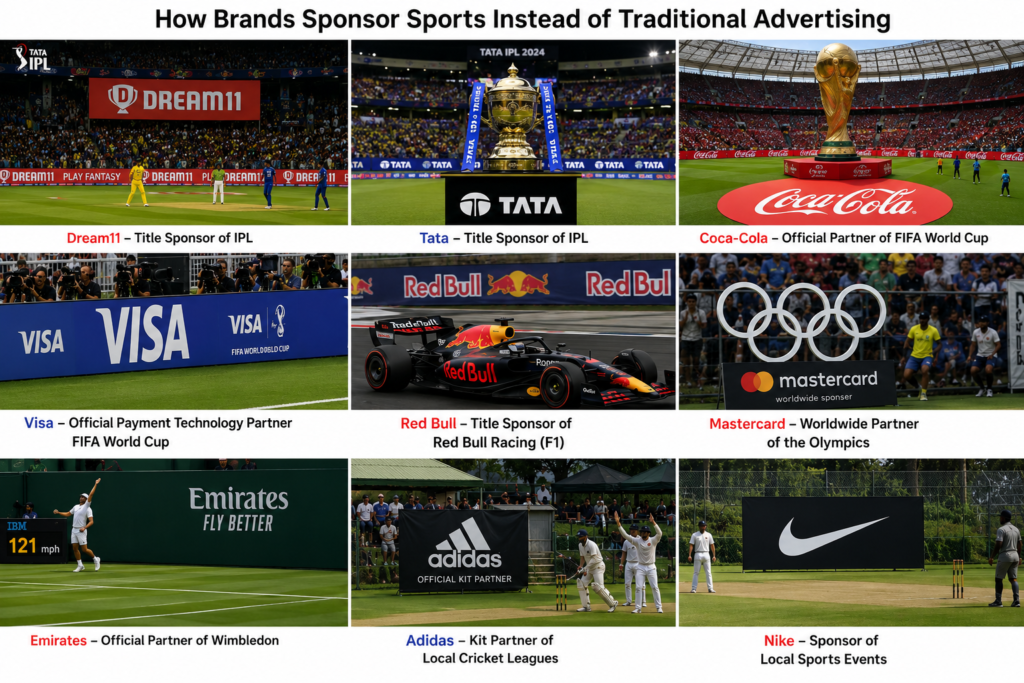
Every time we watch the IPL, FIFA World Cup, Wimbledon, Formula 1, the Olympics, or even your local cricket league, we’re surrounded by logos.
Dream11.
Tata.
Coca-Cola.
Visa.
Mastercard.
Nike.
Adidas.
Emirates.
Red Bull.
Sometimes we notice them.
Most of the time, we don’t.
Yet these companies spend millions and sometimes billions of dollars every year just to place their logos on jerseys, stadiums, scoreboards, player interviews, digital broadcasts, and social media highlights.
Here’s the interesting part.
None of these logos are asking you to buy something immediately.
Unlike a television commercial, there is no dramatic voice saying:
“Buy now.”
“50% OFF.”
Still, brands continue investing enormous amounts of money into sports sponsorships.
Why?
If advertisements already exist, why not simply buy more TV commercials, YouTube ads, Instagram ads, or Google Ads?
The answer lies deep inside consumer psychology.
Sports sponsorship is not about today’s sales.
It is about becoming part of your memory.
Imagine two situations.
While watching an IPL match, Virat Kohli hits a match-winning six.
Thousands of fans celebrate.
Millions cheer.
Your emotions peak.
Now notice what’s quietly happening in the background.
The stadium displays Tata’s logo.
The boundary rope features Dream11.
The replay screen shows Coca-Cola.
The strategic timeout is presented by another sponsor.
Without realizing it, your brain has linked these brands with one of the happiest moments of your day.
That’s something a 30-second advertisement struggles to achieve.
This is why sports sponsorship isn’t just marketing.
It’s emotional branding.
This strategy has existed for decades.
Coca-Cola has sponsored the Olympics for generations.
Nike has built relationships with legendary athletes.
Emirates appears across football stadiums worldwide.
Red Bull transformed itself from an energy drink into an extreme sports company.
These brands are no longer simply selling products.
They’re selling emotions, memories, identity, and belonging.
As consumers, we often believe we choose products based on price or quality.
Reality is far more fascinating.
Psychologists have shown that our purchasing decisions are heavily influenced by familiarity, trust, repeated exposure, and emotional experiences.
Sports sponsorship combines all of these into one powerful marketing strategy.
Instead of interrupting entertainment,
brands become part of the entertainment itself.
And that’s where the magic begins.
Table of Contents
- Chapter 1: Why Brands Sponsor Sports Instead of Running More Ads
- Chapter 2: Why Brands Sponsor Sports, How Sports Sponsorship Works Behind the Scenes
- Chapter 3: Why Brands Sponsor Sports, The Hidden Psychology Behind Sports Sponsorship
- Chapter 4: Sports Sponsorship vs Traditional Advertising, Which One Works Better?
- Chapter 5: What Businesses, Startups, Marketers, and Consumers Can Learn from Why Brands Sponsor Sports
- Final Chapter: The Future of Sports Sponsorship and the Biggest Marketing Lesson Every Brand Should Learn
Chapter 1: Why Brands Sponsor Sports Instead of Running More Ads
The Billion Dollar Question: Why Not Spend Everything on Advertisements?
Imagine we’re watching an IPL match.
The over ends.
Suddenly…
Five advertisements appear back to back.
A soft drink.
An insurance company.
A smartphone.
A banking app.
A food delivery platform.
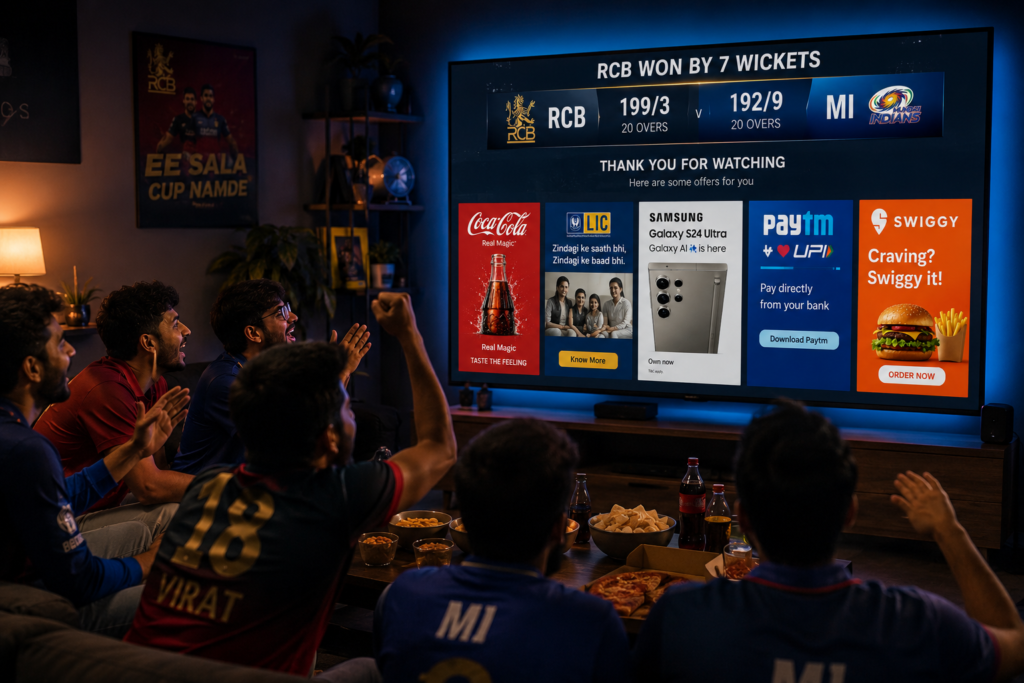
By the time the match resumes, we’ve probably forgotten half of them.
Now imagine something different.
Virat Kohli walks onto the field wearing a jersey with a sponsor’s logo.
The stadium is named after a brand.
The replay is “Presented by Tata.”
The strategic timeout is sponsored by another company.
The boundary rope displays Dream11.
The trophy ceremony happens in front of dozens of sponsor logos.
You don’t feel like you’re watching advertisements.
Yet we’re surrounded by branding.
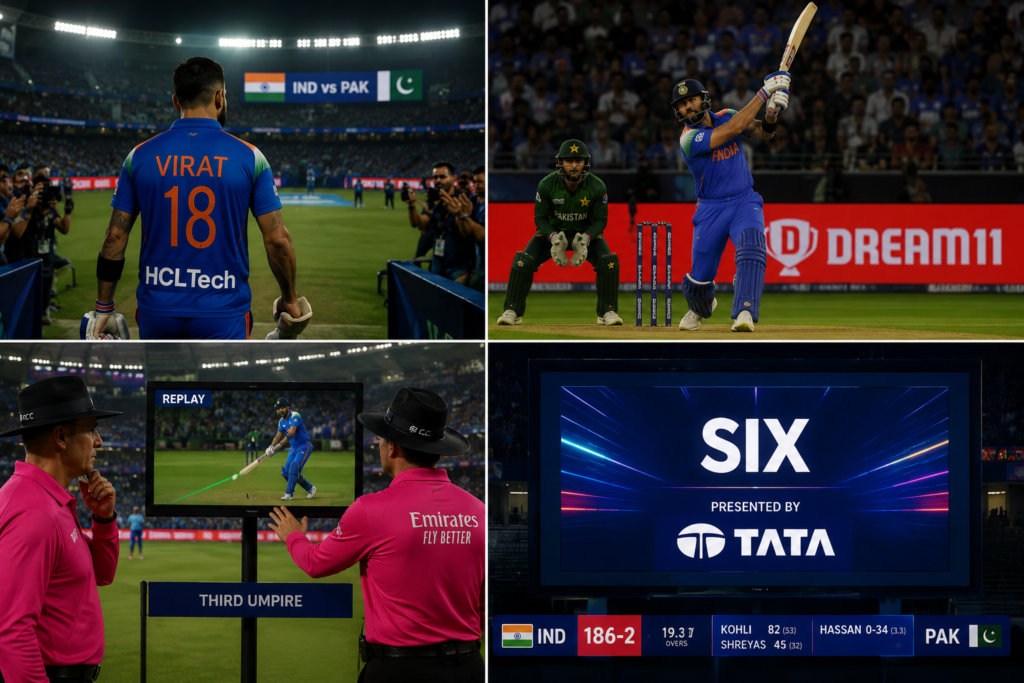
This is exactly why brands sponsor sports instead of spending all their budget on traditional advertising.
Because people avoid advertisements, but they rarely avoid experiences.
The Problem with Traditional Advertising
Advertising has existed for decades.
Television.
Radio.
Newspapers.
Digital Ads.
YouTube Ads.
Instagram Ads.
Google Ads.
These channels still work.
But they also face one major problem.
Consumers have become experts at ignoring advertisements.
Think about our own behavior.
How often do you…
- Skip YouTube ads?
- Scroll past Instagram ads?
- Ignore banner advertisements?
- Use ad blockers?
- Look at your phone during TV commercial breaks?
Most of us do this every day.
Marketing experts even have a term for it.
Advertisement Fatigue
When people repeatedly see promotional messages, their brains automatically begin filtering them out.
Instead of grabbing attention,
the advertisement becomes background noise.
This is why companies cannot rely only on running more advertisements.
They need another way to stay inside consumers’ minds.
Sponsorship Doesn’t Interrupt. It Integrates.
Here’s where sports sponsorship becomes powerful.
Advertisements interrupt what you’re doing.
Sports sponsorship becomes part of what you’re enjoying.
Imagine we’re watching an IPL final.
Would you rather…
Pause the match every five minutes to watch commercials?
Or continue enjoying the match while sponsor logos naturally appear throughout the experience?
Most people prefer the second option.
The viewing experience remains uninterrupted.
The sponsor still receives visibility.
Everyone wins.
This is called integrated marketing.
Instead of forcing attention,
brands earn attention naturally.
Sports Create Emotional Moments
Now let’s ask a simple question.
When do people remember things the most?
Usually during emotional experiences.
Think about your favorite cricket match.
Maybe it was:
- India winning the World Cup.
- A last-ball six in the IPL.
- Your favorite football club lifting a trophy.
- A Formula 1 driver winning an unforgettable race.
- An Olympic athlete earning a historic gold medal.
Years later,
we’ll probably remember that moment.
But here’s something fascinating.
We’ll also remember many of the brands that were present during that moment.
This isn’t an accident.
It’s psychology.
Brands Don’t Want Your Attention for 30 Seconds
They Want Your Memory for Years
Traditional advertising usually buys attention.
Sports sponsorship buys association.
Let’s compare them.
Advertisement
“Watch this commercial.”
Duration?
30 seconds.
After that,
it’s gone.
Sports Sponsorship
The brand becomes part of:
- Every match.
- Every celebration.
- Every trophy.
- Every interview.
- Every highlight.
- Every social media clip.
- Every newspaper headline.
Instead of appearing once,
the brand appears hundreds of times throughout a season.
That’s a completely different marketing strategy.
Sponsorship Builds Familiarity
Imagine you meet someone once.
Will you remember them?
Maybe.
Now imagine meeting that same person every weekend for six months.
Eventually,
they’ll feel familiar.
The same thing happens with brands.
When you repeatedly see the same logo during sports,
your brain starts recognizing it effortlessly.
Psychologists call this the Mere Exposure Effect.
The more often we encounter something,
the more comfortable and trustworthy it feels.
This doesn’t mean you’ll immediately buy the product.
But when it’s time to make a purchase,
your brain naturally favors familiar brands over unfamiliar ones.
That’s one reason why brands sponsor sports year after year.
The Difference Between Selling and Staying Relevant
Advertisements often focus on immediate action.
Examples include:
- Buy now.
- Limited offer.
- Sale ends tonight.
- Flat 50% OFF.
- Shop today.
Sports sponsorship follows a different objective.
It quietly says:
“Remember us.”
That single difference changes everything.
Great brands understand that customers don’t buy every day.
Someone doesn’t purchase:
- A car every week.
- A credit card every month.
- A pair of shoes every weekend.
- A home loan every season.
But when that buying moment finally arrives,
the familiar brand usually has an advantage.
This is why long-term visibility matters more than short-term promotion.
Real-World Example: Coca-Cola
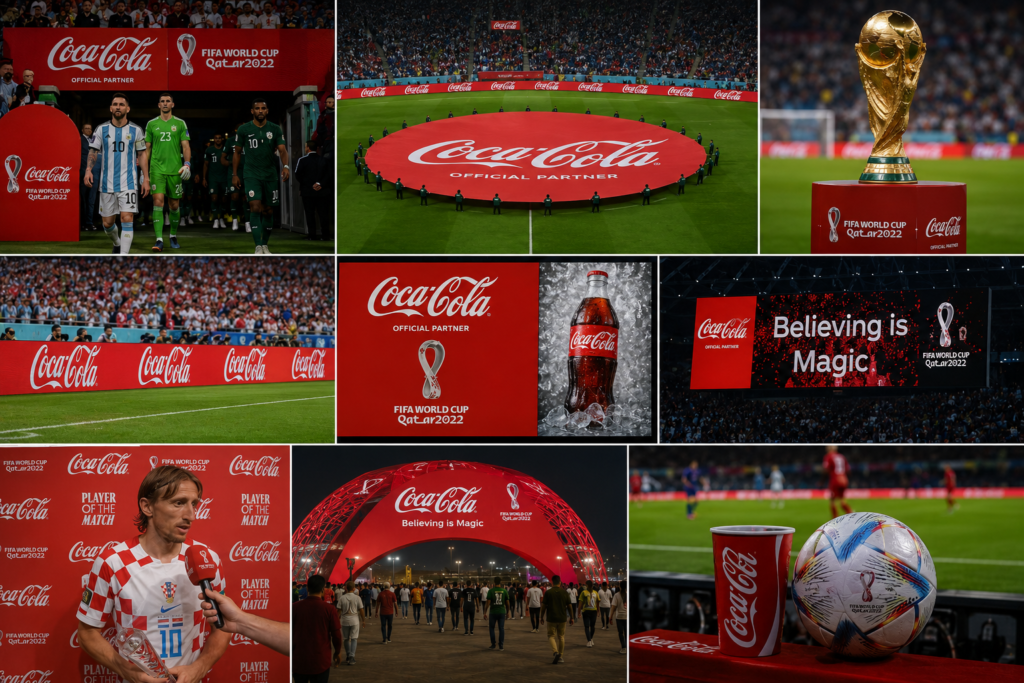
Imagine watching the FIFA World Cup.
Throughout the tournament,
you repeatedly see Coca-Cola.
You don’t immediately leave your seat to buy a soft drink.
That’s not the goal.
Months later,
when you’re standing in front of a refrigerator at a supermarket,
your brain already recognizes Coca-Cola.
It feels familiar.
Comfortable.
Trusted.
That feeling didn’t begin inside the supermarket.
It began months earlier while watching football with friends and family.
Real-World Example: Dream11 During IPL
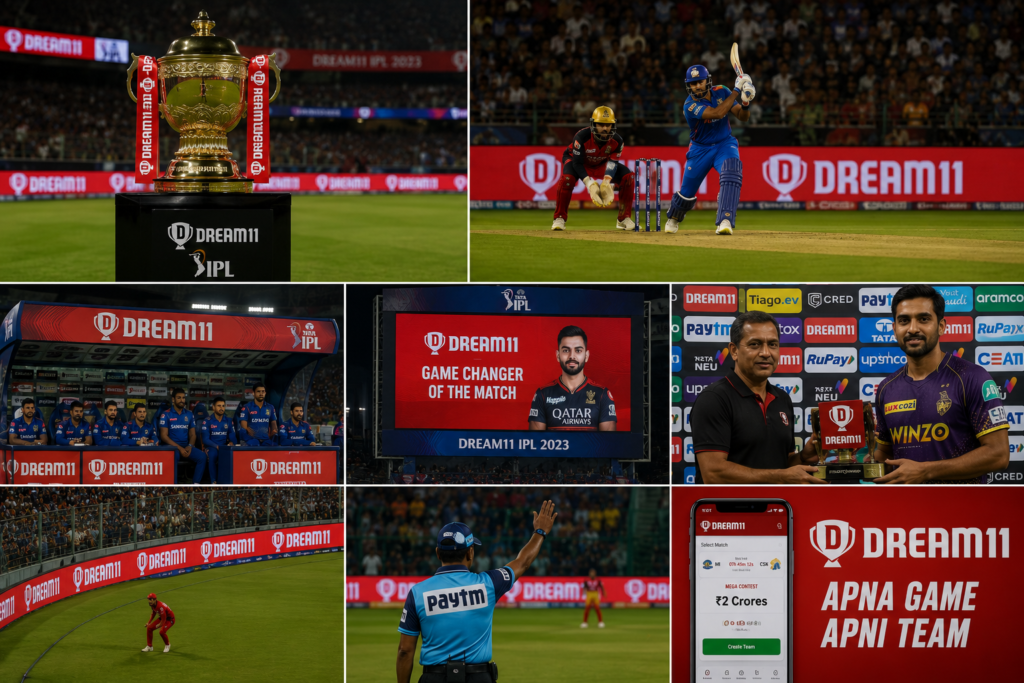
Dream11 advertisements are everywhere during IPL.
But Dream11 didn’t become a household name because of television commercials alone.
It became memorable because fans repeatedly saw the brand:
- Before every match.
- During the toss.
- Around the boundary ropes.
- On digital scoreboards.
- Across fantasy league discussions.
- In social media conversations.
By becoming part of the IPL experience,
Dream11 became part of cricket culture.
That’s much stronger than showing a single commercial.
Real-World Example: Emirates
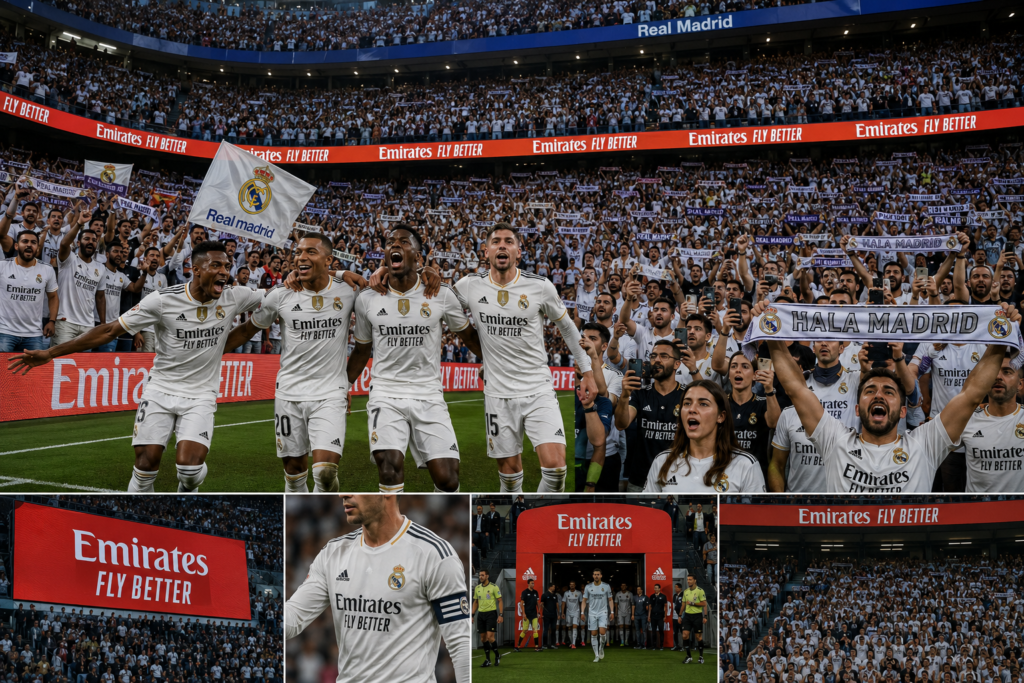
Millions of football fans know the airline Emirates.
Many of them have never flown with the airline.
So why do they recognize it?
Because they’ve spent years watching:
- Emirates on football jerseys.
- Emirates stadium branding.
- Emirates sponsorship boards.
- Emirates during Champions League broadcasts.
The airline became globally recognizable without relying solely on traditional advertisements.
Sponsorship Is an Investment in Mental Availability
Marketing professor Byron Sharp introduced the concept of mental availability.
A brand grows when it is easy to remember at the moment a customer wants to buy.
Sports sponsorship helps brands achieve exactly that.
Every match,
every logo,
every trophy ceremony,
every highlight,
adds another small memory inside the consumer’s mind.
One exposure isn’t enough.
Hundreds of exposures create familiarity.
Thousands create trust.
Over time,
trust often leads to preference.
Chapter 2: Why Brands Sponsor Sports, How Sports Sponsorship Works Behind the Scenes
Now let’s answer another fascinating question.
How does sports sponsorship actually work?
Do brands simply pay money and place their logos on a jersey?
Not at all.
Behind every major sporting event is a massive marketing ecosystem involving broadcasters, teams, leagues, athletes, digital platforms, sponsors, advertisers, and technology companies.
Every logo you see during a match has been carefully planned months or even years in advance.
Let’s step behind the scenes.
Sports Sponsorship Is Much More Than Putting a Logo on a Jersey
Imagine you’re watching the IPL Final.
At first glance, you may notice only a few sponsor logos.
But look closely.
You’ll find branding almost everywhere.
- Team jerseys
- Player helmets
- Cricket bats
- Boundary ropes
- Giant stadium screens
- Toss ceremony backdrop
- Strategic timeout graphics
- Match scorecard
- Replay screens
- Post-match presentation
- Interview backdrop
- Digital streaming apps
- Social media highlights
This isn’t accidental.
It’s a carefully designed marketing system where every touchpoint creates another opportunity for brand recall.
The objective isn’t simply to be seen once.
It’s to be seen repeatedly throughout the entire fan journey.
The Different Levels of Sports Sponsorship
Not every sponsor has the same role.
Some companies become the face of the tournament.
Others sponsor individual teams or players.
Let’s understand the different levels.
1. Title Sponsor
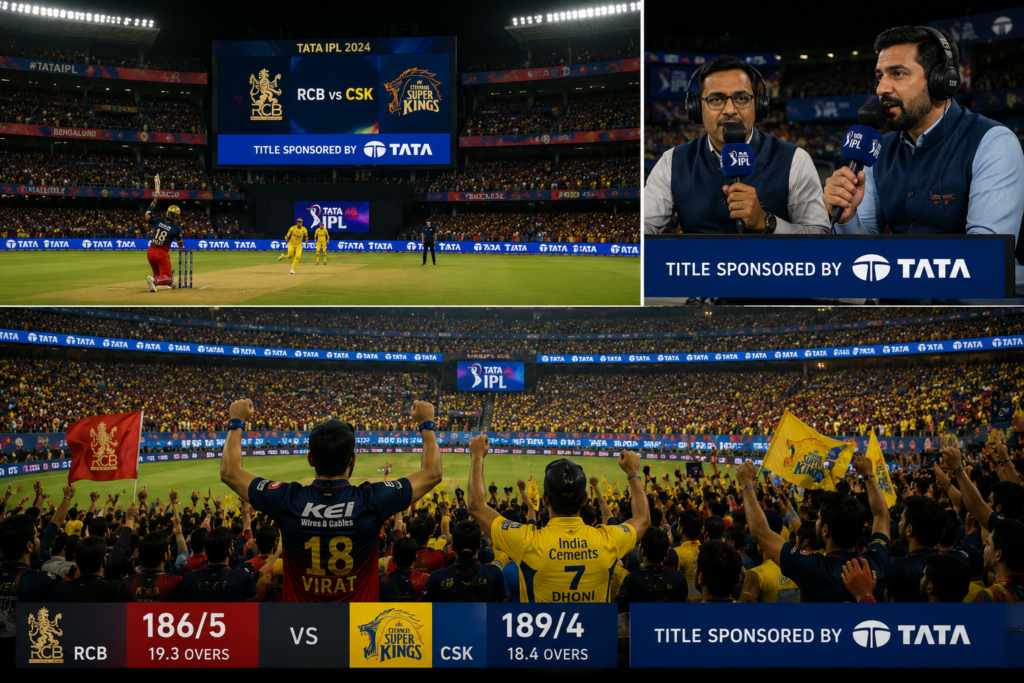
This is the highest level of sponsorship.
The sponsor’s name becomes part of the event itself.
Examples include:
- Tata IPL
- Vivo IPL (previous seasons)
- Pepsi IPL
- Hero Indian Super League
Every time commentators mention the tournament, they automatically mention the sponsor.
Instead of buying advertisements,
the brand becomes part of the event’s identity.
That’s incredibly valuable.
2. Official Partner
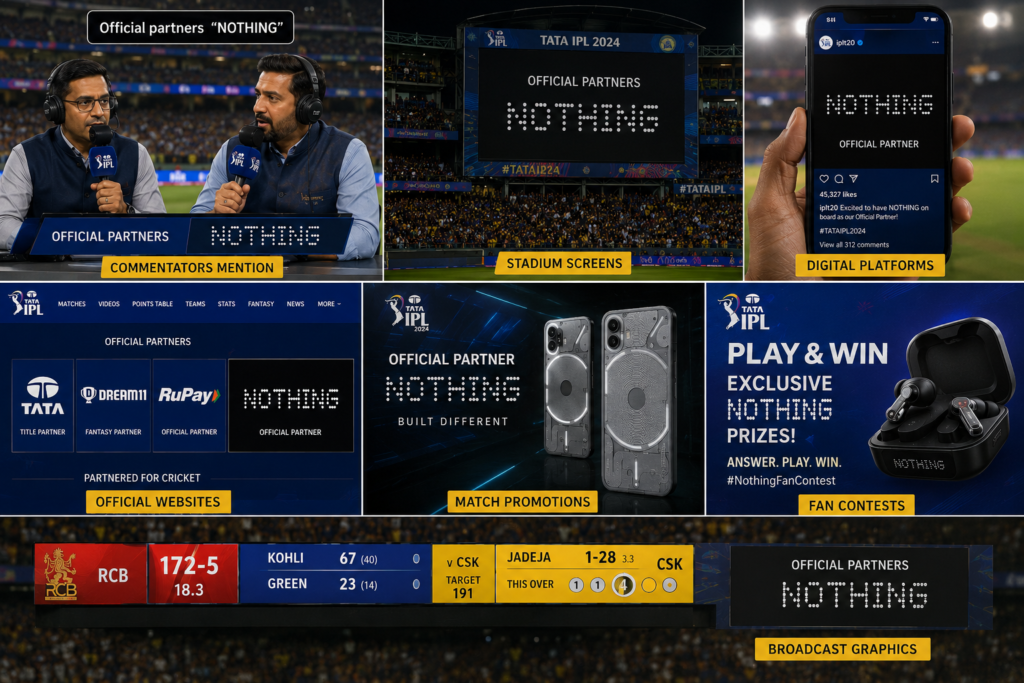
Official partners receive visibility throughout the tournament.
Their logos may appear on:
- Broadcast graphics
- Stadium screens
- Digital platforms
- Official websites
- Match promotions
- Fan contests
Although they don’t own the tournament name,
they remain visible throughout the season.
3. Team Sponsorship
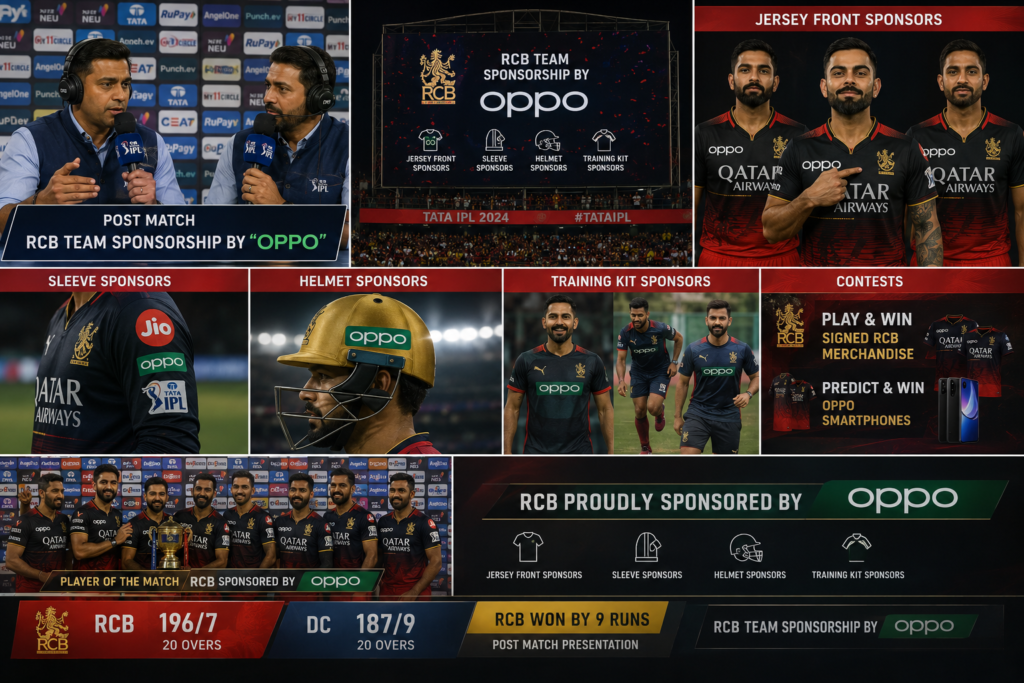
Many companies choose to sponsor individual teams.
Examples include:
- Jersey front sponsors
- Sleeve sponsors
- Helmet sponsors
- Training kit sponsors
Imagine supporting Royal Challengers Bengaluru for years.
Over time,
you repeatedly associate the team’s emotions with its sponsors.
That emotional connection becomes stronger every season.
4. Athlete Sponsorship
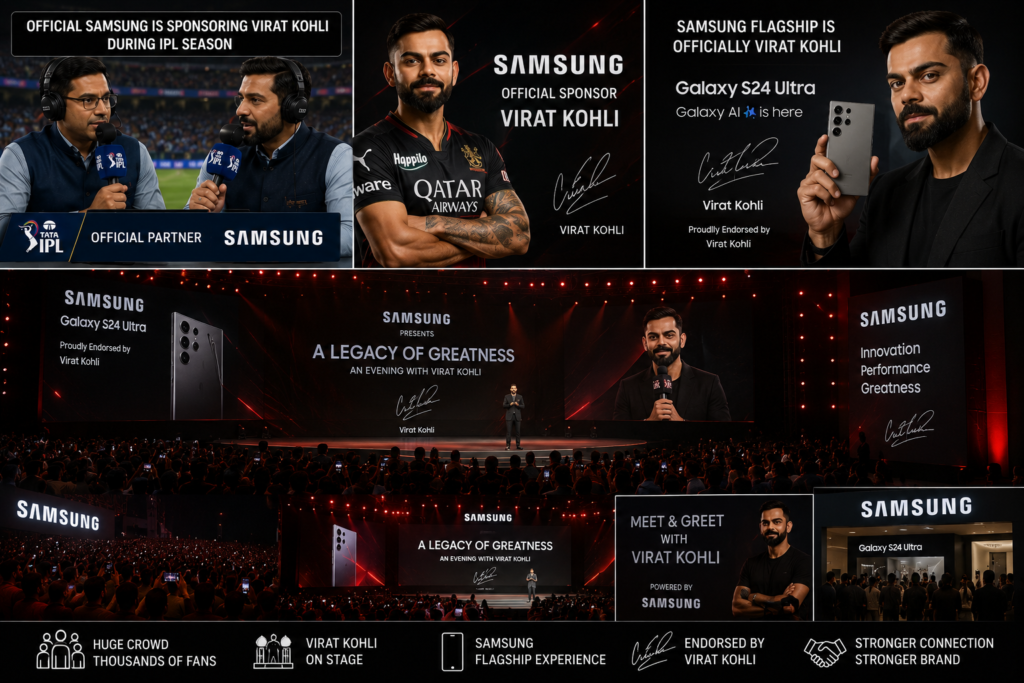
Sometimes the athlete becomes more powerful than the event.
Think about:
- Virat Kohli
- Lionel Messi
- Cristiano Ronaldo
- Roger Federer
- Lewis Hamilton
When these athletes endorse a brand,
their credibility transfers to the company.
This is called the Halo Effect.
Consumers subconsciously think,
“If my favorite athlete trusts this brand, maybe I can too.”
That’s why athlete partnerships often become long-term relationships instead of one-time advertisements.
5. Digital Sponsorship
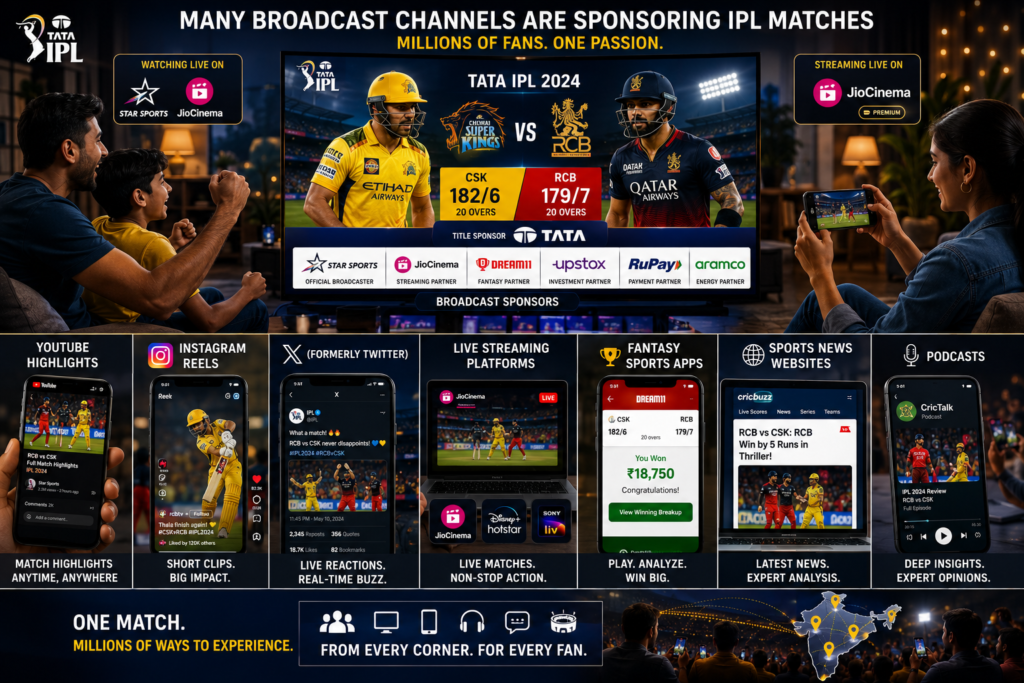
Today’s sports experience doesn’t end inside the stadium.
Fans also consume sports through:
- YouTube highlights
- Instagram Reels
- X (formerly Twitter)
- Live streaming platforms
- Fantasy sports apps
- Sports news websites
- Podcasts
Brands now sponsor these digital experiences as well.
For example,
while watching highlights,
you may notice:
“Replay presented by Brand X.”
Or while checking live scores,
the scoreboard itself may be sponsored.
This ensures the brand stays visible even after the match ends.
Why Brands Want Multiple Touchpoints
Imagine you see a brand only once.
You might forget it.
Now imagine seeing the same brand:
- Before the match
- During the toss
- During every over
- During the strategic timeout
- During the replay
- During player interviews
- On social media after the match
- In post-match analysis
- In highlight videos the next day
You’ve now encountered that brand many times without feeling interrupted.
This is known as a multi-touchpoint marketing strategy.
Instead of relying on one advertisement,
brands surround the customer throughout the entire experience.
Every interaction strengthens familiarity.
Modern Sports Sponsorship Doesn’t End at the Stadium
Years ago,
sports sponsorship mainly meant banners around the stadium.
Today,
technology has completely transformed the game.
When a brand sponsors a sporting event,
it often gains visibility across multiple channels simultaneously.
For example:
Television Broadcast
Millions of viewers watch sponsor logos during the live match.
OTT Platforms
Streaming apps display branded overlays, scorecards, and promotional integrations.
Social Media
Every highlight clip, meme, interview, and celebration can carry sponsor branding.
Influencers
Sports creators discuss matches while naturally mentioning sponsors.
Fantasy Sports Apps
Fans interact with sponsor branding while creating teams and checking live scores.
News Websites
Match reports and statistics often include sponsored sections.
One sponsorship investment now reaches audiences across television, mobile apps, websites, social platforms, and digital content.
Why Sports Sponsorship Creates Continuous Visibility
Traditional advertisements usually disappear after a campaign ends.
Sports sponsorship works differently.
Think about an IPL season.
It lasts for weeks.
During that period, fans:
- Watch matches almost every day.
- Discuss performances with friends.
- Share memes.
- Follow player interviews.
- Read match previews.
- Watch post-match analysis.
- Check fantasy league scores.
Each interaction creates another opportunity for the sponsor to appear.
Instead of one advertisement,
the brand receives hundreds of natural exposures.
That’s why companies often view sponsorship as a long-term investment rather than a short-term expense.
The Real Product Isn’t the Logo
Many people believe brands sponsor sports just to display their logo.
In reality,
the logo is only the beginning.
The real objective is to own a place in the fan’s mind.
A sponsor wants consumers to think:
- “I’ve seen this brand before.”
- “This company supports the sport I love.”
- “I trust this brand.”
- “It feels familiar.”
Notice something important.
None of these thoughts involve product features or discounts.
They involve emotions.
And emotions often influence purchasing decisions more than facts.
A Real-Life Example
Imagine two sportswear brands.
Brand A spends millions on online advertisements for one month.
After the campaign ends,
the ads disappear.
Brand B becomes the official sponsor of a major football league for five years.
Every match,
every jersey,
every interview,
every trophy celebration,
and every social media highlight features Brand B.
Five years later,
which brand is more likely to be remembered?
For most consumers,
it’s Brand B.
Not because it shouted louder,
but because it became part of unforgettable sporting moments.
That is the true power of sports sponsorship.
Chapter 3: Why Brands Sponsor Sports, The Hidden Psychology Behind Sports Sponsorship
Until now, we’ve answered two important questions.
- Why do brands sponsor sports instead of running more advertisements?
- How does sports sponsorship work behind the scenes?
Now we’re going to uncover the real secret.
This chapter explains why sports sponsorship actually works on the human mind.
Because here’s something interesting.
If sponsorship only meant putting a logo on a stadium,
companies wouldn’t spend billions of dollars every year.
There has to be something much deeper.
There is.
The world’s biggest brands don’t just sponsor sports.
They sponsor human emotions.
Every six.
Every goal.
Every trophy.
Every celebration.
Every tear of joy.
Every unforgettable comeback.
The brain quietly connects those emotional moments with the brands present at that moment.
This is where consumer psychology becomes more powerful than advertising.
Let’s explore the psychological principles behind it.
1. The Mere Exposure Effect: Why Familiar Brands Feel Safer
Imagine two sports shoe brands.
One you’ve never heard of.
The other you’ve seen during:
- IPL
- FIFA World Cup
- Olympics
- Formula 1
- Wimbledon
Both shoes have similar quality.
Which one are you more likely to trust?
Most people choose the familiar brand.
Why?
Not because they’ve researched it.
Because they’ve seen it repeatedly.
Psychologists call this the Mere Exposure Effect.
The principle is simple.
The more often people see something, the more they tend to like and trust it.
This doesn’t happen consciously.
Your brain interprets familiarity as safety.
Real Example
Think about Emirates.
Even people who have never flown with Emirates recognize its logo.
Why?
Because they’ve seen it:
- On football jerseys.
- Around stadiums.
- During Champions League broadcasts.
- At international sporting events.
Years of repeated exposure create familiarity.
Familiarity creates trust.
Trust influences purchasing decisions.
Business Lesson
Companies don’t sponsor one tournament expecting immediate sales.
They invest in repeated visibility over many years.
Consumer Lesson
Just because a brand feels familiar doesn’t automatically make it the best option.
Always compare products based on quality, price, and value, not familiarity alone.
2. Emotional Association: Brands Borrow Your Happiness
Imagine India wins the Cricket World Cup.
Fans celebrate.
People hug each other.
Fireworks begin.
Players lift the trophy.
Now pause for a moment.
Look around.
Sponsor logos appear everywhere.
- Trophy backdrop.
- Player jerseys.
- Stadium screens.
- Broadcast graphics.
- Social media highlights.
Something fascinating happens inside the brain.
The happiness from the victory becomes emotionally linked with the brands visible during that moment.
This is called Emotional Association.
Brands don’t create the emotion.
They simply become part of it.
Real Example
Think about Coca-Cola.
The company rarely advertises only soft drinks during major sporting events.
Instead,
it associates itself with:
- Celebration.
- Friendship.
- Victory.
- Family.
- Togetherness.
Years later,
those emotional connections remain stronger than the advertisement itself.
Business Lesson
People rarely remember advertisements.
They remember experiences.
Great brands become part of memorable experiences.
Consumer Lesson
Positive emotions can influence purchasing decisions.
Ask yourself:
“Am I buying this because I genuinely like the product,
or because I associate it with happy memories?”
3. The Halo Effect: Success Spreads to the Brand
Imagine Virat Kohli endorses a sports brand.
Or Lionel Messi wears a particular pair of boots.
Or Neeraj Chopra appears in an advertisement.
People often think,
“If they trust this brand,
it must be good.”
This psychological shortcut is called the Halo Effect.
The positive qualities of one person transfer to another object.
The athlete becomes successful.
The brand appears successful too.
Examples
Nike and Michael Jordan.
Adidas and Lionel Messi.
Puma and Virat Kohli.
Red Bull and Max Verstappen.
The athlete’s reputation enhances the brand’s reputation.
Business Lesson
Choosing the right ambassador is more important than choosing the most famous one.
Values should align.
Consumer Lesson
Celebrity endorsements create trust,
but trust should never replace research.
Always evaluate products independently.
4. Social Proof: If Millions Love It, It Must Be Good
Imagine walking past two restaurants.
Restaurant A is empty.
Restaurant B has people waiting outside.
Which one seems more attractive?
Most people choose Restaurant B.
This is called Social Proof.
Humans naturally look at others when making decisions.
Sports amplify this effect.
Millions of fans watch the same event.
Millions see the same sponsors.
That widespread visibility makes brands appear more credible.
Example
During IPL,
millions of viewers repeatedly see brands like:
- Dream11
- Tata
- JioHotstar
- CEAT
- Angel One
Whether people consciously notice them or not,
their repeated presence signals that these are established companies.
Business Lesson
Visibility creates credibility.
Credibility creates confidence.
Confidence encourages purchases.
Consumer Lesson
Popularity doesn’t always equal quality.
Use reviews, comparisons, and personal needs before making decisions.
5. Tribal Psychology: Fans Become Part of a Community
One of the strongest human instincts is belonging.
Sports create tribes.
People proudly say:
“I’m an RCB fan.”
“I’m a Barcelona supporter.”
“I’m a Manchester United fan.”
“I’m a CSK supporter.”
That identity becomes part of who they are.
Now imagine your favorite team is sponsored by a particular brand.
Over time,
the sponsor quietly becomes part of your community as well.
Example
Many football fans associate Emirates with Arsenal.
Some associate Etihad with Manchester City.
Others associate Red Bull with Formula 1.
These connections develop over years,
not days.
Business Lesson
Brands don’t simply sponsor teams.
They sponsor communities.
Communities create long-term loyalty.
Consumer Lesson
Brand loyalty is powerful,
but remember that supporting a team doesn’t require blindly supporting every sponsor.
6. Classical Conditioning: The Psychology of Association
One of the oldest principles in psychology is Classical Conditioning, introduced by Ivan Pavlov.
The idea is simple.
When two things repeatedly appear together,
our brains begin linking them.
Sports sponsorship uses this principle constantly.
For example:
Exciting cricket match
- Sponsor logo
↓
Repeated hundreds of times
↓
Positive emotional association
Eventually,
the brand itself begins triggering positive feelings,
even outside the sporting event.
Business Lesson
Repeated positive associations strengthen brand image.
Consumer Lesson
Recognize that brands often become emotionally appealing through repeated association,
not necessarily because of superior products.
7. Memory Over Sales: The Real Goal of Sponsorship
Many people believe sports sponsorship is designed to increase immediate sales.
Actually,
its first objective is much simpler.
Be remembered.
Imagine you’re buying a sports drink.
You see:
Brand A
Brand B
Brand C
One of them feels instantly familiar.
That’s often the brand you’ve unknowingly seen during dozens of sporting events.
Marketing researchers call this mental availability.
The easier a brand is to recall,
the more likely it is to be considered during purchase.
Why Sponsorship Is More Powerful Than One Advertisement
Let’s compare.
Traditional Advertisement
- Seen once.
- Often skipped.
- Easily forgotten.
- Interrupts entertainment.
Sports Sponsorship
- Seen hundreds of times.
- Integrated into the experience.
- Builds familiarity.
- Creates emotional connections.
- Strengthens long-term memory.
That’s why the world’s biggest companies continue investing billions in sports sponsorships.
They’re not buying impressions.
They’re building relationships.
Consumer Perspective: What Can We Learn?
Understanding this psychology helps you become a smarter consumer.
Here are some practical lessons.
1. Familiarity influences decisions.
A familiar brand isn’t automatically the best brand.
Compare before buying.
2. Emotions affect purchasing.
Exciting sporting moments can create positive feelings toward sponsors.
Be aware of those emotional influences.
3. Celebrity endorsements are persuasive.
Admire athletes,
but evaluate products independently.
4. Popularity isn’t proof of quality.
A heavily advertised or highly visible brand may still not be the right choice for your needs.
5. Separate emotion from value.
Ask yourself:
“Would I still choose this product if I had never seen it during a sporting event?”
That question alone can lead to more thoughtful purchasing decisions.
Key Takeaways
- The success of Why Brands Sponsor Sports is rooted in psychology rather than visibility alone.
- The Mere Exposure Effect makes repeatedly seen brands feel more familiar and trustworthy.
- Emotional Association links positive sporting moments with sponsor brands.
- The Halo Effect transfers an athlete’s credibility and success to the brands they endorse.
- Social Proof increases trust by making sponsored brands appear established and widely accepted.
- Tribal Psychology strengthens loyalty by connecting brands with passionate fan communities.
- Classical Conditioning creates long-term positive associations through repeated exposure during emotional experiences.
- For businesses, sponsorship builds memory, trust, and long-term brand equity.
- For consumers, understanding these psychological principles helps separate emotional influence from objective product evaluation.
Chapter 4: Sports Sponsorship vs Traditional Advertising, Which One Works Better?
Now comes the biggest question.
If sports sponsorship is so effective, why do companies still spend billions on advertisements?
Should businesses completely stop advertising?
Or should they sponsor every sporting event?
The answer is…
Neither.
The world’s most successful companies don’t choose one over the other.
They understand that advertising and sponsorship solve different marketing problems.
Think of them as two players on the same team.
Let’s understand why.
The Difference Between Advertising and Sponsorship
Imagine opening YouTube.
Before your video starts,
you watch a 30-second advertisement.
Its goal is simple.
Convince you to take action immediately.
Now imagine watching an IPL match.
Throughout the game,
you repeatedly notice Tata,
Dream11,
CEAT,
and dozens of other sponsor logos.
No one is asking you to buy anything.
The objective is different.
One strategy tries to create action today.
The other tries to create memory for tomorrow.
Advertising Sells. Sponsorship Builds.
This is perhaps the simplest way to understand the difference.
Advertising says:
“Buy our product.”
Sponsorship says:
“Remember our brand.”
Both are valuable.
But they operate at different stages of the customer journey.
Let’s Compare Them
| Factor | Traditional Advertising | Sports Sponsorship |
|---|---|---|
| Primary Goal | Immediate sales | Long-term brand building |
| Duration | Short campaign | Months or years |
| Consumer Experience | Interrupts content | Becomes part of the experience |
| Emotional Impact | Moderate | Very High |
| Brand Recall | Short-term | Long-term |
| Trust Building | Limited | Strong |
| Customer Relationship | Transactional | Emotional |
| Cost | Flexible | High investment |
| Best For | Promotions, launches, offers | Brand awareness and loyalty |
Notice something interesting.
Neither strategy is better.
They simply solve different business objectives.
Advertising Is Like Speed Dating
Imagine meeting someone for five minutes.
You introduce yourself.
Talk briefly.
Then leave.
That’s how advertising works.
It creates a quick interaction.
If the message is good,
people may remember it.
If not,
it’s forgotten within minutes.
Sponsorship Is Like a Long-Term Friendship
Now imagine meeting the same person every weekend for five years.
You celebrate victories together.
Watch matches together.
Create memories together.
Eventually,
trust develops naturally.
That’s exactly how sponsorship works.
Brands repeatedly appear during meaningful experiences until they become familiar.
Why Big Brands Use Both
Let’s take Nike as an example.
Nike sponsors athletes like:
- Cristiano Ronaldo
- Kylian Mbappé
- LeBron James
This builds aspiration,
credibility,
and emotional connection.
But Nike also runs:
- Television commercials
- YouTube advertisements
- Instagram campaigns
- Influencer collaborations
- Product launches
Why?
Because sponsorship creates awareness,
while advertising converts awareness into purchases.
Together,
they create a complete marketing strategy.
Example: Coca-Cola
Imagine the FIFA World Cup.
Coca-Cola sponsors the tournament.
Millions of fans see the brand throughout the event.
But Coca-Cola doesn’t stop there.
At the same time,
it launches television commercials,
digital campaigns,
retail promotions,
and supermarket discounts.
Here’s the sequence.
Step 1
Sports sponsorship creates familiarity.
↓
Step 2
Advertisements remind people.
↓
Step 3
Retail promotions encourage purchases.
↓
Step 4
Customers buy the product.
Marketing isn’t one activity.
It’s a connected system.
Example: Dream11 During IPL
Dream11 is one of India’s biggest examples of combining sponsorship with advertising.
During IPL,
the company:
- Sponsors the tournament.
- Runs television commercials.
- Collaborates with cricket influencers.
- Creates YouTube campaigns.
- Uses social media extensively.
- Offers referral programs.
- Sends push notifications.
Imagine relying only on television commercials.
Many viewers might skip them.
Now imagine seeing Dream11:
Before the toss.
During every over.
On scoreboards.
In advertisements.
On Instagram.
On YouTube.
Inside fantasy cricket discussions.
The combined effect is far stronger.
Why Sponsorship Creates Better Brand Recall
Psychologists often explain memory through repetition and emotion.
Advertisements usually offer repetition.
Sports sponsorship offers:
- Repetition
- Emotion
- Context
- Storytelling
Imagine watching your favorite team lift the trophy.
The sponsor logo appears in every photograph.
Years later,
you may forget the advertisement.
But you’ll still remember the championship celebration.
That’s why sponsorship builds stronger memories.
Why Advertisements Still Matter
If sponsorship is so powerful,
why not stop advertising completely?
Because sponsorship has limitations.
For example,
sports sponsorship cannot easily communicate:
- Product features.
- Pricing.
- Discounts.
- Limited-time offers.
- New product launches.
Advertisements are much better for these objectives.
Imagine Apple launching a new iPhone.
Simply sponsoring a football tournament won’t explain:
- Camera improvements.
- Battery life.
- AI features.
- Pricing.
Advertising fills that gap.
Sponsorship Creates Curiosity. Advertising Answers Questions.
Think of sponsorship as the first conversation.
Advertising is the explanation that follows.
Example.
You repeatedly notice a new sportswear brand during IPL.
Later,
you search Google.
Watch YouTube reviews.
Visit the website.
Read customer reviews.
Finally,
you make a purchase.
Without sponsorship,
you may never have searched.
Without advertising,
you may never have understood the product.
Both work together.
The Modern Marketing Funnel
Today’s leading brands rarely rely on a single channel.
Instead,
they build an integrated customer journey.
Sports Sponsorship
        ↓
Brand Awareness
        ↓
Curiosity
        ↓
Digital Advertising
        ↓
Website Visit
        ↓
Social Media Engagement
        ↓
Product Research
        ↓
Purchase
        ↓
Customer Experience
        ↓
Repeat Purchase
        ↓
Brand Loyalty
Notice that sponsorship often starts the journey,
but many other marketing activities help complete it.
Which Businesses Should Invest in Sports Sponsorship?
Not every company needs to sponsor the IPL or FIFA World Cup.
The right strategy depends on business size and objectives.
Large Brands
Examples:
- Coca-Cola
- Adidas
- Nike
- Tata
- Emirates
Goal:
Build long-term brand leadership.
Mid-Sized Companies
Often sponsor:
- Regional tournaments.
- Local football clubs.
- Marathon events.
- College sports festivals.
Goal:
Increase regional brand awareness.
Startups
Most startups cannot afford global sponsorships.
Instead,
they can:
- Sponsor college events.
- Partner with local sports clubs.
- Support community cricket tournaments.
- Sponsor school competitions.
The principle remains the same.
Build trust by becoming part of meaningful community experiences.
Consumer Perspective: What Can We Learn?
Understanding the difference between sponsorship and advertising makes you a smarter consumer.
1. Sponsorship influences emotions.
Advertisements explain products.
Recognize the difference.
2. Familiar brands aren’t always superior brands.
Visibility doesn’t automatically equal quality.
Compare before buying.
3. Marketing works through multiple touchpoints.
A purchase often results from many interactions,
not one advertisement.
4. Companies aren’t just selling products.
They’re building memories.
That’s why some brands feel more familiar than others.
5. Become aware of the entire customer journey.
The moment you notice a brand during sports,
ask yourself:
“Am I becoming interested because of the product, or because I’ve repeatedly seen this brand?”
Awareness helps you make more intentional purchasing decisions.
Key Takeaways
- Why Brands Sponsor Sports and traditional advertising are complementary strategies, not competitors.
- Advertising focuses on immediate action, while sponsorship builds long-term familiarity, trust, and emotional connection.
- Sponsorship integrates seamlessly into experiences, whereas advertisements often interrupt them.
- Major brands such as Nike, Coca-Cola, and Dream11 combine sponsorship, advertising, digital marketing, and retail promotions to guide customers through the entire buying journey.
- Sponsorship is most effective for building brand recall, while advertising is essential for communicating product features, offers, and launches.
- Businesses should choose sponsorship opportunities that match their budget and audience, from global tournaments to local community events.
- Consumers benefit by recognizing how repeated exposure and emotional experiences influence brand perception.
Chapter 5: What Businesses, Startups, Marketers, and Consumers Can Learn from Why Brands Sponsor Sports
So far, we’ve explored:
- Why brands sponsor sports instead of running more advertisements.
- How sports sponsorship works behind the scenes.
- The psychology that makes sponsorship so powerful.
- Why sponsorship and advertising work better together.
Now let’s answer the most practical question.
What can we actually learn from Why Brands Sponsor Sports?
This chapter isn’t just for marketers.
It’s for:
- Business owners.
- Startup founders.
- Content creators.
- Marketing professionals.
- Students.
- Consumers.
Because the principles behind sports sponsorship extend far beyond cricket, football, or Formula 1.
They’re lessons about building trust, creating memories, and becoming unforgettable.
Let’s explore them.
What Businesses Can Learn from Why Brands Sponsor Sports
The world’s biggest companies don’t sponsor sports simply because they have large budgets.
They do it because they’ve learned an important marketing truth.
People remember experiences much longer than advertisements.
Here are the biggest lessons every business can apply.
Lesson 1: Don’t Chase Sales. Build Brand Recall.
Many businesses ask:
“How can we increase sales this month?”
Great brands ask a different question.
“Will customers remember us next year?”
Sales are temporary.
Brand recall lasts much longer.
Imagine launching a new coffee brand.
Instead of running advertisements for two weeks,
you sponsor a city’s annual marathon.
Thousands of runners,
spectators,
families,
and social media users interact with your brand.
Even if they don’t buy today,
they’ll remember your name tomorrow.
That’s the power of brand recall.
Business Lesson
Be memorable before trying to be profitable.
Customers buy from brands they remember.
Lesson 2: Become Part of People’s Lives
The most successful brands don’t simply sell products.
They become part of important moments.
Think about:
Coca-Cola
Celebrations.
Nike
Achievement.
Red Bull
Adventure.
Dream11
Cricket.
Apple
Creativity.
Information.
Notice something?
These brands aren’t remembered because of advertisements alone.
They’re remembered because they consistently appear during meaningful experiences.
Business Lesson
Ask yourself:
“Where does my customer experience happiness, excitement, or success?”
That’s where your brand should be.
Lesson 3: Consistency Beats Loud Marketing
Many businesses disappear after one campaign.
Successful brands remain visible for years.
Imagine sponsoring the same annual event for ten years.
Customers begin expecting your presence.
Eventually,
your brand becomes part of the tradition.
Consistency builds familiarity.
Familiarity builds trust.
Trust builds loyalty.
Business Lesson
Marketing isn’t about making the loudest noise.
It’s about showing up consistently.
Lesson 4: Invest in Communities, Not Just Customers
Sports fans are communities.
Communities create conversations.
Conversations create loyalty.
Instead of asking,
“How do we sell to customers?”
Ask,
“How do we support communities?”
This could mean sponsoring:
- Local cricket tournaments.
- College festivals.
- Charity runs.
- Startup events.
- Gaming competitions.
- Educational workshops.
When brands contribute to communities,
people naturally remember them.
Business Lesson
Community marketing often creates stronger loyalty than promotional marketing.
Lesson 5: Emotion Creates Stronger Brands Than Discounts
Discounts attract attention.
Emotions create attachment.
Imagine two brands.
Brand A constantly offers:
- 30% OFF.
- Flash Sale.
- Limited Offer.
Brand B consistently supports national sports events.
Years later,
which one feels more trustworthy?
Usually,
the second.
Because emotional memories last much longer than temporary discounts.
Business Lesson
Price creates transactions.
Emotion creates relationships.
What Startups Can Learn from Why Brands Sponsor Sports
Many startup founders think:
“We don’t have millions to sponsor the IPL.”
That’s perfectly fine.
The principle matters more than the budget.
Lesson 1: Start Small
Instead of sponsoring global tournaments,
support:
- College cricket leagues.
- School competitions.
- Local football clubs.
- Community marathons.
- Startup networking events.
The objective isn’t worldwide visibility.
It’s meaningful visibility among your target audience.
Lesson 2: Own a Niche Community
Imagine becoming the official sponsor of every startup hackathon in your city.
Within a few years,
your brand becomes associated with innovation.
That’s exactly how great brands begin.
Lesson 3: Think Long-Term
Startups often expect instant results.
Sports sponsorship teaches patience.
Great brands are built through consistent visibility over time.
What Marketers Can Learn from Why Brands Sponsor Sports
Sports sponsorship reveals several timeless marketing principles.
Marketing Lesson 1: Context Matters
A logo seen during an exciting World Cup final has more impact than the same logo shown in a random banner advertisement.
Environment influences perception.
Marketing Lesson 2: Attention Cannot Be Forced
People skip advertisements.
They rarely skip unforgettable sporting moments.
Successful marketers learn to integrate with experiences rather than interrupt them.
Marketing Lesson 3: Every Touchpoint Matters
Today’s customer journey looks like this.
See sponsor during IPL.
↓
Watch YouTube highlights.
↓
Read social media posts.
↓
Search Google.
↓
Visit website.
↓
Purchase later.
No single interaction creates the sale.
Marketing is the sum of many experiences.
Marketing Lesson 4: Brand Equity Is an Investment
Sales generate revenue.
Brand equity generates future revenue.
Sports sponsorship is one of the most effective ways to build brand equity over time.
What Consumers Can Learn from Why Brands Sponsor Sports
This may be the most important section of the entire article.
Understanding marketing psychology helps you become a smarter consumer.
Lesson 1: Familiar Doesn’t Always Mean Better
A brand you’ve seen hundreds of times during IPL naturally feels trustworthy.
But familiarity isn’t proof of quality.
Before buying,
compare:
- Features.
- Reviews.
- Price.
- Customer support.
- Value for money.
Lesson 2: Recognize Emotional Influence
Imagine your favorite team wins a championship.
The sponsor’s logo appears everywhere.
Your brain quietly associates positive emotions with that brand.
Simply recognizing this effect helps reduce unconscious bias.
Lesson 3: Ask Better Questions Before Buying
Instead of asking:
“Do I know this brand?”
Ask:
- Is it reliable?
- Does it fit my needs?
- Is it worth the price?
- Have I compared alternatives?
Those questions lead to better decisions.
Lesson 4: Marketing Isn’t Manipulation
Many people believe marketing tricks consumers.
Good marketing actually helps people discover products that solve problems.
Ethical marketing creates value.
Manipulative marketing creates regret.
As consumers,
our goal isn’t to reject marketing.
It’s to understand it.
Lesson 5: Awareness Gives You Control
Every time you notice a sponsor during a sporting event,
pause for a second.
Ask yourself:
“What is this brand trying to achieve?”
Usually,
the answer isn’t immediate sales.
It’s long-term memory.
Once you recognize that,
you’re no longer influenced automatically.
You’re making conscious decisions.
The Biggest Lesson from Why Brands Sponsor Sports
Let’s connect everything we’ve learned.
Sports sponsorship isn’t really about sports.
It’s about people.
People remember:
- Stories.
- Emotions.
- Communities.
- Celebrations.
- Heroes.
- Victories.
Great brands place themselves inside those moments.
That’s why they remain memorable for decades.
Marketing isn’t just about selling products.
It’s about becoming part of people’s lives.
Final Framework: Why Brands Sponsor Sports
Every successful sports sponsorship follows a similar journey.
Sporting Event
        ↓
Large Audience
        ↓
Repeated Brand Visibility
        ↓
Emotional Moments
        ↓
Consumer Psychology
        ↓
Brand Familiarity
        ↓
Trust
        ↓
Brand Recall
        ↓
Purchase Consideration
        ↓
Customer Experience
        ↓
Repeat Purchases
        ↓
Brand Loyalty
        ↓
Long-Term Business Growth
Notice something interesting.
The sponsorship itself doesn’t sell the product.
It builds the relationship that makes future purchases more likely.
Combined Lessons for Businesses and Consumers
| Businesses & Startups | Consumers |
|---|---|
| Invest in long-term brand building. | Don’t mistake familiarity for quality. |
| Create emotional connections instead of relying only on discounts. | Compare products before buying. |
| Support communities, not just customers. | Recognize how emotions influence decisions. |
| Focus on consistency rather than short-term campaigns. | Understand the psychology behind sponsorships. |
| Build trust before asking for sales. | Make intentional purchasing decisions instead of emotional ones. |
Key Takeaways
- Why Brands Sponsor Sports goes beyond advertising. It’s a strategy for building trust, emotional connection, and long-term brand recall.
- Businesses should focus on creating memorable experiences instead of chasing only immediate sales.
- Startups can apply the same principles by sponsoring local communities, niche events, or college competitions.
- Marketers can learn that relevance, consistency, and emotional storytelling often outperform aggressive promotional campaigns.
- Consumers who understand the psychology behind sports sponsorship can make more thoughtful purchasing decisions by separating emotional familiarity from actual product value.
Final Chapter: The Future of Sports Sponsorship and the Biggest Marketing Lesson Every Brand Should Learn
Let’s go back to the question we asked at the beginning of this article.
Why Brands Sponsor Sports instead of running more advertisements?
At first, the answer seemed simple.
To increase brand awareness.
But after exploring marketing psychology, consumer behavior, and real-world examples, we now know the answer is much deeper.
Brands don’t sponsor sports because people watch sports.
They sponsor sports because people remember emotions.
Every thrilling finish.
Every championship celebration.
Every emotional comeback.
Every standing ovation.
Every unforgettable sporting moment creates memories.
The smartest brands quietly become part of those memories.
That’s why sports sponsorship remains one of the most powerful marketing strategies ever created.
But this strategy is evolving.
Let’s see where it’s heading next.
The Future of Sports Sponsorship
Sports sponsorship has changed dramatically over the last twenty years.
Earlier, sponsorship mostly meant:
- A logo on a jersey.
- A banner inside a stadium.
- Television commercials during matches.
Today,
sports sponsorship has become much bigger.
It now combines:
- Artificial Intelligence
- Data Analytics
- Influencer Marketing
- Digital Streaming
- Social Media
- Creator Economy
- Interactive Fan Experiences
The future isn’t about placing logos.
It’s about creating experiences.
AI Will Personalize Sports Marketing
Imagine two cricket fans watching the same IPL match.
One supports Chennai Super Kings.
The other supports Royal Challengers Bengaluru.
In the future,
AI may show each fan completely different sponsor experiences.
For example:
A CSK fan may receive:
“Exclusive CSK merchandise available nearby.”
An RCB fan may receive:
“Meet your favorite RCB player this weekend.”
Same match.
Different sponsorship experience.
That’s hyper-personalization.
Brands will move from mass sponsorship to personal sponsorship experiences.
Digital Streaming Is Changing Sponsorship Forever
Millions of people now watch sports on:
- JioHotstar
- YouTube
- Amazon Prime Video
- Sony LIV
- FanCode
Streaming platforms collect valuable audience insights.
This allows sponsors to deliver:
- Personalized advertisements.
- Interactive contests.
- Live polls.
- Product recommendations.
- QR code offers.
- Instant purchases.
Instead of simply seeing a logo,
fans can interact with brands in real time.
Influencers Are Becoming Part of Sports Sponsorship
Sports marketing no longer belongs only to athletes.
Today,
fans also follow:
- Cricket analysts.
- Football creators.
- Sports YouTubers.
- Fantasy sports experts.
- Instagram creators.
Brands increasingly collaborate with these creators because people trust authentic voices.
The future of sponsorship isn’t only inside stadiums.
It’s also inside YouTube videos,
Instagram Reels,
podcasts,
and live streams.
Every Brand Wants to Build a Community
One of the biggest shifts in modern marketing is this.
Earlier,
brands wanted customers.
Today,
brands want communities.
Think about:
Nike Running Club.
Red Bull’s adventure community.
Formula 1 fan clubs.
Fantasy cricket communities.
Football supporter groups.
Communities generate conversations.
Conversations create loyalty.
Loyal customers become brand advocates.
That’s why the future belongs to brands that bring people together.
Sustainability Will Influence Sponsorship
Consumers today expect more than logos.
They want brands to stand for something meaningful.
Many companies now sponsor:
- Women’s sports.
- Grassroots sports.
- Paralympic athletes.
- Youth development programs.
- Environmental initiatives.
- Community sports events.
This creates a stronger emotional connection because consumers increasingly support brands that contribute positively to society.
The Biggest Mistake Brands Can Make
Many businesses believe:
“If we sponsor a major tournament,
customers will automatically buy our products.”
That’s rarely true.
Sponsorship creates:
Awareness.
Trust.
Familiarity.
Emotional connection.
Sales happen later,
through:
- Great products.
- Excellent customer service.
- Fair pricing.
- Positive customer experiences.
Sponsorship opens the door.
The product determines whether customers stay.
Frequently Asked Questions (FAQs)
1. Why do brands sponsor sports instead of running more ads?
Sports sponsorship helps brands build long-term awareness, emotional connections, trust, and brand recall. Unlike traditional advertisements, sponsorship becomes part of the fan experience instead of interrupting it.
2. Is sports sponsorship better than advertising?
Not necessarily.
Advertising and sponsorship serve different purposes.
Advertising drives immediate action.
Sports sponsorship builds long-term brand equity.
The strongest marketing strategies combine both.
3. Why do companies spend billions on IPL sponsorships?
The IPL attracts millions of viewers across television, streaming platforms, social media, and news channels. This repeated exposure helps brands strengthen recognition, trust, and long-term recall among a massive audience.
4. How does sports sponsorship influence consumer behavior?
Sports sponsorship leverages psychological principles such as:
- Mere Exposure Effect
- Emotional Association
- Halo Effect
- Social Proof
- Tribal Psychology
- Classical Conditioning
Together, these make brands feel more familiar and trustworthy.
5. Can startups benefit from sports sponsorship?
Yes.
Startups don’t need to sponsor global tournaments.
They can sponsor:
- College events.
- Local cricket leagues.
- Community marathons.
- School competitions.
- Startup conferences.
The goal is to become memorable within their target audience.
6. Why do brands sponsor athletes?
Athletes transfer their credibility, achievements, and reputation to the brands they endorse. This is known as the Halo Effect, where positive feelings toward the athlete positively influence perceptions of the brand.
7. What is the biggest advantage of sports sponsorship?
Its greatest strength is long-term brand recall.
Consumers may forget a commercial after a few days, but they often remember brands associated with iconic sporting moments for years.
8. Does sponsorship increase sales immediately?
Usually not.
Sports sponsorship primarily builds awareness and trust. Sales often occur later when consumers are ready to purchase and recall the familiar brand.
9. What is the biggest lesson businesses should learn?
Don’t focus only on selling products.
Focus on becoming memorable.
People buy from brands they remember and trust.
10. What is the biggest lesson consumers should learn?
Recognize that repeated exposure influences your preferences.
A familiar brand isn’t always the best brand.
Compare products objectively before making purchasing decisions.
Final Thoughts: The Real Product Was Never the Logo
At first glance,
sports sponsorship looks like a business transaction.
A company pays money.
Its logo appears on a jersey or stadium.
The event begins.
But that’s only what we see on the surface.
Behind every sponsorship lies a carefully designed strategy built on psychology, emotion, repetition, and long-term brand building.
The logo isn’t the real product.
The relationship is.
Brands aren’t just trying to sell shoes,
soft drinks,
bank accounts,
or airline tickets.
They’re trying to become part of the moments that matter most to people.
Because when fans celebrate,
they rarely remember every advertisement.
But they often remember the brands that stood beside those unforgettable moments.
That’s why sports sponsorship continues to outperform many traditional marketing strategies.
It doesn’t interrupt experiences.
It becomes part of them.
The Biggest Takeaway
The best brands don’t compete for attention for just 30 seconds.
They earn a place in people’s memories for years.
That is the true answer to Why Brands Sponsor Sports.
They aren’t just sponsoring a game.
They’re investing in trust, emotion, memory, and long-term relationships, because those are the foundations of brands that people remember, recommend, and return to for generations.