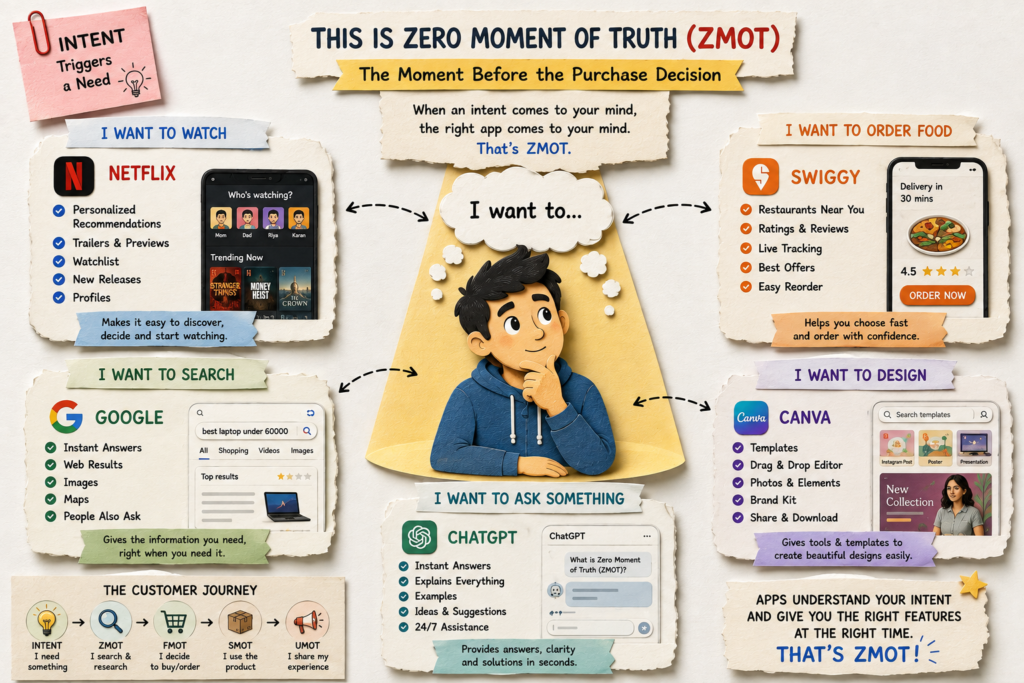
Zero Moment of Truth (ZMOT) starts long before a customer enters a store or clicks the “Buy Now” button.
Imagine you’re planning to buy a new smartphone. Instead of walking into the nearest store, what do you do first?
You search on Google.
You watch YouTube reviews.
You compare prices.
You read customer ratings.
You ask ChatGPT for recommendations.
You check Reddit discussions.
By the time you visit a website or a store, you’ve already decided which brand you’re most likely to buy.
That’s Zero Moment of Truth (ZMOT).
Today, companies don’t just compete on product quality or price. They compete for attention and trust before the purchase happens. The brands that win during this research phase are usually the ones customers end up buying.
Understanding Zero Moment of Truth (ZMOT) is one of the most valuable lessons in modern marketing because it explains why some brands consistently outperform their competitors, even when similar products are available.
Chapter 1: What Is Zero Moment of Truth (ZMOT)?
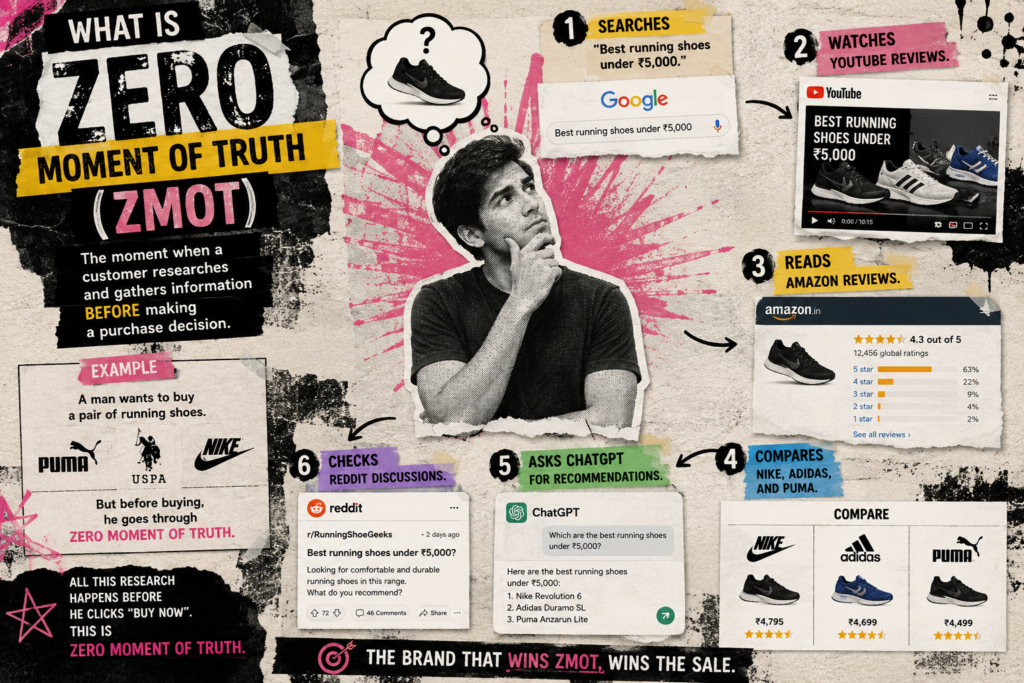
Zero Moment of Truth (ZMOT) is the moment when a customer researches a product or service before making a buying decision.
Instead of purchasing immediately after seeing an advertisement, customers first search for information online. They compare brands, read reviews, watch videos, explore social media, and ask AI assistants before deciding what to buy.
Simple Definition
Zero Moment of Truth (ZMOT) is the research stage where customers gather information before making a purchase.
Simple Example
Suppose Rahul wants to buy running shoes.
Instead of visiting a shoe store immediately, he:
- Searches “Best running shoes under ₹5,000.”
- Watches YouTube reviews.
- Reads Amazon reviews.
- Compares Nike, Adidas, and Puma.
- Asks ChatGPT for recommendations.
- Checks Reddit discussions.
After spending an hour researching, Rahul decides to buy Nike.
The purchase wasn’t decided in the store.
It was decided during the research process.
That research process is Zero Moment of Truth (ZMOT).
Chapter 2: Why Did Google Introduce Zero Moment of Truth?
Before the internet became part of everyday life, marketers believed customers followed a simple buying journey:
Advertisement → Store → Purchase
However, Google observed that customers were behaving differently.
Before buying anything, they were searching online, reading reviews, comparing alternatives, and watching videos.
Google introduced the concept of Zero Moment of Truth (ZMOT) in 2011 to describe this new stage in the customer journey.
Today, this stage has become even more important because customers also use:
- ChatGPT
- Gemini
- Perplexity AI
- YouTube
- Amazon reviews
Customers no longer rely on advertisements alone. They trust information gathered from multiple sources before making a decision.
Chapter 3: Traditional Buying Process vs Zero Moment of Truth
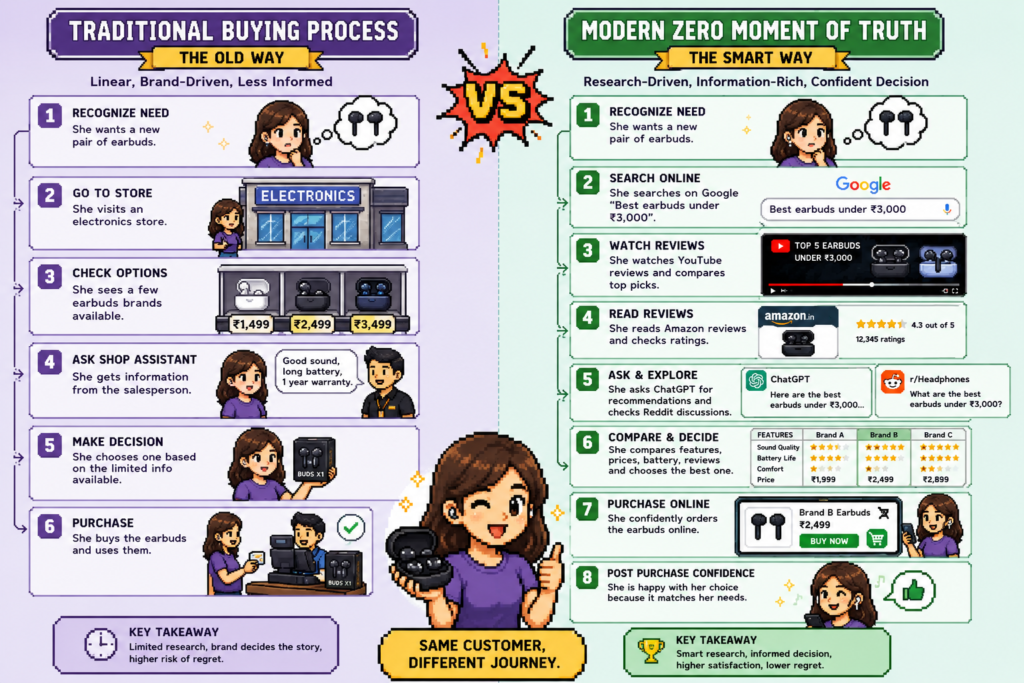
Traditional Buying Journey
- Customer sees an advertisement.
- Customer visits the store.
- Customer buys the product.
The decision happened mostly inside the store.
Modern Buying Journey (ZMOT)
- Customer sees an advertisement.
- Searches online.
- Reads reviews.
- Watches videos.
- Compares competitors.
- Asks AI tools.
- Visits the website.
- Makes the purchase.
Today, the buying decision often happens before the customer reaches the seller.
Why Is Zero Moment of Truth Important?
Imagine two coffee shops on the same street.
One has:
- 4.9-star Google rating
- Hundreds of positive reviews
- Great Instagram posts
- Helpful website
- Active social media
The other has:
- No reviews
- No website
- No online presence
Which one would you visit?
Most people choose the first one without even thinking.
That decision happened during the Zero Moment of Truth, before entering the shop.
Chapter 4: Where Does ZMOT Happen Today?
Customers perform research almost everywhere online.
Common places include:
Search Engines
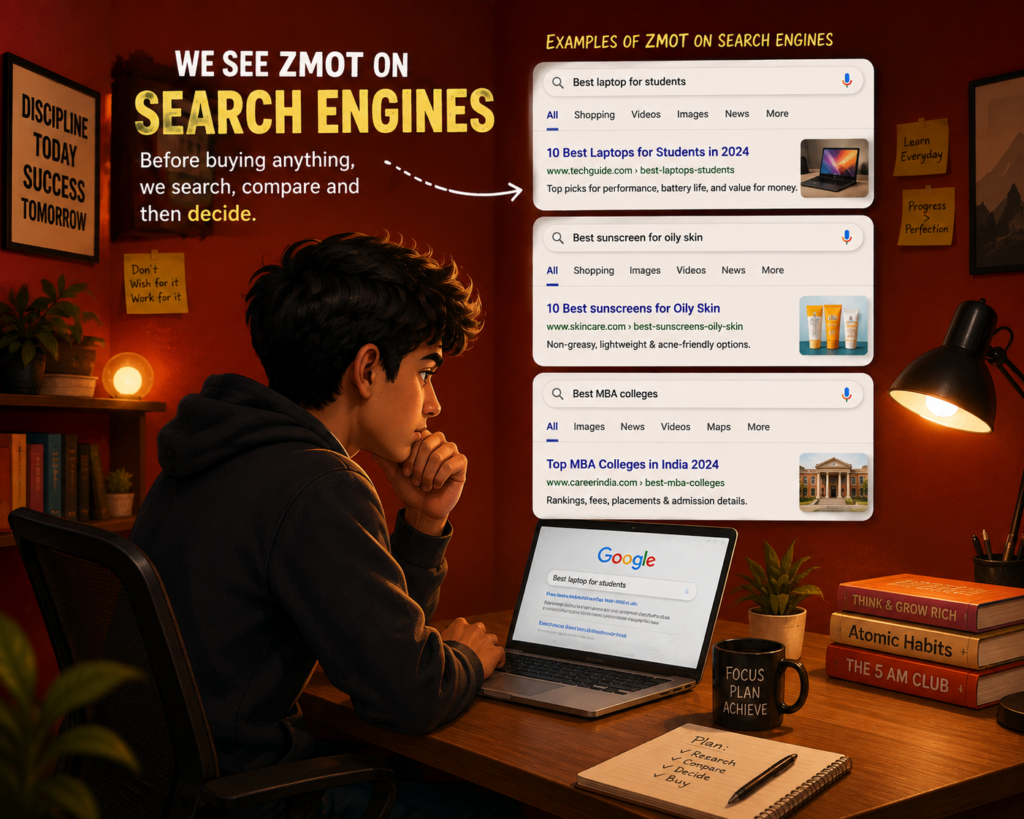
People search for answers before buying.
Example:
- Best laptop for students
- Best sunscreen for oily skin
- Best MBA colleges
YouTube
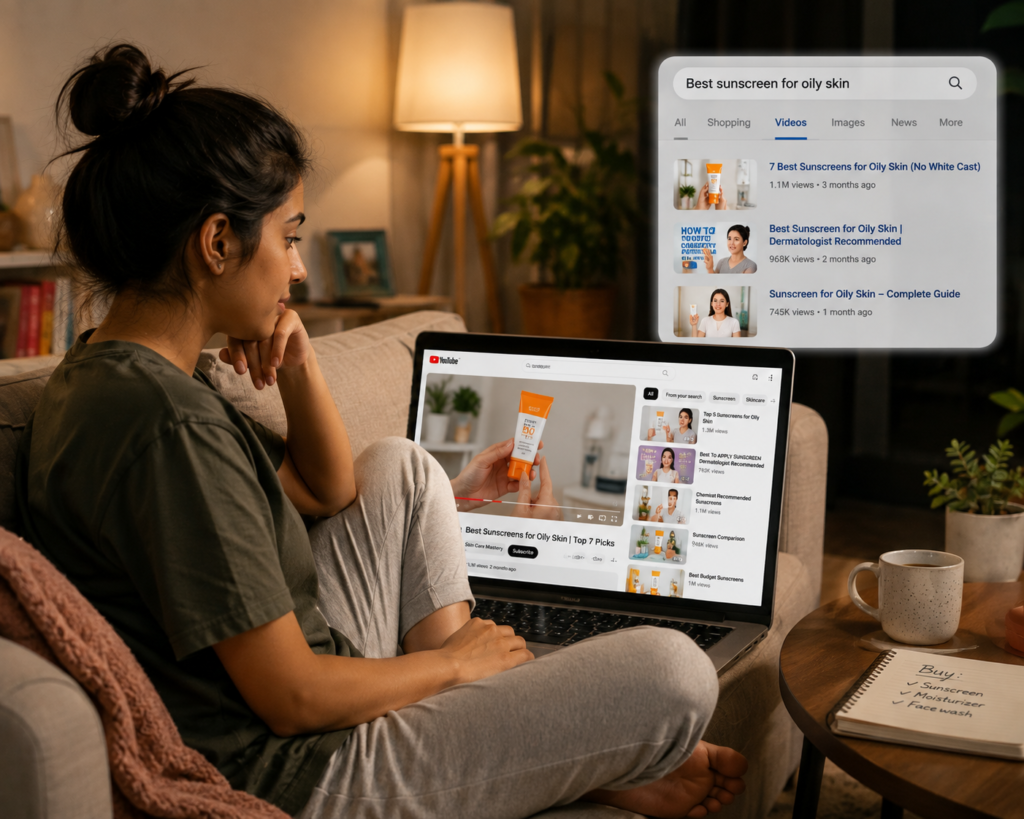
Customers watch:
- Product reviews
- Unboxing videos
- Comparisons
- Tutorials
Social Media
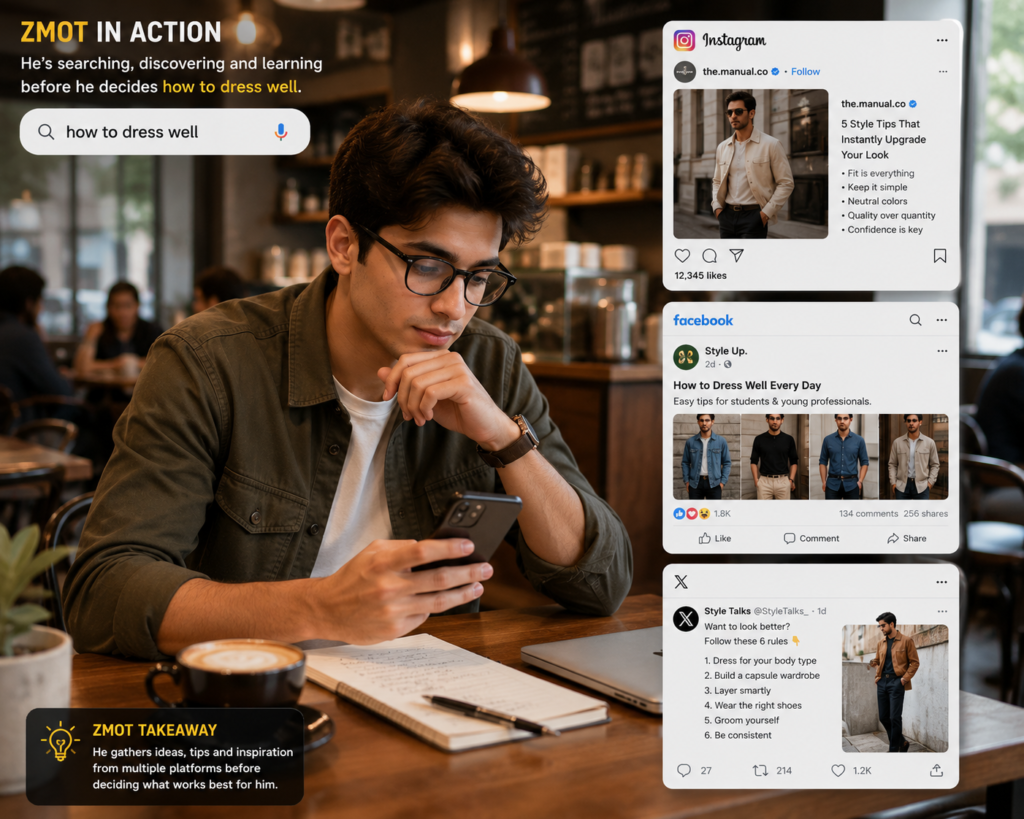
Instagram, LinkedIn, Facebook, and X influence buying decisions through creators, customer experiences, and brand content.
Review Platforms

Customers trust real experiences from other buyers.
Examples include:
- Google Reviews
- Amazon Reviews
- Flipkart Reviews
AI Assistants
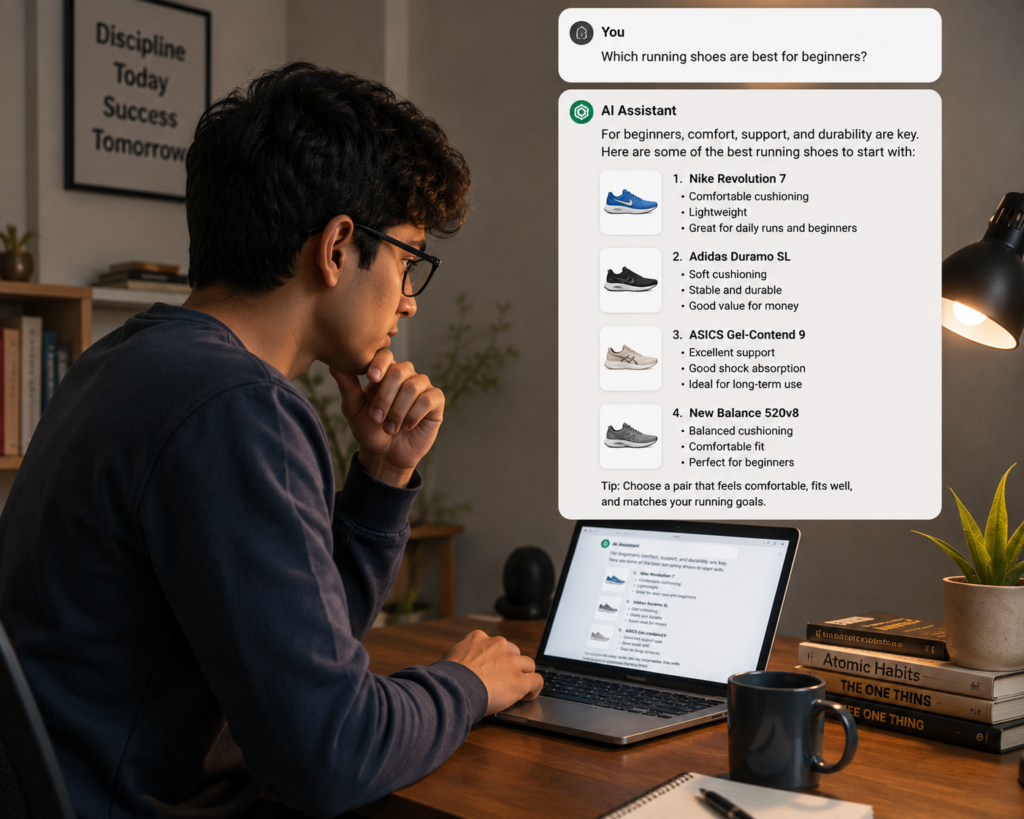
Increasingly, customers ask AI tools questions like:
- Which laptop should I buy?
- What’s the best CRM for startups?
- Which running shoes are best for beginners?
AI is quickly becoming part of the Zero Moment of Truth, helping customers make faster and more informed decisions.
Chapter 5: How Brands Win During the Zero Moment of Truth
Winning ZMOT isn’t about having the cheapest product.
It’s about building trust before the purchase.
Successful brands invest in:
- Helpful blog content
- SEO
- YouTube videos
- Customer reviews
- Testimonials
- Social proof
- Expert recommendations
- Fast websites
- AI-friendly content
- Strong brand reputation
When customers research, these brands appear everywhere, making the final buying decision much easier.
Chapter 6: Zero Moment of Truth (ZMOT) vs First Moment of Truth (FMOT) vs Second Moment of Truth (SMOT) vs Ultimate Moment of Truth (UMOT)
Understanding these four moments helps businesses see how customers move from discovering a product to becoming loyal advocates.
| Moment | What Happens? | Example |
|---|---|---|
| Stimulus | Customer notices a need or sees an advertisement. | You see an ad for Nike running shoes. |
| Zero Moment of Truth (ZMOT) | Customer researches before buying. | You read reviews, watch YouTube videos, ask ChatGPT, and compare brands. |
| First Moment of Truth (FMOT) | Customer decides whether to buy. | You purchase Nike shoes from Amazon or a store. |
| Second Moment of Truth (SMOT) | Customer experiences the product. | You use the shoes and find them comfortable. |
| Ultimate Moment of Truth (UMOT) | Customer shares the experience. | You leave a 5-star review, recommend them to friends, or post on social media. |
Simple Definition
Think of buying a smartphone.
- Stimulus: You see an iPhone advertisement.
- ZMOT: You research reviews, comparisons, and YouTube videos.
- FMOT: You purchase the phone.
- SMOT: You use it and experience its features.
- UMOT: You recommend it or post a review online.
Modern marketing focuses heavily on Zero Moment of Truth, because if a brand wins there, the remaining journey becomes much easier.
Real-World Examples of Zero Moment of Truth (ZMOT)
Amazon
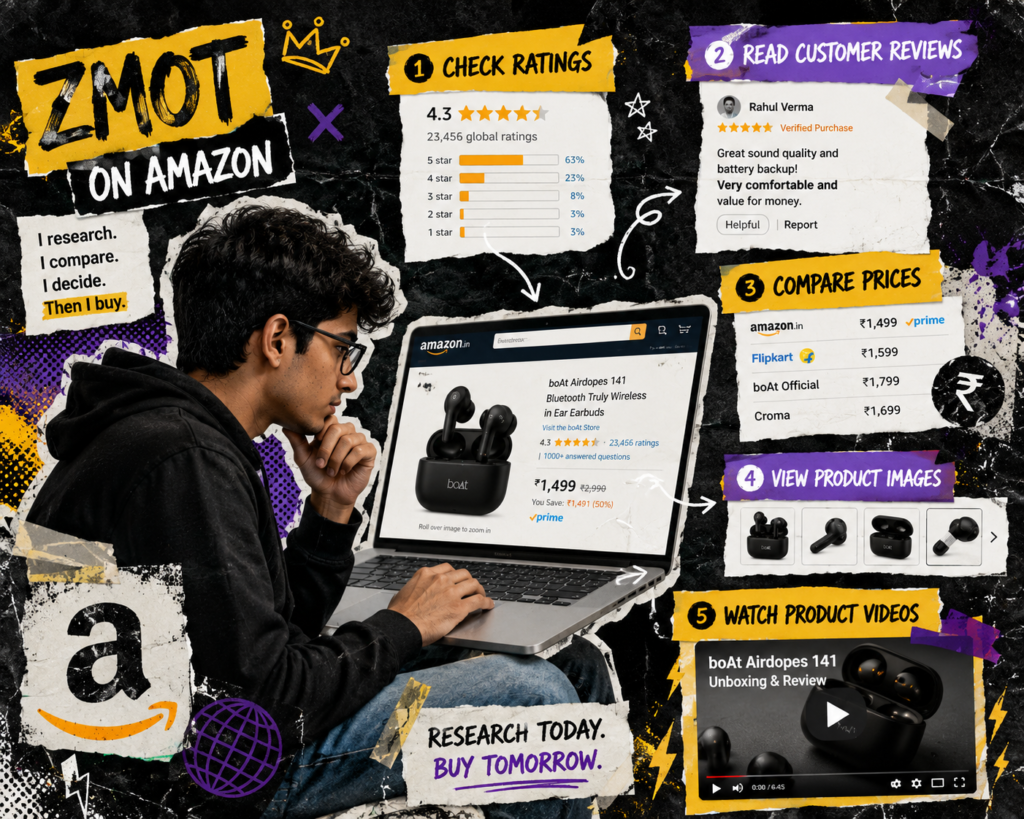
Imagine you’re buying wireless earbuds.
Before ordering, you usually:
- Check ratings
- Read customer reviews
- Compare prices
- View product images
- Watch product videos
Amazon understands that customers research before buying. That’s why it highlights reviews, ratings, FAQs, verified purchases, and comparison features to help customers make confident decisions.
ZMOT Lesson: Trustworthy information reduces buying hesitation.
Apple
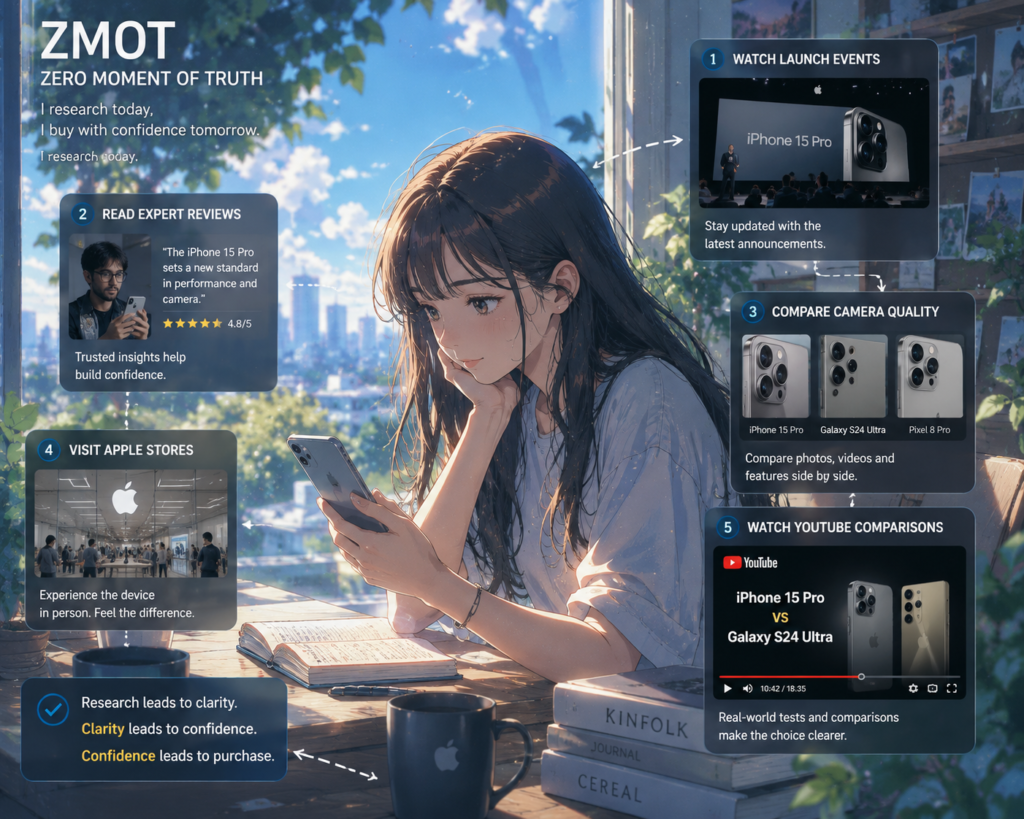
Apple knows customers spend weeks researching before purchasing expensive devices.
Potential buyers often:
- Watch launch events
- Read expert reviews
- Compare camera quality
- Visit Apple stores
- Watch YouTube comparisons
By the time customers enter the store, they’ve already decided.
ZMOT Lesson: Great storytelling and trusted product information influence buying decisions long before the purchase.
Swiggy
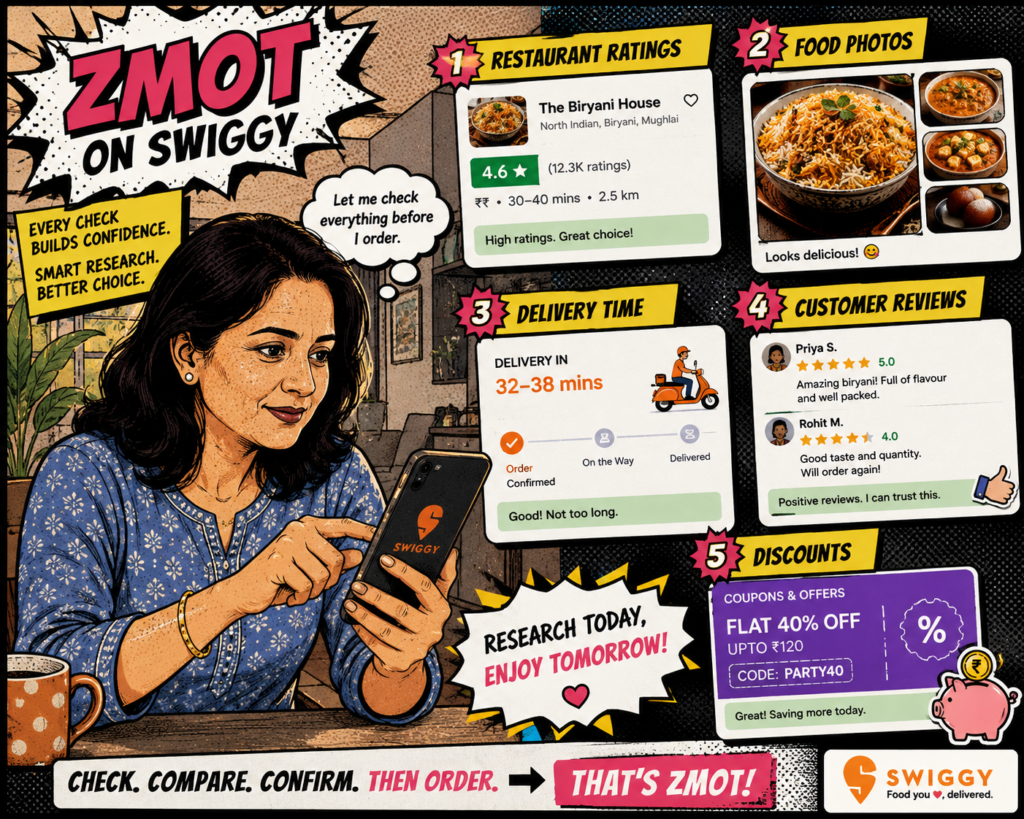
Suppose you’re hungry.
Before placing an order, you usually check:
- Restaurant ratings
- Food photos
- Delivery time
- Customer reviews
- Discounts
Swiggy understands that every one of these touchpoints influences the buying decision.
ZMOT Lesson: Convenience and trust drive purchases.
Netflix

Before starting a new series, viewers often:
- Watch trailers
- Read IMDb ratings
- Check Rotten Tomatoes
- Read social media opinions
- Ask friends for recommendations
Netflix improves this research process with personalized previews and AI recommendations.
ZMOT Lesson: The easier it is to choose, the more likely customers are to stay.
ChatGPT
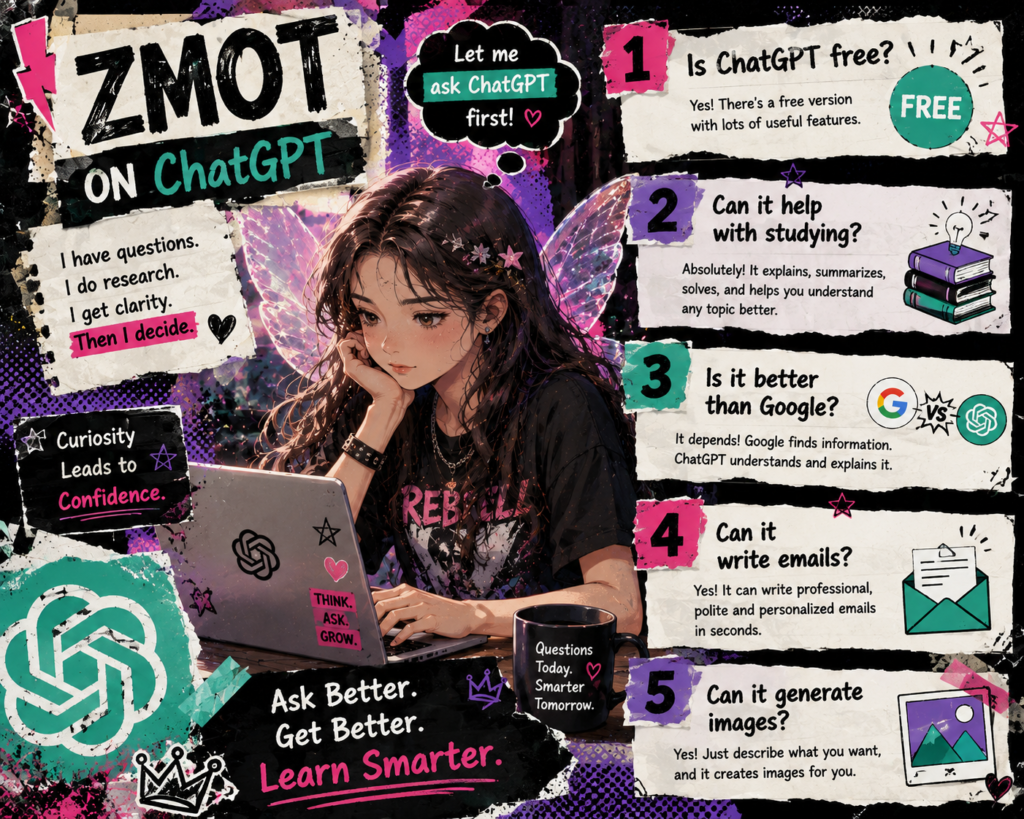
When people hear about AI, they often ask:
- Is ChatGPT free?
- Can it help with studying?
- Is it better than Google?
- Can it write emails?
- Can it generate images?
Instead of relying only on advertisements, people watch demonstrations, read articles, and ask others before trying it.
ZMOT Lesson: Demonstrating value before asking customers to sign up reduces uncertainty.
How AI Is Changing the Zero Moment of Truth (ZMOT)
Artificial Intelligence is transforming how customers research products.
A few years ago, people mainly searched on Google.
Today, they increasingly ask AI assistants:
- ChatGPT
- Gemini
- Perplexity AI
- Claude
Instead of reading ten websites, customers now expect one clear, personalized answer.
For example:
Instead of searching:
“Best laptop for MBA students”
A customer might simply ask:
“I’m an MBA student with a budget of ₹70,000. Which laptop should I buy?”
AI provides recommendations tailored to the customer’s needs, reducing research time.
This means businesses must optimize not only for search engines but also for AI-generated answers by creating trustworthy, structured, and genuinely helpful content.
How Businesses Can Win the Zero Moment of Truth
Winning ZMOT requires becoming the most trusted source during the customer’s research phase.
Here are proven strategies:
- Publish helpful, problem-solving blog posts.
- Invest in SEO to appear in search results.
- Encourage authentic customer reviews.
- Create educational YouTube videos.
- Stay active on social media.
- Answer common customer questions.
- Optimize content for AI search platforms.
- Build authority through expert content.
- Maintain a fast, mobile-friendly website.
- Showcase testimonials and case studies.
When customers consistently find valuable information from your brand, they are far more likely to choose you.
Frequently Asked Questions (FAQs)
1. What is Zero Moment of Truth (ZMOT)?
Zero Moment of Truth (ZMOT) is the stage where customers research products or services before making a purchase. They compare options, read reviews, watch videos, and seek recommendations before deciding.
2. Who introduced the Zero Moment of Truth?
Google introduced the Zero Moment of Truth concept in 2011 after observing that customers increasingly researched online before buying.
3. Why is ZMOT important?
Because today’s customers rarely buy immediately after seeing an advertisement. Winning the research stage builds trust and significantly increases the likelihood of a purchase.
4. Is ZMOT only for online businesses?
No. Restaurants, hospitals, educational institutions, retail stores, and local businesses are all influenced by online research, reviews, and recommendations before customers visit.
5. How is AI changing ZMOT?
AI helps customers get faster, more personalized answers through tools like ChatGPT, Gemini, and Perplexity. Businesses now need to create content that is helpful, trustworthy, and easy for both people and AI to understand.
Conclusion
Zero Moment of Truth (ZMOT) has fundamentally changed how customers make buying decisions.
Today, purchases are often influenced before customers visit a store or website. They search, compare, watch reviews, ask AI assistants, and seek opinions from others before making a choice.
For businesses, this means success is no longer determined only by having a great product. Brands must also earn trust during the research stage by creating valuable content, encouraging positive reviews, optimizing for search engines and AI platforms, and providing clear answers to customer questions.
As AI continues to reshape online discovery, the Zero Moment of Truth is evolving from a simple Google search into intelligent, personalized conversations. Brands that educate, build credibility, and deliver helpful experiences before the purchase will become the first choice when customers are ready to buy.
Remember: Customers don’t buy because they see your product. They buy because they trust the information they find before making a decision. Winning the Zero Moment of Truth means winning the customer’s confidence before the sale ever happens.