Have You Ever Wondered Why Insurance Companies Want You to Exercise?
Insurance Wellness Benefits are becoming increasingly common.
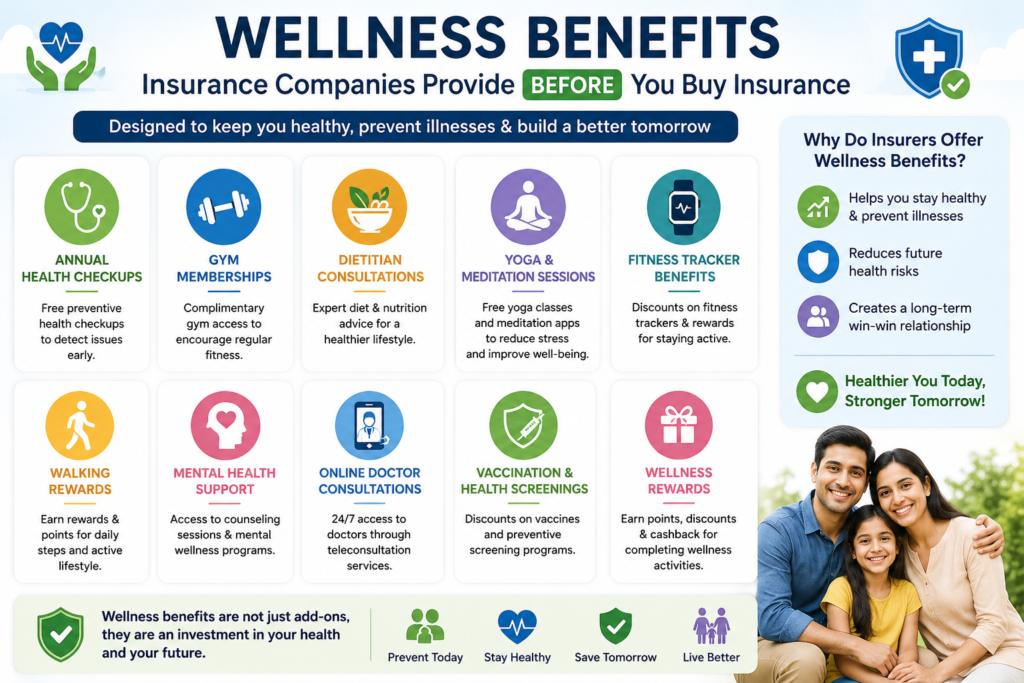
Buy a health insurance policy today, and we might receive benefits such as:
- Free gym memberships
- Annual health checkups
- Dietitian consultations
- Yoga sessions
- Meditation programs
- Mental health counseling
- Fitness tracker integration
- Walking rewards
- Health coaching
- Preventive screenings
At first glance, these benefits feel like generous freebies.
After all, why would an insurance company pay for your gym membership when its primary job is to pay your hospital bills?
It’s an interesting question that most people never stop to ask.
Think about it.
Insurance companies earn money by selling insurance policies.
They don’t own gyms.
They don’t run yoga studios.
They aren’t fitness brands.
So why are they investing in your health long before you ever file a claim?
The answer isn’t just customer care.
It’s a carefully designed business strategy built on marketing psychology, preventive healthcare, behavioral science, and long-term customer relationships.
Modern insurance companies have realized something important.
It’s far less expensive to help customers stay healthy than it is to pay for expensive medical treatments after they become sick.
In other words,
preventing illness is often more profitable than treating illness.
This represents one of the biggest shifts the insurance industry has experienced over the last decade.
Years ago, insurers focused almost entirely on paying claims after hospitalization.
Today, leading insurers are investing in helping customers avoid hospitalization altogether.
The role of an insurance company is quietly changing from financial protection to health partnership.
That’s why you’re seeing wellness benefits becoming a standard part of many modern health insurance plans.
What Are Insurance Wellness Benefits?
Insurance Wellness Benefits are additional health-focused services and rewards provided by insurance companies to help policyholders maintain a healthier lifestyle and reduce the likelihood of future medical claims.
Unlike traditional insurance coverage, which helps after an illness or accident occurs, wellness benefits are designed to encourage healthier habits before health problems arise.
Think of them as preventive healthcare services rather than claim-related benefits.
These benefits may include:
- Free gym memberships
- Annual preventive health checkups
- Online doctor consultations
- Nutrition and dietitian support
- Mental wellness counseling
- Yoga and meditation sessions
- Fitness challenges
- Health coaching
- Vaccination reminders
- Lifestyle disease screening
Rather than waiting for customers to become sick, insurers are actively encouraging behaviors that can improve long-term health.
This creates value for both sides.
Customers enjoy better health and additional services.
Insurance companies reduce the likelihood of high-value claims while building stronger, long-term relationships with policyholders.
That is what makes Insurance Wellness Benefits one of the most interesting examples of modern marketing and business strategy.
A New Era of Insurance
Insurance has quietly evolved over the years.
Traditional Insurance Model
- Buy a policy.
- Pay your premium.
- File a claim only when something goes wrong.
- Receive financial support after hospitalization.
The relationship between the customer and the insurer was mostly reactive.
Modern Insurance Model
Today, insurers engage with customers throughout the year by offering:
- Preventive healthcare services
- Digital wellness platforms
- Fitness incentives
- Lifestyle coaching
- Mental wellness support
- Regular health monitoring
- Personalized health recommendations
The relationship has become proactive instead of reactive.
Insurance companies are no longer saying:
“Call us when you get sick.”
They’re increasingly saying:
“Let’s help you stay healthy before you ever need to make a claim.”
That simple shift explains why wellness benefits have become one of the fastest-growing differentiators in the health insurance industry.
Table of Contents
- Have You Ever Wondered Why Insurance Companies Want You to Exercise?
- What Are Insurance Wellness Benefits?
- Chapter 1: Insurance Wellness Benefits vs Insurance Riders
- Chapter 2: The Hidden Marketing Psychology Behind Insurance Wellness Benefits
- 2. Behavioral Nudging: Encouraging Better Decisions Without Force
- 3. Risk Reduction Strategy: Lower Risk Means Lower Claims
- 4. Customer Lifetime Value (CLV): Healthy Customers Stay Longer
- 5. Customer Retention: Giving Customers Reasons to Stay
- 6. Habit Formation: Small Actions Create Long-Term Change
- 7. Gamification: Making Wellness Feel Enjoyable
- 8. Value-Added Services: Offering More Than Insurance
- 9. Shared Value Strategy: A Win-Win for Everyone
- Chapter 3: Real-World Examples of Insurance Wellness Benefits
Chapter 1: Insurance Wellness Benefits vs Insurance Riders
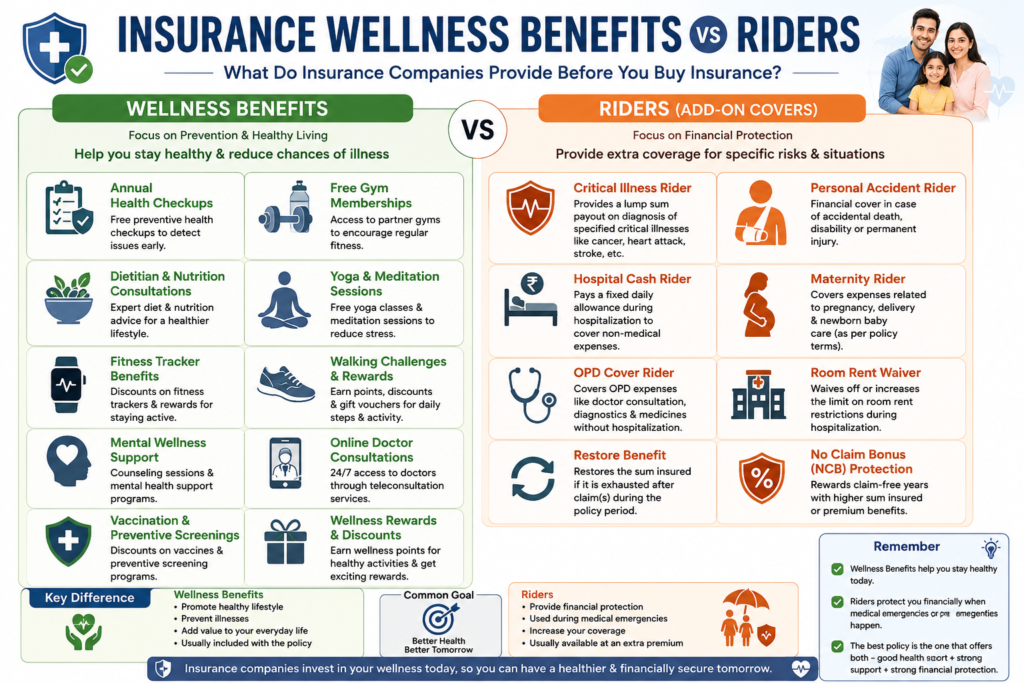
Many people use the terms wellness benefits and insurance riders interchangeably.
However, they are completely different.
Understanding this difference will help you choose the right insurance policy and appreciate why insurers are investing so heavily in wellness programs.
What Are Insurance Riders?
An Insurance Rider is an optional add-on that increases or customizes your insurance coverage by providing additional financial protection for specific situations.
Unlike wellness benefits, riders generally become useful after a medical event, accident, or hospitalization occurs.
Think of riders as extra layers of insurance protection.
For example, imagine you already have a health insurance policy worth ₹10 lakh.
You can enhance it by purchasing riders that cover additional risks such as critical illnesses, accidental disabilities, or maternity expenses.
Most riders require an additional premium because they increase the insurer’s financial liability.
What Are Insurance Wellness Benefits?
Insurance Wellness Benefits are preventive services designed to improve your health before you become ill.
Instead of increasing your insurance coverage, they encourage healthier lifestyles through rewards, screenings, consultations, and fitness programs.
The goal isn’t to pay larger claims.
The goal is to prevent claims from happening in the first place.
That’s the biggest difference.
Insurance Riders vs Insurance Wellness Benefits
| Insurance Riders | Insurance Wellness Benefits |
|---|---|
| Increase insurance coverage | Improve your overall health |
| Activated after illness or accidents | Used before illness occurs |
| Usually require additional premium | Often included with eligible plans |
| Reduce financial burden during emergencies | Reduce health risks through prevention |
| Provide financial compensation | Provide health-focused services and rewards |
Think of it this way:
Riders protect your money. Wellness benefits protect your health.
Modern insurers increasingly combine both to create more comprehensive insurance plans.
Types of Insurance Wellness Benefits
Today’s insurance companies offer far more than hospitalization coverage.
Many are becoming wellness partners by providing services that encourage healthier habits throughout the year.
Let’s explore the most common wellness benefits.
1. Free Annual Health Checkups
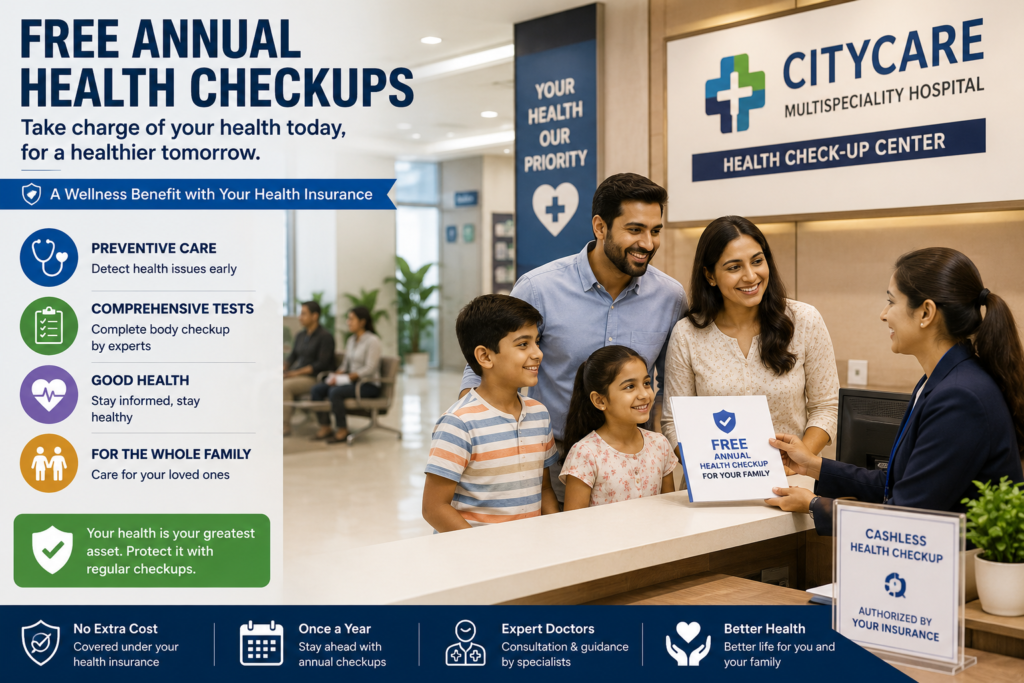
One of the most popular Insurance Wellness Benefits is the annual preventive health checkup.
What is it?
A complimentary medical examination offered once a year to detect health issues before they become serious.
These health checkups may include:
- Blood sugar tests
- Cholesterol screening
- Blood pressure monitoring
- Liver and kidney function tests
- ECG
- BMI assessment
- General physician consultation
Why it matters
Early diagnosis allows customers to seek treatment before diseases become severe.
From the insurer’s perspective, early intervention often means significantly lower claim costs in the future.
2. Free Gym Memberships
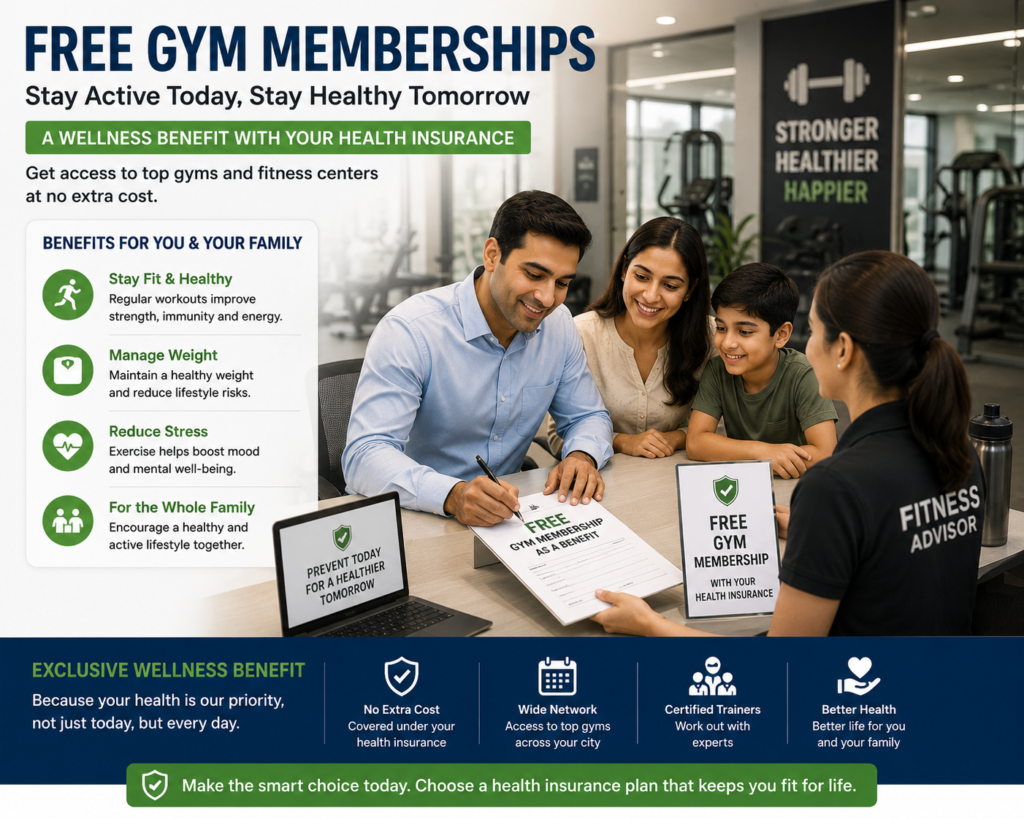
Gym memberships have become one of the most recognizable wellness benefits.
What is it?
Insurance companies partner with fitness centers to provide discounted or complimentary gym access.
Some insurers even reimburse membership fees after customers achieve predefined fitness goals.
Why it matters
Regular exercise helps reduce the risk of:
- Obesity
- Diabetes
- High blood pressure
- Heart disease
- Lifestyle-related illnesses
A healthier customer generally leads to fewer expensive medical claims.
3. Dietitian and Nutrition Consultations

Healthy eating plays a major role in preventing chronic diseases.
Many insurers now provide access to certified nutritionists.
What is it?
Customers receive personalized dietary advice based on:
- Age
- Medical history
- Lifestyle
- Weight goals
- Existing health conditions
Nutrition coaching helps customers make sustainable lifestyle improvements.
4. Mental Health Counseling

Modern healthcare extends beyond physical fitness.
Stress, anxiety, and depression can significantly affect overall health.
Many insurers now include confidential counseling sessions with licensed psychologists or mental wellness experts.
These services may include:
- Stress management
- Anxiety counseling
- Emotional wellness
- Workplace burnout support
- Family counseling
This reflects a broader understanding that mental health and physical health are deeply connected.
5. Yoga and Meditation Programs

Instead of focusing only on hospitals, insurers increasingly encourage preventive wellness practices.
Many policies now provide:
- Guided yoga classes
- Online meditation sessions
- Breathing exercises
- Mindfulness coaching
These activities help improve flexibility, reduce stress, and support long-term well-being.
6. Fitness Tracker Integration

Technology has transformed preventive healthcare.
Many insurance companies integrate with fitness devices and mobile health apps.
Examples include:
- Smartwatches
- Fitness bands
- Health tracking apps
Customers can automatically share activity data such as:
- Daily steps
- Calories burned
- Heart rate
- Exercise duration
Some insurers even reward customers who consistently achieve their activity goals.
7. Walking Challenges and Wellness Rewards

Walking is one of the simplest forms of exercise.
To encourage healthier lifestyles, insurers often organize wellness challenges.
Examples include:
- Walk 8,000 steps daily.
- Complete a monthly fitness challenge.
- Maintain weekly activity streaks.
Customers who complete these goals may receive:
- Wellness points
- Shopping vouchers
- Premium discounts
- Gift cards
- Additional health benefits
The reward isn’t just for exercising.
It’s for building healthier habits.
8. Telemedicine and Online Doctor Consultations

Healthcare has become more accessible through digital platforms.
Many insurers now provide unlimited or discounted online consultations with doctors.
Customers can speak with medical professionals without visiting a hospital for routine concerns.
Benefits include:
- Faster medical advice
- Reduced travel
- Early diagnosis
- Better convenience
This also reduces unnecessary hospital visits.
9. Vaccination and Preventive Screening Programs

Several insurers promote preventive healthcare by encouraging routine vaccinations and health screenings.
Examples include:
- Flu vaccinations
- Cervical cancer screening
- Breast cancer screening
- Diabetes screening
- Heart health assessments
Early prevention benefits both customers and insurers.
10. Personalized Health Coaching

Some insurance companies now provide dedicated health coaches who guide customers through long-term lifestyle improvements.
Health coaches may help with:
- Weight management
- Exercise planning
- Sleep improvement
- Stress reduction
- Nutrition planning
- Lifestyle modification
Instead of simply paying claims, insurers are becoming active partners in maintaining customer health.
Common Insurance Riders We Should Know
While wellness benefits focus on prevention, riders strengthen financial protection.
Some of the most common riders include:
Critical Illness Rider
Provides a lump-sum payout if you’re diagnosed with specified serious illnesses such as cancer, stroke, or heart attack.
Personal Accident Rider
Offers financial compensation for accidental death, disability, or permanent injury.
Hospital Cash Rider
Pays a fixed daily amount during hospitalization to help cover non-medical expenses such as transportation or meals.
Maternity Rider
Helps cover pregnancy-related expenses, childbirth, and newborn care according to policy terms.
OPD Cover Rider
Provides reimbursement for eligible outpatient consultations, diagnostic tests, and prescribed medicines without hospitalization.
Room Rent Waiver
Removes or increases restrictions on hospital room rent, giving customers greater flexibility during treatment.
Restore Benefit
Automatically restores the insured sum if it becomes exhausted after an eligible claim, allowing continued protection during the same policy period.
No Claim Bonus (NCB)
Rewards customers who don’t make claims by increasing the sum insured or offering premium-related benefits, depending on the policy.
The Bigger Picture
Notice something interesting.
Insurance Riders prepare you for unexpected emergencies.
Insurance Wellness Benefits try to reduce the chances of those emergencies happening in the first place.
That’s a remarkable shift.
Insurance companies are no longer waiting for customers to become sick.
They’re investing in helping customers stay healthy.
And that naturally leads to an even more interesting question.
Why would an insurance company willingly spend money on your health today instead of simply waiting until you file a claim?
The answer lies in marketing psychology, behavioral science, and long-term business strategy.
Chapter 2: The Hidden Marketing Psychology Behind Insurance Wellness Benefits
At this point, one question naturally comes to mind.
Why would an insurance company willingly spend money on your gym membership, annual health checkup, yoga sessions, or dietitian consultations?
Wouldn’t it be more profitable to simply collect premiums and pay claims only when necessary?
Surprisingly, the answer is no.
Modern insurance companies have discovered that investing in your health today often costs far less than paying for expensive medical treatments tomorrow.
That’s why many insurers are shifting from being claim payers to becoming health partners.
Let’s uncover the marketing and business strategies behind this transformation.
1. Preventive Marketing: Solving Problems Before They Happen
The biggest strategy behind Insurance Wellness Benefits is Preventive Marketing.
Definition
Preventive Marketing is a strategy where companies invest in preventing future problems instead of waiting to solve them after they occur.
Think about these two situations.
Scenario A
An insurer pays ₹10,000 every year for your:
- Health checkup
- Gym membership
- Dietitian consultation
You remain healthy.
Scenario B
The insurer skips these wellness benefits.
Five years later, you require:
- Heart surgery
- Diabetes treatment
- Long-term hospitalization
The medical claim could cost several lakhs of rupees.
Which option is more economical?
The answer is obvious.
Preventing disease is often much cheaper than treating disease.
That’s why wellness programs are not simply customer benefits.
They are long-term business investments.
2. Behavioral Nudging: Encouraging Better Decisions Without Force
Insurance companies cannot force people to exercise.
They cannot force healthier eating.
They cannot force customers to sleep better.
Instead, they use Behavioral Nudging.
Definition
Behavioral Nudging is the practice of encouraging people to make better decisions without removing their freedom of choice.
For example,
instead of saying,
“You should exercise every day.”
an insurer may say,
“Complete 10,000 daily steps this month and earn wellness rewards.”
The customer still chooses.
But the reward increases the likelihood of healthier behavior.
That’s the power of a nudge.
3. Risk Reduction Strategy: Lower Risk Means Lower Claims
Insurance companies operate on probabilities.
The healthier their customers remain,
the lower the chances of expensive claims.
This is known as a Risk Reduction Strategy.
Definition
A Risk Reduction Strategy focuses on minimizing the likelihood of future financial losses.
For insurers,
healthy customers generally have lower risks of:
- Heart disease
- Type 2 diabetes
- Obesity-related complications
- Hypertension
- Lifestyle disorders
Lower health risks often translate into lower claim costs.
In other words,
every healthy habit adopted by a customer helps reduce future uncertainty for the insurer.
4. Customer Lifetime Value (CLV): Healthy Customers Stay Longer
Another important concept behind Insurance Wellness Benefits is Customer Lifetime Value (CLV).
Definition
Customer Lifetime Value is the total revenue a business expects to earn from a customer throughout their relationship.
Imagine two policyholders.
Customer A
- Frequently falls ill.
- Makes multiple high-value claims.
- Switches insurers after three years.
Customer B
- Exercises regularly.
- Uses wellness benefits.
- Renews the policy for fifteen years.
Which customer creates greater long-term value?
Clearly, Customer B.
Insurance companies understand that healthier customers are often happier customers.
Happy customers are more likely to renew their policies.
That increases Customer Lifetime Value.
5. Customer Retention: Giving Customers Reasons to Stay
Health insurance has become increasingly competitive.
Many companies now offer similar:
- Coverage amounts
- Hospital networks
- Premium pricing
So how can one insurer stand out?
Through Insurance Wellness Benefits.
Imagine comparing two policies.
Policy A
- Hospitalization cover only.
Policy B
Includes:
- Free annual health checkups.
- Mental health counseling.
- Gym membership.
- Dietitian consultations.
- Online doctor consultations.
- Wellness rewards.
Most customers would naturally perceive Policy B as offering greater overall value.
That’s an example of Customer Retention in action.
Customers are less likely to switch when they receive ongoing value throughout the year.
6. Habit Formation: Small Actions Create Long-Term Change
Insurance companies don’t expect customers to transform overnight.
Instead,
they encourage small, repeatable behaviors.
Definition
Habit Formation is the process of turning repeated actions into automatic behaviors.
For example,
an insurer may encourage customers to:
- Walk daily.
- Complete weekly fitness goals.
- Track their sleep.
- Practice meditation.
Over time,
these healthy actions become habits rather than occasional activities.
Once habits form,
customers often continue them even without rewards.
Both the customer and the insurer benefit.
7. Gamification: Making Wellness Feel Enjoyable
Let’s be honest.
Most people don’t get excited about health insurance.
But they do enjoy:
- Challenges.
- Badges.
- Progress bars.
- Achievement levels.
- Rewards.
Insurance companies use Gamification to make healthy living more engaging.
Definition
Gamification is the use of game-like elements to encourage desired behaviors.
Examples include:
- Walk 10,000 steps today.
- Complete a 30-day fitness challenge.
- Unlock the Gold Wellness Badge.
- Earn wellness points for healthy activities.
Instead of making health feel like an obligation,
companies make it feel like an achievement.
8. Value-Added Services: Offering More Than Insurance
Years ago,
insurance companies competed almost entirely on:
- Premium price.
- Claim settlement.
- Coverage amount.
Today,
customers expect much more.
That’s where Value-Added Services come in.
Definition
Value-Added Services are additional benefits that increase the perceived value of a product without changing its core purpose.
Insurance companies now offer services like:
- Wellness coaching.
- Preventive screenings.
- Mental health support.
- Nutrition advice.
- Health education.
- Telemedicine.
These services make the policy feel more valuable throughout the year rather than only during emergencies.
9. Shared Value Strategy: A Win-Win for Everyone
Perhaps the most fascinating strategy behind Insurance Wellness Benefits is the Shared Value Strategy.
Definition
A Shared Value Strategy creates benefits for both the company and its customers at the same time.
Consider this simple chain.
Customer exercises regularly.
↓
Customer becomes healthier.
↓
Fewer hospital visits.
↓
Lower insurance claims.
↓
Insurance company saves money.
↓
Customer enjoys better health and potentially lower long-term costs.
Unlike many marketing strategies where only the company benefits,
this creates genuine value for both parties.
That’s why wellness programs continue to grow across the insurance industry.
The Real Transformation
When you put all these strategies together, a clear pattern emerges.
Insurance companies are no longer asking,
“How can we pay claims efficiently?”
They’re increasingly asking,
“How can we prevent claims from happening in the first place?”
That shift represents one of the biggest changes in modern healthcare and insurance.
Today’s leading insurers don’t simply insure illness.
They actively encourage wellness.
They don’t just protect your finances.
They invest in your everyday health.
And that’s why Insurance Wellness Benefits have become much more than attractive add-ons.
They’re a carefully designed combination of marketing psychology, behavioral science, preventive healthcare, and long-term business strategy.
Chapter 3: Real-World Examples of Insurance Wellness Benefits
The idea of Insurance Wellness Benefits isn’t just a marketing theory.
Across the world, insurance companies are actively investing in preventive healthcare by offering wellness services that encourage healthier lifestyles and reduce long-term medical risks.
Although the exact benefits differ from one insurer to another, many companies now provide wellness programs alongside traditional insurance coverage.
Here are some common examples.
Annual Preventive Health Checkups
Many insurers offer complimentary health screenings every year to help detect diseases at an early stage.
These may include:
- Blood pressure tests
- Blood sugar screening
- Cholesterol tests
- BMI measurement
- Liver and kidney function tests
- ECG
- General physician consultation
Instead of waiting until customers require hospitalization, insurers encourage early diagnosis.
Free Gym Memberships
Some health insurance plans include discounted or complimentary gym memberships through partner fitness centers.
The objective is simple.
Encourage regular physical activity that may reduce the likelihood of:
- Heart disease
- Obesity
- Diabetes
- Hypertension
Healthy customers generally require fewer expensive treatments over time.
Digital Doctor Consultations
Many insurers now include telemedicine services.
Customers can consult qualified doctors online without visiting hospitals for minor illnesses.
Benefits include:
- Faster diagnosis
- Convenience
- Reduced travel
- Better preventive care
Mental Wellness Support
Insurance companies increasingly recognize that mental health is just as important as physical health.
Many policies now include:
- Counseling sessions
- Stress management
- Anxiety support
- Emotional wellness programs
This reflects the growing understanding that better mental health often contributes to better physical health.
Fitness Challenges
Instead of rewarding claims,
insurers reward healthy behavior.
Examples include:
- Daily step goals
- Weekly activity challenges
- Monthly fitness milestones
Customers who participate may receive:
- Wellness points
- Gift vouchers
- Premium discounts
- Additional wellness benefits
Nutrition and Lifestyle Coaching
Many wellness programs include professional guidance from:
- Certified dietitians
- Nutritionists
- Lifestyle coaches
Customers receive personalized recommendations for:
- Healthy eating
- Weight management
- Better sleep
- Exercise planning
Insurance Companies Are Quietly Becoming Wellness Companies
Twenty years ago,
insurance companies focused almost entirely on one promise.
“We’ll help you financially when something goes wrong.”
Today,
their message is changing.
“We’ll help you stay healthy so that nothing goes wrong.”
That is a remarkable shift.
The relationship no longer begins only after illness.
It begins long before illness ever occurs.
Similar Strategies in Other Industries
Although health insurance companies are leading this transformation, they’re not the only businesses encouraging healthier behavior.
Many organizations have realized that healthier people are often happier, more productive, and less expensive to support.
Here are a few examples.
Corporate Wellness Programs
Many employers now invest in employee wellness by providing:
- Gym reimbursements
- Free annual health checkups
- Mental health counseling
- Wellness allowances
- Healthy cafeteria options
- Standing desks
- Ergonomic workspaces
Why?
Healthier employees often experience:
- Higher productivity
- Lower absenteeism
- Greater job satisfaction
Fitness Technology Companies
Wearable technology companies encourage users to develop healthier habits through:
- Daily activity goals
- Sleep tracking
- Heart rate monitoring
- Exercise reminders
- Guided breathing sessions
The product isn’t just a smartwatch.
It’s a daily health companion.
Digital Health Platforms
Modern health applications encourage consistency through:
- Walking streaks
- Workout reminders
- Water intake tracking
- Sleep monitoring
- Nutrition logging
Rather than treating illness,
they encourage healthier routines every day.
What Businesses Can Learn
Insurance companies demonstrate an important lesson that applies to almost every business.
1. Solve Problems Before Customers Experience Them
The best businesses don’t simply react.
They anticipate.
Instead of waiting for customers to face problems, they create solutions that prevent those problems from occurring.
2. Build Long-Term Relationships
The strongest customer relationships aren’t built during transactions.
They’re built through continuous value.
Insurance companies now interact with customers throughout the year instead of only during claim settlements.
3. Create Shared Success
The best marketing creates outcomes where everyone benefits.
Customers become healthier.
Insurance companies reduce claim costs.
Both sides win.
That’s sustainable marketing.
What Consumers Should Know
Insurance Wellness Benefits can provide genuine value.
However,
before choosing a policy,
consider these questions.
Does the policy match my lifestyle?
A free gym membership is valuable only if you actually plan to use it.
Are the wellness benefits included or optional?
Some benefits are included automatically.
Others require enrollment or participation.
Always review the policy details.
What are the eligibility conditions?
Certain rewards may require:
- Completing fitness challenges
- Using partner hospitals
- Booking through specific apps
- Maintaining policy continuity
Understanding these conditions helps you maximize the available benefits.
Frequently Asked Questions(FAQs)
What are Insurance Wellness Benefits?
Insurance Wellness Benefits are preventive healthcare services offered alongside health insurance policies to encourage healthier lifestyles and reduce future health risks.
Are wellness benefits the same as insurance riders?
No.
Insurance riders increase your financial protection.
Wellness benefits help improve your health before illness occurs.
Why do insurance companies offer gym memberships?
Regular exercise may reduce the risk of lifestyle diseases, which can lower future insurance claims while improving customer well-being.
Are wellness benefits free?
Many are included with eligible insurance plans, while others may depend on the insurer, policy type, or participation in wellness programs.
Should wellness benefits influence my insurance decision?
Yes, but they should complement, not replace, the core factors such as coverage amount, exclusions, network hospitals, claim settlement record, and premium affordability.
Final Thoughts
When most people think about health insurance, they think about hospital bills, claim settlements, and financial protection.
But the industry is changing.
Modern insurers are no longer waiting for customers to become ill.
They’re actively encouraging healthier lifestyles through Insurance Wellness Benefits.
Whether it’s a free health checkup, gym membership, yoga session, nutrition consultation, or mental wellness support, these services reflect a larger transformation in the insurance industry.
They’re not random giveaways.
They’re carefully designed investments in healthier customers.
For businesses, this strategy demonstrates the power of preventive marketing, behavioral nudging, and shared value creation.
For consumers, it offers an opportunity to improve health while making better use of their insurance policy.
The next time you see a health insurance plan offering a free gym membership or wellness reward, don’t think of it as just another add-on.
Ask yourself a different question.
“Is this company simply selling me insurance, or is it investing in helping me stay healthy?”
More often than not, you’ll discover that the smartest insurance companies are doing both.
What We Can Learn as Consumers
One of the biggest lessons from Insurance Wellness Benefits is that prevention is often more valuable than treatment.
Instead of viewing health insurance as something you use only during emergencies, think of it as a long-term health partner.
If your insurer provides annual checkups, nutrition guidance, mental wellness support, or fitness programs, make use of them.
These benefits aren’t just designed to reduce the insurer’s future costs.
They’re also opportunities to detect health issues early, build healthier habits, and improve your overall quality of life.
Sometimes, the most valuable part of an insurance policy isn’t the claim you make.
It’s the claim you never have to make because you stayed healthy.